
Speech Delay in Children:
Dr Sunil Sable, Pediatric Neurologist & Epilepsy Specialist in Ahmednagar (Ahilyanagar) Maharashtra
Helping Children Develop Communication, Language, and Confidence Through Early Diagnosis and Evidence-Based Care
Communication is one of the most important milestones in a child’s development. Long before a child speaks their first word, they begin communicating through eye contact, smiling, facial expressions, gestures, babbling, and interactions with parents and caregivers. These early communication skills form the foundation for speech, language, learning, social relationships, and emotional development.
Every child develops at their own pace, and there is a natural variation in when children begin to speak. However, there are well-recognized developmental milestones that most children achieve within a predictable age range. While some children may simply be “late talkers,” persistent speech delay should never be ignored. Difficulty speaking may be the first sign of an underlying condition such as hearing impairment, Autism Spectrum Disorder, Developmental Delay, Specific Language Disorder, Attention-Deficit/Hyperactivity Disorder (ADHD), epilepsy, genetic disorders, or other neurological conditions. Early recognition allows these conditions to be identified and managed before they significantly affect a child’s communication, learning, and social development.
The first five years of life are a period of remarkable brain growth and brain plasticity. During this time, the brain forms millions of new neural connections that support language, communication, thinking, and learning. Research has consistently shown that children who receive early diagnosis and timely intervention have better outcomes in speech, language, academic achievement, social interaction, and independence than those whose treatment is delayed. This is why parents should seek professional evaluation whenever they have concerns about their child’s speech or language development rather than adopting a “wait and see” approach.
Parents play the most important role in a child’s language development. Everyday conversations, reading storybooks together, singing songs, playing interactive games, and responding to a child’s attempts to communicate all stimulate healthy language development. At the same time, excessive screen exposure and reduced face-to-face interaction may limit opportunities for meaningful communication during these critical early years.
At Dr. Sunil Sable’s Pediatric Neurology and Cardiology Centre, Ahilyanagar (Ahmednagar), Maharashtra, children with speech delay receive a comprehensive developmental and neurological evaluation to identify the underlying cause of delayed communication. Dr. Sunil Sable, Pediatric Neurologist & Epilepsy Specialist, Ahilyanagar (Ahmednagar), Maharashtra, has over 20 years of experience in evaluating children with speech delay, developmental delay, autism, ADHD, epilepsy, cerebral palsy, genetic disorders, and other neurodevelopmental conditions. Every child is assessed individually, and a personalized management plan is developed in collaboration with parents, speech-language pathologists, occupational therapists, psychologists, educators, and other specialists whenever required.
If your child is not speaking as expected, has stopped using previously learned words, does not respond to their name, struggles to understand simple instructions, or has difficulty communicating with others, an early evaluation can make a life-changing difference. With evidence-based care, family involvement, and timely intervention, many children with speech delay make significant progress and develop the communication skills they need to thrive at home, in school, and throughout life.
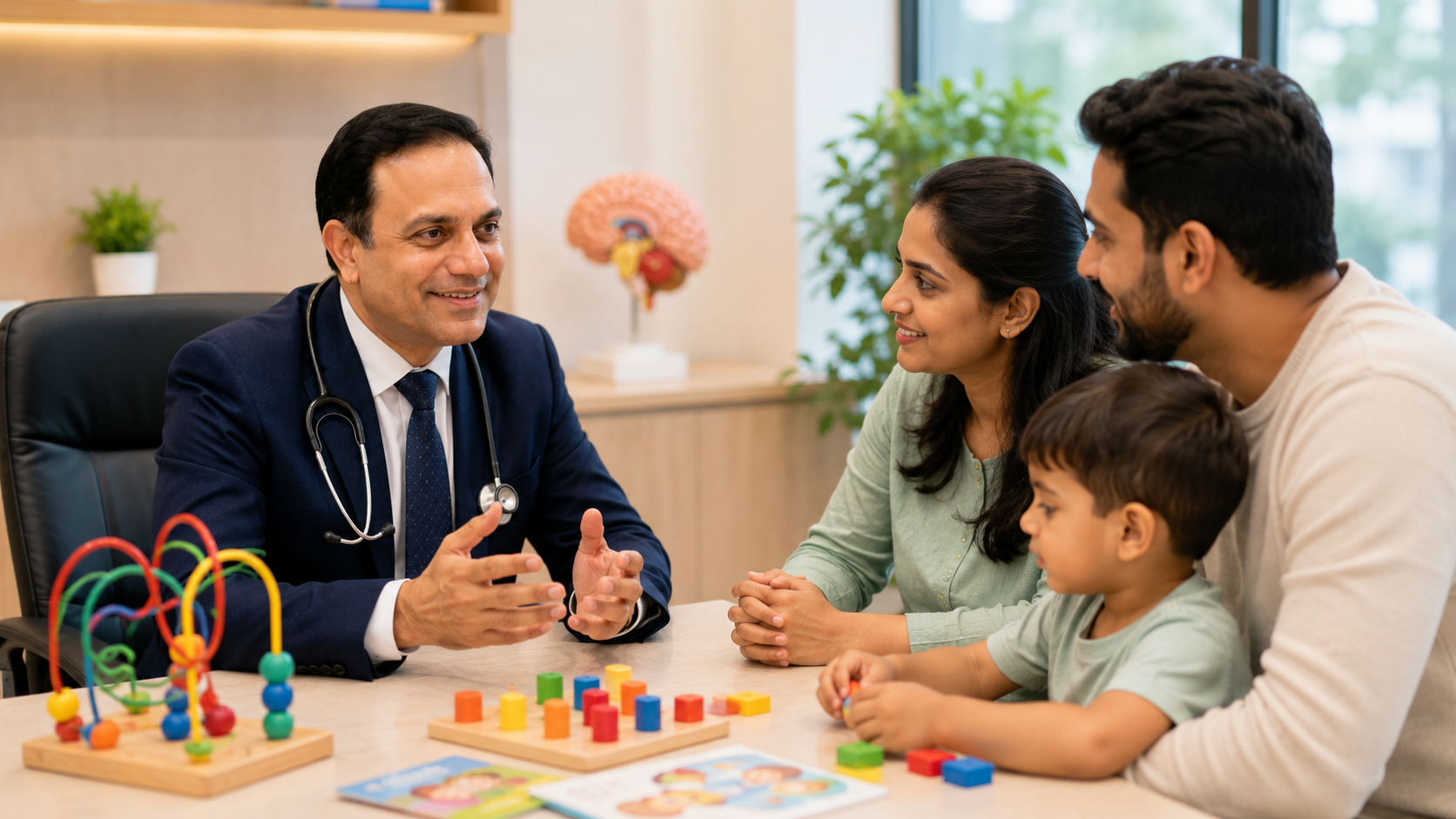
What Is Speech Delay?
Speech delay is one of the most common developmental concerns seen during early childhood. It occurs when a child does not develop speech skills according to the expected developmental milestones for their age. A child with speech delay may speak fewer words than expected, begin talking later than peers, or have difficulty producing clear and understandable speech.
It is important to remember that every child develops at a slightly different pace. Some children naturally begin speaking a little later than others. However, when speech development is significantly delayed or accompanied by difficulties in understanding language, social interaction, or other developmental milestones, a detailed evaluation is essential to identify the underlying cause.
Speech delay is not a disease but rather a symptom that may result from several conditions, including hearing impairment, Developmental Delay, Autism Spectrum Disorder, Attention-Deficit/Hyperactivity Disorder (ADHD), Specific Language Disorder, cerebral palsy, epilepsy, genetic disorders, or other neurological conditions. Early identification allows timely intervention, which can significantly improve communication, learning, and social development.
At Dr. Sunil Sable’s Pediatric Neurology and Cardiology Centre, Ahilyanagar (Ahmednagar), Maharashtra, children with speech delay undergo a comprehensive developmental and neurological assessment to determine the cause of delayed communication. Dr. Sunil Sable, Pediatric Neurologist & Epilepsy Specialist, Ahilyanagar (Ahmednagar), Maharashtra, works closely with parents and a multidisciplinary team to develop an individualized treatment plan that supports each child’s communication and overall development.
Speech Delay vs. Language Delay
Many parents use the terms speech delay and language delay interchangeably, but they are not the same.
Speech refers to the ability to produce sounds and words clearly. It involves the physical act of speaking using the lips, tongue, jaw, vocal cords, and breathing muscles.
Language refers to the ability to understand and use words, sentences, gestures, and other forms of communication to express thoughts, needs, and emotions.
A child may have:
- A speech delay, where they know what they want to say but have difficulty producing words clearly.
- A language delay, where they have difficulty understanding or using language, even if speech sounds are clear.
- Or both speech and language delay together.
Understanding the difference is important because the evaluation and treatment approach may differ depending on the child’s specific challenges.
What Is Expressive Language?
Expressive language is the ability to communicate thoughts, feelings, needs, and ideas to others using spoken words, gestures, facial expressions, or other forms of communication.
Children with expressive language delay may:
- Speak very few words for their age.
- Take longer to start talking.
- Use single words instead of short sentences.
- Have difficulty naming familiar objects.
- Struggle to ask questions.
- Find it difficult to describe events or experiences.
- Become frustrated because they cannot express themselves clearly.
Many parents say, “My child understands everything but doesn’t talk.” This is a common description of expressive language delay and should be evaluated by a healthcare professional.
What Is Receptive Language?
Receptive language is the ability to understand spoken language and make sense of what other people say.
Children with receptive language difficulties may:
- Not respond consistently when their name is called.
- Have difficulty following simple instructions.
- Seem to ignore conversations even though hearing is normal.
- Need repeated explanations.
- Struggle to understand questions.
- Find it difficult to learn new words.
- Have trouble understanding stories or classroom teaching.
Because understanding language forms the foundation for speaking, children with receptive language delay often also experience expressive language difficulties.
Communication Is More Than Talking
Communication begins long before a child speaks their first word. Babies communicate through eye contact, smiling, crying, babbling, pointing, waving, gestures, facial expressions, and shared attention with parents and caregivers.
Healthy communication development includes:
- Making eye contact.
- Smiling in response to others.
- Babbling during infancy.
- Responding to familiar voices.
- Pointing to objects of interest.
- Using gestures such as waving or clapping.
- Understanding simple instructions.
- Using words to express needs.
- Participating in conversations as they grow older.
A child who is not yet speaking may still be communicating effectively through gestures and social interaction. Conversely, a child who says many words but has difficulty understanding language or interacting socially may also require further assessment.
Communication is therefore much broader than speech alone and reflects the overall development of language, social interaction, hearing, cognition, and brain function
Why Early Evaluation Is Important
Many parents hope that their child will “start talking on their own.” While some late talkers do catch up, others have an underlying developmental or neurological condition that requires early intervention.
A professional evaluation is recommended if a child:
- Is not babbling by around 9 months.
- Has no meaningful words by about 15–18 months.
- Is not combining two words by around 2 years.
- Does not respond consistently to their name.
- Has poor eye contact or limited use of gestures.
- Stops using words they had previously learned.
- Has associated developmental, behavioral, or neurological concerns.
At Dr. Sunil Sable’s Pediatric Neurology and Cardiology Centre, Ahilyanagar (Ahmednagar), Maharashtra, children with speech delay receive a comprehensive evaluation to identify whether the delay is related to hearing impairment, Autism Spectrum Disorder, Developmental Delay, ADHD, epilepsy, genetic disorders, or another neurological condition. Early diagnosis, evidence-based therapy, and active parent participation provide the best opportunity for children to develop effective communication skills and reach their full developmental potential.
Normal Speech and Language Development
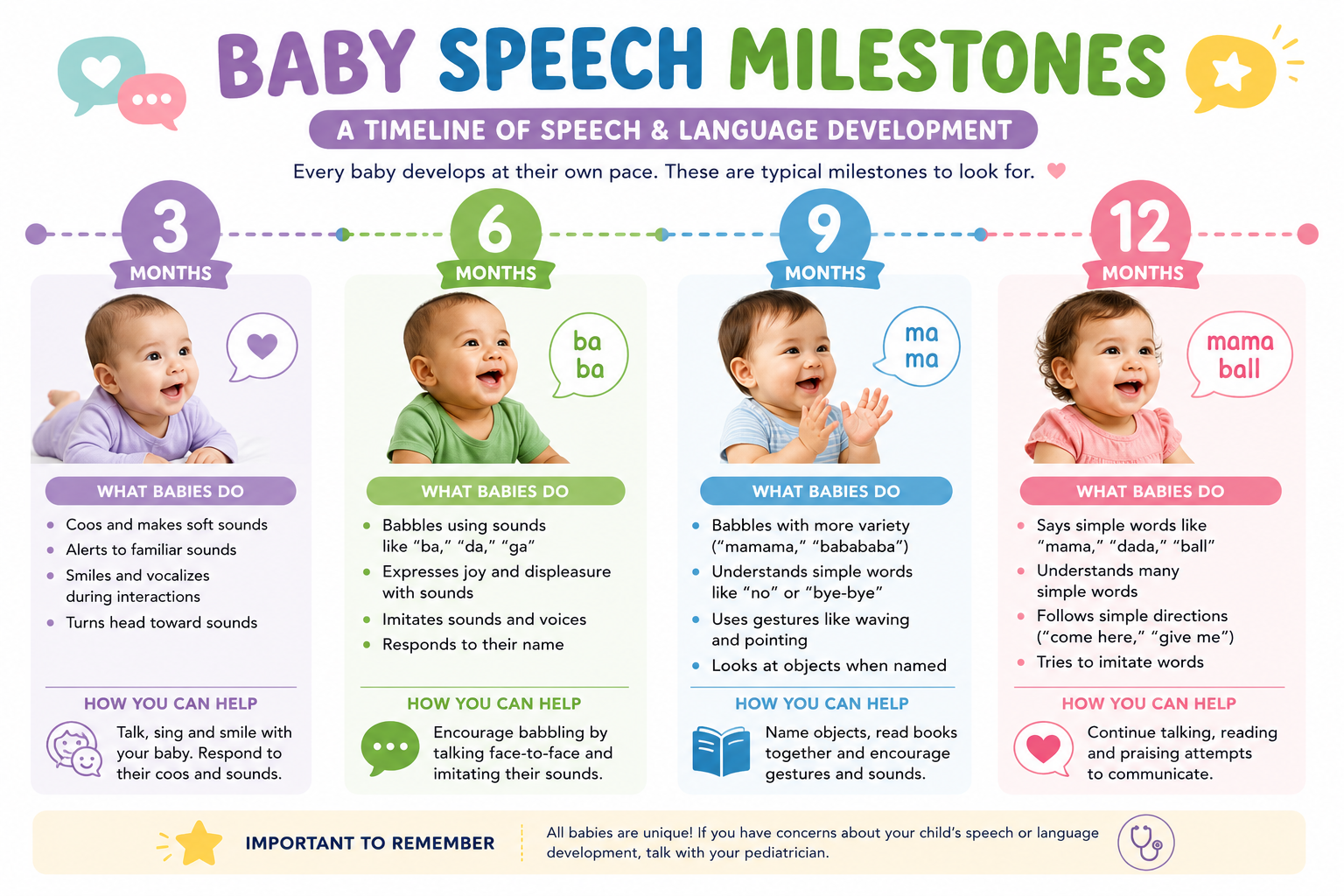
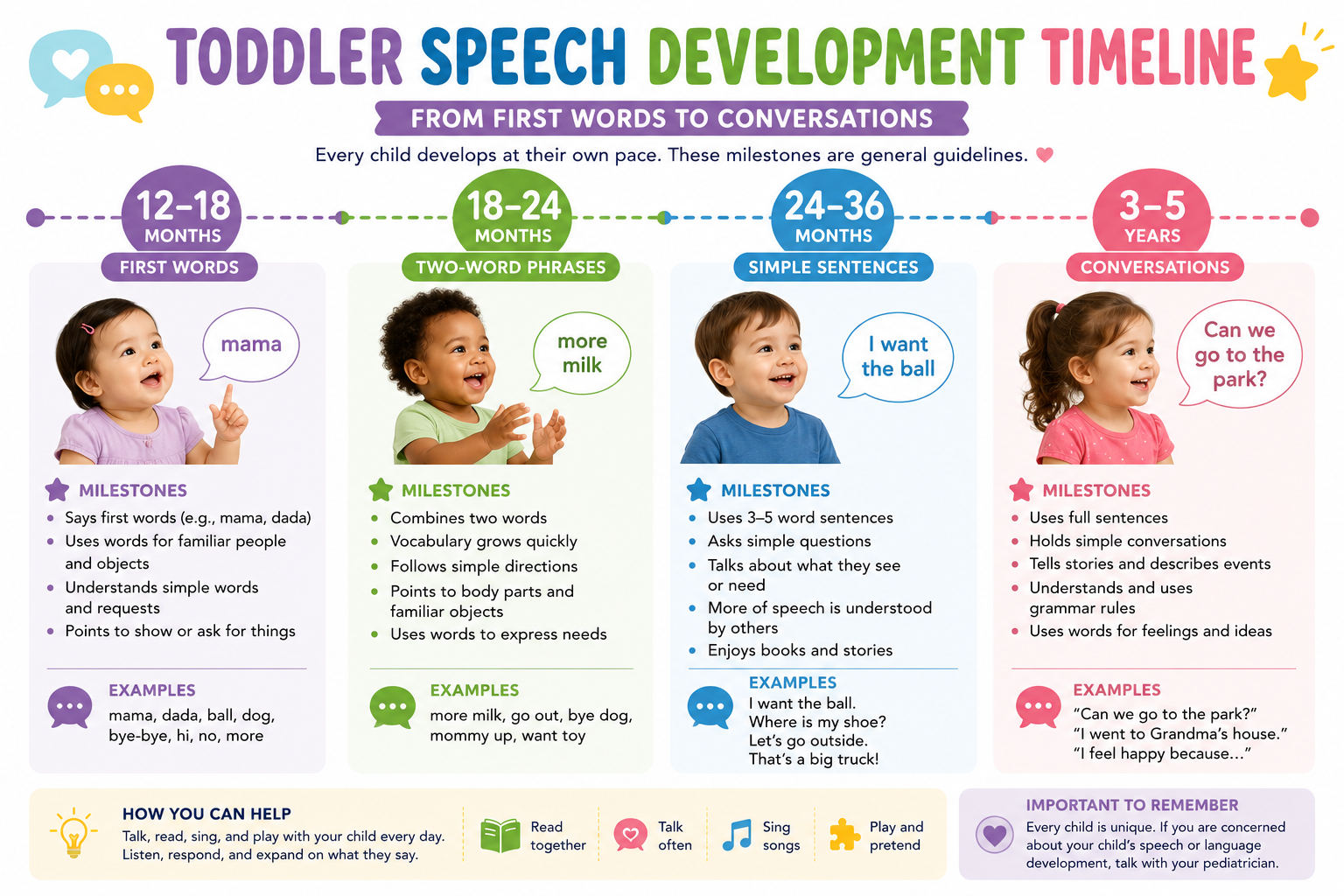
Speech and language development is one of the most exciting parts of early childhood. From the moment a baby is born, they begin learning to communicate by listening to voices, watching facial expressions, and interacting with their parents and caregivers. Long before children speak their first words, they develop important communication skills such as eye contact, smiling, babbling, pointing, and understanding simple language.
Although every child develops at their own pace, most children achieve speech and language milestones within a predictable age range. Knowing these milestones helps parents recognize when development is progressing normally and when a professional evaluation may be needed.
At Dr. Sunil Sable’s Pediatric Neurology and Cardiology Centre, Ahilyanagar (Ahmednagar), Maharashtra, developmental milestones are carefully assessed during every child development and speech delay evaluation. Dr. Sunil Sable, Pediatric Neurologist & Epilepsy Specialist, Ahilyanagar (Ahmednagar), Maharashtra, emphasizes that early identification of delayed speech allows timely intervention and better long-term communication outcomes.
Birth to 3 Months
During the first three months, babies begin communicating through sounds, facial expressions, and interactions with their caregivers.
Typical speech and language milestones include:
- Startles or quietens in response to familiar voices.
- Recognizes parents’ voices.
- Cries differently for different needs.
- Makes cooing sounds such as “oo” and “ah.”
- Smiles socially by around 6–8 weeks.
- Makes eye contact during feeding.
- Enjoys face-to-face interaction.
- Watches parents while they talk.
These early interactions are the foundation of future language development.
4 to 6 Months
Between four and six months, babies become increasingly interested in communication and begin experimenting with different sounds.
Expected milestones include:
- Laughs aloud.
- Responds when spoken to.
- Turns toward familiar voices.
- Produces a variety of vowel and consonant sounds.
- Begins babbling with sounds such as “ba,” “da,” and “ma.”
- Enjoys interactive games like peek-a-boo.
- Shows excitement when hearing familiar voices.
Parents should actively talk, sing, and respond to these sounds, as this encourages further language development.
6 to 9 Months
Babies become much more interactive during this period.
Typical milestones include:
- Responds consistently to their name.
- Understands the word “no.”
- Uses repetitive babbling such as “bababa” or “dadada.”
- Imitates sounds made by others.
- Looks toward familiar people when named.
- Uses different sounds to express emotions.
- Enjoys social interaction and turn-taking.
Babbling is an important milestone because it prepares the child for meaningful speech.
9 to 12 Months
By the end of the first year, babies usually begin understanding much more language than they can speak.
Expected milestones include:
- Responds consistently to their name.
- Understands simple words such as “bye-bye” and “come.”
- Waves goodbye.
- Points to request objects or share interest.
- Uses gestures like clapping or reaching.
- Says one or two meaningful words such as “mama” or “dada.”
- Imitates simple words and sounds.
- Enjoys interactive games and songs.
Children who do not point, wave, or respond to their name by 12 months should be evaluated because these may be early signs of developmental concerns.
12 to 18 Months
Language develops rapidly during the second year of life.
Typical milestones include:
- Speaks approximately 10–20 meaningful words.
- Understands many more words than they can speak.
- Follows simple one-step commands.
- Points to familiar objects when named.
- Identifies body parts when asked.
- Uses gestures together with words.
- Attempts to imitate new words.
- Communicates needs using words or gestures.
Parents often notice new words appearing every few weeks during this period.
18 to 24 Months
Vocabulary expands dramatically between 18 and 24 months.
Expected milestones include:
- Uses approximately 50 or more meaningful words.
- Combines two words into simple phrases such as:
- “Mama come”
- “More water”
- “Daddy go”
- Follows two-step instructions.
- Names familiar people and objects.
- Begins asking simple questions.
- Enjoys pretend play.
- Understands simple stories.
Children who are not using two-word phrases by around two years should undergo a speech and developmental evaluation.
2 to 3 Years
Speech becomes much more understandable and children begin expressing themselves in longer sentences.
Typical milestones include:
- Vocabulary expands to several hundred words.
- Uses three- to four-word sentences.
- Answers simple questions.
- Follows two- and three-step instructions.
- Understands concepts such as big/small and up/down.
- Names familiar objects and pictures.
- Begins asking “What?” and “Where?” questions.
- Speech is understood by familiar adults most of the time.
Children at this age enjoy conversations and learn many new words every day.
3 to 4 Years
Children become confident communicators during the preschool years.
Expected milestones include:
- Speaks in complete sentences.
- Uses correct grammar most of the time.
- Tells simple stories.
- Understands colours and basic concepts.
- Answers questions appropriately.
- Participates in conversations.
- Speech is understandable to most unfamiliar adults.
- Uses language during imaginative play.
At this stage, communication skills support preschool learning and social interaction.
4 to 5 Years
By five years of age, children have developed language skills that prepare them for school.
Typical milestones include:
- Speaks clearly and fluently.
- Uses complete, grammatically correct sentences.
- Tells detailed stories in sequence.
- Understands time concepts such as yesterday and tomorrow.
- Follows complex instructions.
- Recognizes rhyming words.
- Asks many “Why?” and “How?” questions.
- Communicates confidently with adults and other children.
By this age, most children can express their thoughts, needs, and emotions effectively and participate successfully in classroom activities.
Speech and Language Milestones by Age
| Age | Expected Speech and Language Milestones |
|---|---|
| Birth–3 Months | Responds to voices, social smile, cooing, eye contact, different cries for different needs. |
| 4–6 Months | Laughs, turns toward voices, begins babbling, enjoys social interaction. |
| 6–9 Months | Responds to name, imitates sounds, repetitive babbling, understands “no.” |
| 9–12 Months | Waves goodbye, points to objects, understands simple words, says first meaningful words. |
| 12–18 Months | Uses 10–20 words, follows simple commands, identifies familiar objects and body parts. |
| 18–24 Months | Uses 50 or more words, combines two-word phrases, follows two-step instructions, enjoys pretend play. |
| 2–3 Years | Speaks in short sentences, vocabulary grows rapidly, answers simple questions, follows multiple instructions. |
| 3–4 Years | Speaks in complete sentences, tells simple stories, speech understood by most adults, participates in conversations. |
| 4–5 Years | Speaks clearly, tells detailed stories, follows complex instructions, communicates confidently in school and social settings. |
Remember Every Child Is Unique
Children develop at different rates, and slight variations in speech milestones are common. However, significant delays in babbling, first words, combining words, understanding language, or communicating with others should not be ignored.
If your child is not meeting expected speech and language milestones, an early evaluation is recommended. At Dr. Sunil Sable’s Pediatric Neurology Centre, Ahilyanagar (Ahmednagar), Maharashtra, Dr. Sunil Sable, Pediatric Neurologist & Epilepsy Specialist, performs a comprehensive assessment to identify the cause of speech delay and develop an individualized treatment plan. Early diagnosis, family involvement, and evidence-based intervention provide the best opportunity for children to develop effective communication skills and reach their full developmental potential.
Red Flags for Speech Delay
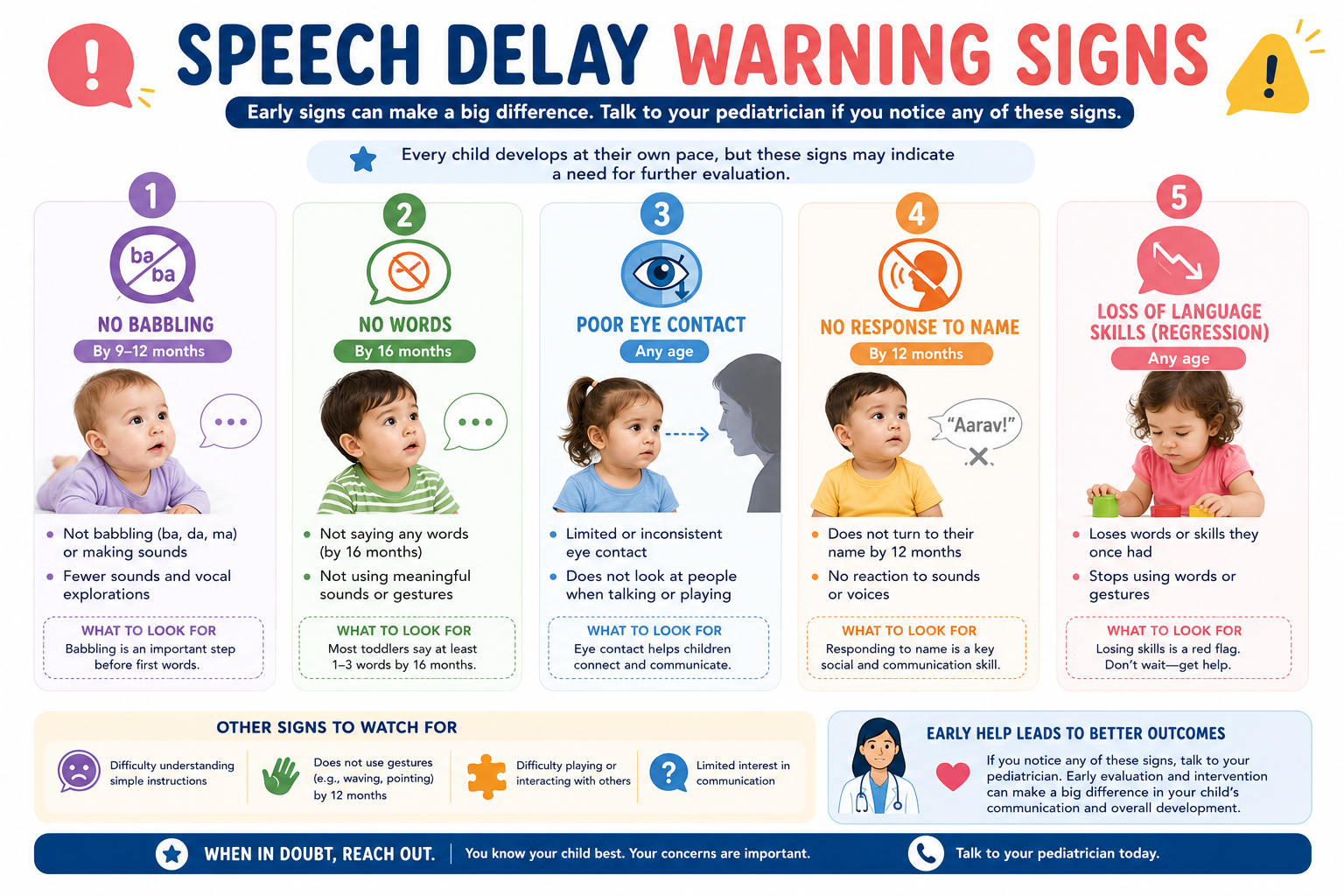
Every child develops speech and language skills at their own pace, and small variations in development are common. However, certain warning signs—often called “red flags”—may indicate that a child needs a comprehensive developmental evaluation. Recognizing these signs early is important because they may be the first indication of hearing impairment, Autism Spectrum Disorder, Developmental Delay, Specific Language Disorder, intellectual disability, epilepsy, genetic disorders, or other neurological conditions.
Parents know their child better than anyone else. If you feel your child’s communication is not progressing as expected, it is always appropriate to seek professional advice. Early identification and intervention during the first five years of life, when the brain is most adaptable, can significantly improve speech, language, learning, and social development.
At Dr. Sunil Sable’s Pediatric Neurology Centre, Ahilyanagar (Ahmednagar), Maharashtra, Dr. Sunil Sable, Pediatric Neurologist & Epilepsy Specialist, performs comprehensive developmental and neurological assessments to identify the underlying cause of speech delay and recommend individualized treatment plans.
No Babbling by Around 9 Months
Babbling is one of the earliest signs of normal speech development. Babies typically begin producing repetitive sounds such as “ba-ba,” “da-da,” or “ma-ma” between six and nine months of age.
If your baby:
- Does not babble,
- Makes very few speech sounds,
- Rarely vocalizes during play, or
- Does not imitate sounds,
a developmental evaluation is recommended. Delayed babbling may be associated with hearing loss, developmental delay, autism, or other neurological conditions.
No Consistent Response to Their Name by Around 9–12 Months
By the end of the first year, most babies consistently turn toward parents or caregivers when their name is called.
A child who:
- Rarely responds to their name,
- Appears unaware when spoken to,
- Responds only occasionally, or
- Seems to hear some sounds but ignores voices,
should undergo further assessment.
This does not always mean autism. Hearing impairment, attention difficulties, or developmental delay can also reduce responsiveness, making a hearing evaluation and developmental assessment essential.
No Pointing or Meaningful Gestures by Around 12 Months
Pointing is an important communication milestone that develops before fluent speech.
Most children begin to:
- Point to request objects,
- Point to share interests,
- Wave goodbye,
- Clap,
- Reach to be picked up,
- Use gestures along with facial expressions.
A child who does not point or use meaningful gestures by around one year of age may have delayed communication development and should be evaluated.
No Meaningful Words by Around 15–18 Months
Most toddlers begin using meaningful words during the second year of life.
Examples include:
- Mama
- Dada
- Ball
- Water
- Bye-bye
If a child has no meaningful words by approximately 15–18 months, or only makes sounds without communicating meaningfully, a comprehensive speech and developmental assessment is recommended.
Possible causes include:
- Hearing impairment
- Speech and language delay
- Autism Spectrum Disorder
- Developmental Delay
- Intellectual disability
- Neurological disorders
No Two-Word Phrases by Around 2 Years
By approximately 24 months, most children begin combining two meaningful words such as:
- “Mama come”
- “Want water”
- “Daddy go”
- “More milk”
If your child is not combining two words by around two years of age, further evaluation should not be delayed.
This milestone is one of the most important indicators of expressive language development.
Loss of Previously Acquired Speech or Language Skills (Regression)
One of the most significant warning signs is developmental regression.
Parents should seek immediate medical evaluation if a child:
- Stops using words they previously knew.
- Speaks less than before.
- Loses social interaction.
- Stops waving or pointing.
- Becomes less responsive to people.
Regression is never considered a normal part of development. It requires prompt assessment because it may be associated with autism, epilepsy, neurodegenerative disorders, metabolic diseases, or other neurological conditions.
Poor Eye Contact and Limited Social Interaction
Communication is much more than talking.
Children normally:
- Look at parents while communicating.
- Smile back.
- Share enjoyment.
- Show toys to parents.
- Seek attention.
- Follow another person’s gaze.
- Engage in simple social games.
Poor eye contact, reduced social interaction, or limited interest in communicating with others may indicate a developmental concern and should be evaluated alongside speech delay.
Poor Understanding of Language
Some children speak very little because they have difficulty understanding language rather than producing speech.
Warning signs include:
- Not following simple instructions.
- Difficulty understanding familiar words.
- Looking confused when spoken to.
- Needing repeated explanations.
- Difficulty identifying familiar objects when named.
- Limited response to everyday conversation despite normal hearing.
Children who have poor understanding of language often require a comprehensive assessment of receptive language development.
Other Warning Signs Parents Should Not Ignore
In addition to delayed speech, parents should seek medical advice if their child:
- Has difficulty chewing or swallowing.
- Frequently drools beyond the expected age.
- Has seizures or episodes of staring.
- Shows significant delays in sitting, walking, or other developmental milestones.
- Has hearing concerns or recurrent ear infections.
- Has poor attention or extreme hyperactivity.
- Avoids interacting with other children.
- Has a family history of developmental or genetic disorders.
These findings may indicate an underlying neurological or developmental condition that requires further evaluation.
When Should Parents Consult a Pediatric Neurologist?
If your child has one or more of these red flags, it is advisable not to adopt a “wait and see” approach. While some children are naturally late talkers, others may have an underlying condition that benefits greatly from early diagnosis and intervention.
At Dr. Sunil Sable’s Pediatric Neurology and Cardiology Centre, Ahilyanagar (Ahmednagar), Maharashtra, Dr. Sunil Sable, Pediatric Neurologist & Epilepsy Specialist, provides comprehensive evaluation for children with speech delay, developmental delay, autism, ADHD, epilepsy, cerebral palsy, and other neurodevelopmental disorders. The assessment includes a detailed developmental history, neurological examination, hearing evaluation, developmental screening, and further investigations when clinically indicated.
Early diagnosis, active parent participation, and evidence-based intervention provide the best opportunity for children to develop strong communication skills, succeed in school, and reach their full developmental potential.
Causes of Speech Delay
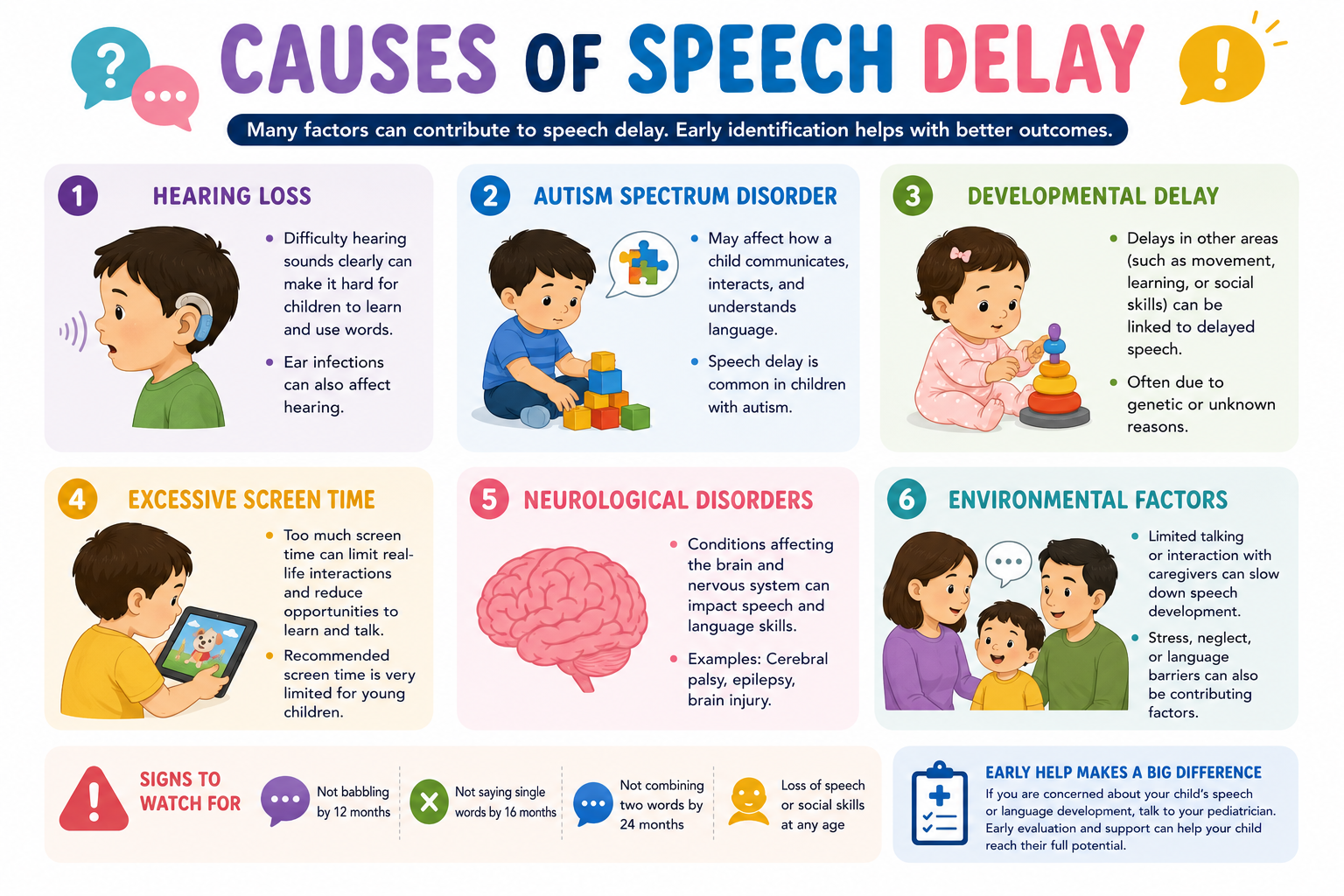
Speech delay is one of the most common developmental concerns during early childhood. It is important to understand that speech delay is not a disease itself but a sign that a child may need further evaluation. Some children are simply late talkers and eventually catch up, while others have an underlying developmental, neurological, hearing, genetic, or medical condition that requires early intervention.
Speech and language development depends on many parts of the brain working together. Children must be able to hear sounds clearly, understand language, remember words, plan speech movements, and interact socially with others. A problem affecting any of these areas can delay speech development.
At Dr. Sunil Sable’s Pediatric Neurology Centre, Ahilyanagar (Ahmednagar), Maharashtra, Dr. Sunil Sable, Pediatric Neurologist & Epilepsy Specialist, performs a comprehensive evaluation to identify the underlying cause of speech delay and develop an individualized treatment plan. Early diagnosis is essential because the treatment for hearing loss differs from that for autism, developmental delay, epilepsy, or other neurological conditions.
Normal Variation (Late Talkers)
Not every child who speaks late has a developmental disorder.
Some children, often called late talkers, have delayed expressive speech but otherwise show normal understanding, social interaction, hearing, and developmental milestones. These children may begin speaking later than their peers and eventually catch up, especially with a language-rich home environment.
However, because it is difficult to predict which children will catch up naturally, persistent speech delay should always be evaluated rather than adopting a prolonged “wait and see” approach.
Hearing Impairment
Normal hearing is essential for speech and language development. Babies learn to speak by listening to the voices of parents and other caregivers.
Children with hearing impairment may:
- Not respond consistently to their name.
- Have delayed babbling.
- Speak very few words.
- Mispronounce words.
- Have difficulty following verbal instructions.
- Seem inattentive despite trying to communicate.
Even mild or moderate hearing loss can significantly affect speech development. Every child with speech delay should undergo a formal hearing assessment, including tests such as Otoacoustic Emissions (OAE) or Brainstem Evoked Response Audiometry (BERA/ABR) when appropriate.
Autism Spectrum Disorder (ASD)
Speech delay is often one of the earliest signs of Autism Spectrum Disorder (ASD), although not every child with delayed speech has autism.
Children with autism may also have:
- Poor eye contact.
- Limited use of gestures such as pointing or waving.
- Reduced social interaction.
- Difficulty responding to their name.
- Repetitive behaviours.
- Restricted interests.
- Delayed or absent pretend play.
Because early intervention greatly improves outcomes, children with speech delay and concerns about social communication should undergo autism screening and developmental assessment.
Developmental Delay
Speech development is closely linked to overall brain development. Children with developmental delay often achieve multiple milestones later than expected, including speech, language, motor skills, and social interaction.
A child with developmental delay may also have:
- Delayed sitting or walking.
- Difficulty learning new skills.
- Poor problem-solving abilities.
- Slow acquisition of language.
- Delayed self-help skills.
Early developmental assessment allows appropriate therapies to begin during the most important years of brain development.
Global Developmental Delay (GDD)
Global Developmental Delay is diagnosed when children younger than five years show significant delays in two or more developmental domains, including speech and language, motor skills, cognition, social development, or adaptive behaviour.
Speech delay is frequently the first concern noticed by parents, but careful evaluation often reveals delays in other developmental areas as well. Identifying GDD early helps guide investigations such as genetic testing or metabolic evaluation and allows comprehensive intervention.
Intellectual Disability
Children with intellectual disability usually experience delays in learning, reasoning, problem-solving, adaptive behaviour, and communication.
Speech delay in these children is often accompanied by:
- Delayed understanding of language.
- Slow learning.
- Difficulty following instructions.
- Delayed academic skills.
- Reduced independence in daily activities.
A comprehensive developmental and cognitive assessment helps distinguish intellectual disability from isolated speech delay or Specific Language Disorder.
cognition, social development, or adaptive behaviour.
Speech delay is frequently the first concern noticed by parents, but careful evaluation often reveals delays in other developmental areas as well. Identifying GDD early helps guide investigations such as genetic testing or metabolic evaluation and allows comprehensive intervention.
Developmental Language Disorder (Specific Language Disorder)
Some children have difficulty developing language despite normal hearing, normal intelligence, and no evidence of autism or another neurological condition. This is known as Developmental Language Disorder (DLD).
Children with DLD may:
- Speak later than expected.
- Use short or grammatically incorrect sentences.
- Have difficulty learning new words.
- Struggle to understand complex language.
- Experience reading and learning difficulties later in school.
Speech and language therapy plays a central role in treatment.
Attention-Deficit/Hyperactivity Disorder (ADHD)
Although ADHD is primarily a disorder of attention and executive functioning, many children with ADHD also experience speech and language challenges.
They may:
- Have difficulty listening carefully.
- Interrupt conversations.
- Miss important information.
- Struggle to organize thoughts before speaking.
- Have delayed language development.
Recognizing ADHD early helps improve communication, learning, and classroom performance through appropriate behavioural strategies and treatment.
Neurological Disorders
Several neurological conditions can affect speech and language development by interfering with brain function, muscle control, or communication pathways.
Examples include:
- Neurodevelopmental disorders.
- Neuromuscular disorders.
- Brain malformations.
- Neurogenetic conditions.
- Rare metabolic disorders.
Because speech development depends on healthy brain function, children with persistent speech delay should receive a thorough neurological evaluation when indicated.
Cerebral Palsy
Children with cerebral palsy may experience speech delay because of difficulties controlling the muscles involved in speech, swallowing, and facial movements.
Speech difficulties may result from:
- Weakness or stiffness of facial muscles.
- Poor coordination of speech muscles.
- Associated hearing or cognitive difficulties.
- Delayed motor development.
Early speech therapy and multidisciplinary rehabilitation can improve communication and quality of life.
Prematurity
Babies born prematurely have a higher risk of speech, language, and developmental delays because important stages of brain development occur during the final weeks of pregnancy.
Premature children may experience:
- Delayed language development.
- Attention difficulties.
- Learning problems.
- Executive function challenges.
Regular developmental follow-up allows speech and language concerns to be identified early.
Brain Injury
Speech delay may occur following brain injury before, during, or after birth.
Possible causes include:
- Birth-related oxygen deprivation.
- Stroke.
- Severe head injury.
- Brain infections such as meningitis or encephalitis.
The severity of speech impairment depends on the location and extent of brain involvement. Early rehabilitation can help maximize recovery.
Genetic Disorders
Many genetic conditions can affect speech and language development.
Examples include:
- Down syndrome.
- Fragile X syndrome.
- Rett syndrome.
- Angelman syndrome.
- Chromosomal abnormalities.
- Single-gene disorders affecting brain development.
Children with speech delay accompanied by developmental delay, epilepsy, unusual physical features, or a family history of similar problems may benefit from genetic evaluation.
Epilepsy
Some children with epilepsy experience speech and language difficulties because of the underlying brain condition, frequent seizures, or, less commonly, the effects of certain anti-seizure medications.
Speech delay is more likely when:
- Seizures begin during infancy.
- Epilepsy is difficult to control.
- There are associated developmental concerns.
- The child has an epilepsy syndrome affecting language development.
Early diagnosis and appropriate seizure management are important for supporting overall brain development.
Environmental Deprivation
Children learn language through frequent interaction with parents, siblings, and caregivers.
Limited opportunities for communication—such as reduced conversation, minimal reading, or lack of interactive play—may contribute to delayed language development.
Parents can support speech development by:
- Talking throughout daily routines.
- Reading books together.
- Singing songs.
- Encouraging pretend play.
- Responding to the child’s attempts to communicate.
A rich language environment promotes healthy communication and learning.
Excessive Screen Time
Excessive screen exposure has become an increasingly common concern in early childhood.
When young children spend long periods watching television or using mobile phones and tablets, they often lose valuable opportunities for face-to-face interaction and conversation, which are essential for language development.
Research suggests that excessive screen time may be associated with:
- Delayed speech and language development.
- Reduced vocabulary growth.
- Poor attention.
- Limited social interaction.
- Fewer opportunities for conversational learning.
The American Academy of Pediatrics (AAP) recommends prioritizing interactive play and direct communication with caregivers over passive screen exposure, particularly in children younger than two years.
Does Growing Up in a Bilingual Home Cause Speech Delay?
A common myth is that learning two languages causes speech delay. Current scientific evidence does not support this belief.
Children raised in bilingual or multilingual families may divide their vocabulary between languages or occasionally mix words from different languages during normal development. This is a typical part of bilingual language learning and does not cause speech delay.
If a child has delayed speech in both languages, an underlying speech or language disorder should be considered. Families should continue speaking the language they are most comfortable using, as rich, meaningful interaction is far more important than limiting the child to one language.
Identifying the Cause Is the Key to Effective Treatment
Because speech delay has many possible causes, no single treatment is suitable for every child. A careful evaluation helps determine whether the delay is related to hearing impairment, autism, developmental delay, Developmental Language Disorder, ADHD, epilepsy, cerebral palsy, genetic conditions, or another neurological disorder.
At Dr. Sunil Sable’s Pediatric Neurology and Cardiology Centre, Ahilyanagar (Ahmednagar), Maharashtra, Dr. Sunil Sable, Pediatric Neurologist & Epilepsy Specialist, provides comprehensive developmental and neurological assessments to identify the underlying cause of speech delay. Based on the findings, an individualized management plan is developed in collaboration with speech-language pathologists, occupational therapists, psychologists, educators, and families. With early diagnosis, evidence-based intervention, and active parent participation, many children make remarkable progress in communication, learning, and overall development.
Difference Between Speech Delay and Language Delay
Many parents use the terms speech delay and language delay interchangeably, but they describe two different aspects of communication. Understanding this difference is important because the underlying causes, evaluation, and treatment may vary.
Speech refers to how a child produces sounds and words. It involves the physical ability to move the lips, tongue, jaw, palate, vocal cords, and breathing muscles to form clear speech.
Language refers to how a child understands and uses communication. It includes understanding spoken words (receptive language) and expressing thoughts, needs, feelings, and ideas using words, gestures, or sentences (expressive language).
Some children have only a speech delay, some have only a language delay, and many have both. A comprehensive developmental assessment helps identify which communication skills are affected and whether there is an associated neurological or developmental condition.
At Dr. Sunil Sable’s Pediatric Neurology Centre, Ahilyanagar (Ahmednagar), Maharashtra, Dr. Sunil Sable, Pediatric Neurologist & Epilepsy Specialist, performs detailed developmental and neurological evaluations to determine whether a child has a speech delay, a language delay, or another condition such as Autism Spectrum Disorder, Developmental Delay, hearing impairment, ADHD, or epilepsy.
Speech Delay vs Language Delay
| Speech Delay | Language Delay |
|---|---|
| Affects the production of speech sounds. | Affects the understanding and/or use of language. |
| The child knows what they want to say but has difficulty saying the words clearly. | The child has difficulty understanding language, expressing ideas, or both. |
| Common problems include unclear speech, sound substitutions, omissions, or poor pronunciation. | Common problems include a limited vocabulary, difficulty following instructions, poor sentence formation, and reduced comprehension. |
| Children usually understand spoken language appropriate for their age. | Children may have difficulty understanding questions, instructions, stories, or conversations. |
| Social interaction is generally appropriate if language understanding is normal. | Communication with parents, teachers, and peers may be affected because understanding and expression are impaired. |
| Often related to speech sound disorders, oral-motor difficulties, hearing impairment, or neurological conditions. | May be associated with Developmental Language Disorder, Autism Spectrum Disorder, Developmental Delay, hearing impairment, intellectual disability, or other neurodevelopmental conditions. |
| Treatment focuses on improving speech clarity and speech sound production. | Treatment focuses on improving understanding, vocabulary, sentence formation, communication, and overall language skills. |
| Speech-language therapy is the primary treatment. | Speech-language therapy, developmental intervention, parent training, and management of any underlying condition are often required. |
What Is Expressive Language Delay?
Children with expressive language delay understand much of what is said to them but have difficulty expressing themselves using words and sentences.
Parents commonly say:
- “My child understands everything but doesn’t talk.”
- “He points to what he wants but doesn’t say the words.”
- “She knows what she wants but cannot express it.”
Children with expressive language delay may:
- Use very few words for their age.
- Speak later than expected.
- Have difficulty combining words into sentences.
- Struggle to name familiar objects.
- Become frustrated because they cannot communicate effectively.
With early speech and language therapy and active parent involvement, many children make significant progress.
What Is Receptive Language Delay?
Children with receptive language delay have difficulty understanding spoken language.
They may:
- Not follow simple instructions.
- Seem not to understand familiar words.
- Need repeated explanations.
- Have difficulty answering questions.
- Appear inattentive even though their hearing is normal.
- Struggle to understand stories or classroom teaching.
Because understanding language is the foundation for speaking, children with receptive language delay often also have expressive language difficulties.
Can a Child Have Both Speech and Language Delay?
Yes. Many children experience both speech and language delay at the same time.
For example, a child may:
- Have unclear speech.
- Speak only a few words.
- Find it difficult to understand instructions.
- Struggle to communicate with family members.
- Have delayed social communication.
This combination is commonly seen in children with Autism Spectrum Disorder, Developmental Delay, hearing impairment, intellectual disability, or certain neurological and genetic conditions.
Why Is the Difference Important?
Knowing whether a child has a speech delay, a language delay, or both helps determine the most appropriate treatment plan.
At Dr. Sunil Sable’s Pediatric Neurology and Cardiology Centre, Ahilyanagar (Ahmednagar), Maharashtra, Dr. Sunil Sable, Pediatric Neurologist & Epilepsy Specialist, conducts a comprehensive assessment that includes developmental history, neurological examination, hearing evaluation, language assessment, and screening for associated conditions such as Autism Spectrum Disorder, ADHD, Developmental Delay, epilepsy, and hearing impairment.
Early diagnosis allows children to receive the right intervention at the right time. With individualized therapy, family participation, and evidence-based care, many children develop stronger communication skills, improved confidence, and better readiness for school and everyday life.
How Is Speech Delay Diagnosed?
A Comprehensive Evaluation Helps Identify the Underlying Cause of Speech Delay
Not all children with speech delay have the same underlying cause. Some children are simply late talkers, while others may have hearing impairment, Autism Spectrum Disorder (ASD), Developmental Delay, Intellectual Disability, neurological disorders, or other medical conditions affecting communication. Identifying the cause of speech delay is essential because treatment and long-term outcomes vary depending on the diagnosis.
At Dr. Sunil Sable Pediatric Neurology & Cardiology Centre, Dr. Sunil Sable, Pediatric Neurologist & Epilepsy Specialist, Ahilyanagar (Ahmednagar), Maharashtra, performs a comprehensive developmental and neurological evaluation to understand your child’s speech, language, communication, and overall development before recommending an individualized management plan.
Developmental and Medical History
The evaluation begins with a detailed discussion about your child’s development, pregnancy and birth history, developmental milestones, medical illnesses, family history, and language environment. Parents are also asked about speech development, social interaction, play skills, screen time, and behavioural concerns.
Speech and Language Assessment
A detailed speech and language evaluation helps determine whether the child has:
- Speech delay
- Language delay
- Expressive language difficulties
- Receptive language difficulties
- Articulation problems
- Communication difficulties
The child’s vocabulary, sentence formation, pronunciation, ability to understand instructions, and social communication skills are carefully assessed.
Developmental Assessment
Speech delay may be part of a broader developmental concern. A developmental assessment evaluates multiple areas of development, including:
- Gross motor skills
- Fine motor skills
- Speech and language
- Cognitive development
- Social interaction
- Adaptive and self-help skills
This helps determine whether the child has an isolated speech delay or a more generalized developmental delay.
Neurological Examination
A Pediatric Neurologist performs a detailed neurological examination to assess:
- Muscle tone and strength
- Reflexes
- Coordination
- Walking and balance
- Cranial nerve function
- Signs of cerebral palsy or neuromuscular disorders
This examination helps identify neurological conditions that may contribute to delayed speech and language development.
Hearing Assessment
Normal hearing is essential for speech and language development. Even mild hearing loss can affect a child’s ability to learn words and communicate effectively.
Depending on the child’s age, hearing tests may include:
- Otoacoustic Emissions (OAE)
- Brainstem Evoked Response Audiometry (BERA/ABR)
- Pure Tone Audiometry (for older children)
Early detection of hearing impairment allows timely intervention and improves language outcomes.
Autism Screening
Children with speech delay are also evaluated for features of Autism Spectrum Disorder (ASD), particularly if they have:
- Poor eye contact
- Limited response to their name
- Delayed social interaction
- Repetitive behaviours
- Restricted interests
- Difficulty with joint attention
Identifying autism early allows children to benefit from timely intervention and specialized therapies.
Cognitive and Psychological Assessment
Some children may require formal developmental or psychological testing to evaluate:
- Intellectual functioning
- Learning abilities
- Memory
- Attention
- Problem-solving skills
- School readiness
These assessments help guide educational planning and individualized intervention.
Vision Assessment
Although vision problems are less commonly associated with speech delay than hearing loss, visual difficulties can affect communication, learning, and overall development. A vision assessment may be recommended if there are concerns about visual development.
MRI Brain (When Indicated)
MRI of the brain is not necessary for every child with speech delay. It may be advised when there are:
- Abnormal neurological findings
- Developmental regression
- Cerebral palsy
- Brain malformations
- Significant motor delays
- Suspected structural brain abnormalities
MRI provides detailed images of the brain and helps identify structural causes of developmental concerns.
Genetic Testing
Genetic testing may be recommended when speech delay is associated with:
- Global developmental delay
- Intellectual disability
- Autism Spectrum Disorder
- Dysmorphic features
- Multiple congenital anomalies
- A strong family history of developmental disorders
Tests may include Chromosomal Microarray (CMA), Fragile X testing, or Whole Exome Sequencing (WES), depending on the child’s clinical presentation.
Metabolic Evaluation
A metabolic work-up is considered in selected children when there are concerns such as:
- Developmental regression
- Recurrent vomiting
- Poor growth
- Seizures
- Low muscle tone
- Family history of inherited metabolic disorders
Early identification of treatable metabolic conditions can significantly improve outcomes.
Individualized Diagnosis and Management
After completing the evaluation, Dr. Sunil Sable, Pediatric Neurologist & Epilepsy Specialist, Ahilyanagar (Ahmednagar), Maharashtra, discusses the findings with the family and develops a personalized management plan. Depending on the diagnosis, this may include speech and language therapy, developmental intervention, hearing management, behavioural therapy, occupational therapy, physiotherapy, educational support, or treatment of any underlying neurological or medical condition.
Early and accurate diagnosis is the foundation of effective treatment. Identifying the underlying cause of speech delay allows children to receive the right intervention at the right time, giving them the best opportunity to develop communication, learning, and social skills
Conditions Associated with Speech Delay
Speech Delay May Be a Sign of an Underlying Developmental or Neurological Condition
Speech delay is a symptom rather than a diagnosis. While some children are simply “late talkers,” others may have an underlying developmental, neurological, hearing, or genetic condition affecting speech and language development. Identifying the underlying cause is essential because early diagnosis and targeted intervention can significantly improve communication, learning, and long-term outcomes.
At Dr. Sunil Sable Pediatric Neurology & Cardiology Centre, Dr. Sunil Sable, Pediatric Neurologist & Epilepsy Specialist, Ahilyanagar (Ahmednagar), Maharashtra, performs a comprehensive evaluation to determine whether speech delay is an isolated concern or part of a broader developmental condition.
🧩 Autism Spectrum Disorder (ASD)
Speech delay is one of the most common early signs of Autism Spectrum Disorder (ASD). Children with autism may also have poor eye contact, reduced response to their name, difficulty with social communication, repetitive behaviours, and restricted interests. Early identification allows children to benefit from evidence-based therapies and developmental support.
👉 Read more: Autism Spectrum Disorder
👉 Visit: Autism Clinic
👉 Watch Videos: Autism Videos
👶 Developmental Delay
Some children experience delays in multiple areas of development, including speech, motor skills, cognition, and social interaction. When speech delay occurs along with delays in other developmental milestones, a comprehensive developmental assessment is recommended to identify the cause and plan appropriate intervention.
👉 Read more: Developmental Delay
👉 Visit: Child Development Clinic
🌍 Global Developmental Delay (GDD)
Global Developmental Delay is diagnosed in young children who have significant delays in two or more developmental domains, such as speech and language, motor skills, cognition, and adaptive behaviour. These children often require multidisciplinary care, early intervention, and long-term developmental follow-up.
👉 Read more: Global Developmental Delay
👂 Hearing Impairment
Normal hearing is essential for speech and language development. Even mild or moderate hearing loss can affect a child’s ability to hear words, imitate sounds, and develop communication skills. Every child with significant speech delay should undergo an appropriate hearing assessment.
👉 Read more: Hearing Assessment for Children
🧠 Intellectual Disability
Children with intellectual disability often have delays in speech, language, learning, problem-solving, and adaptive functioning. Early developmental assessment helps identify their strengths and support needs, allowing individualized educational and therapeutic planning.
👉 Read more: Intellectual Disability
🎯 Attention-Deficit/Hyperactivity Disorder (ADHD)
Although ADHD does not usually cause speech delay directly, children with ADHD may have difficulties with attention, listening, language organization, and communication. ADHD can also coexist with speech and language disorders, making comprehensive assessment important.
👉 Read more: ADHD in Children
👉 Visit: ADHD Assessment Clinic
🧠 Neurological Disorders
Various neurological conditions can affect speech development, including epilepsy, cerebral palsy, acquired brain injury, and certain neurodevelopmental disorders. Some children may also experience regression of previously acquired speech following neurological illness or seizures.
👉 Read more: Pediatric Neurology Services
🚶 Cerebral Palsy
Children with cerebral palsy may experience speech and language difficulties because of challenges with muscle control, coordination, hearing, cognition, or associated developmental conditions. Early multidisciplinary rehabilitation can improve communication and functional independence.
👉 Read more: Cerebral Palsy
🧬 Genetic Disorders
Several genetic conditions, including Down syndrome, Fragile X syndrome, Rett syndrome, Angelman syndrome, and other chromosomal disorders, can be associated with delayed speech and language development. Genetic evaluation may be recommended when speech delay is accompanied by developmental delay, congenital anomalies, or a significant family history.
👉 Read more: Genetic Disorders in Children
👄 Developmental Language Disorder (DLD)
Some children have persistent language difficulties despite normal intelligence, hearing, and social interaction. Developmental Language Disorder primarily affects language understanding and expression and usually requires speech-language therapy and educational support.
👉 Read more: Language Delay in Children
📱 Excessive Screen Time (Virtual Autism-like Features)
Excessive screen exposure during early childhood may contribute to delayed language development, reduced social interaction, and limited communication opportunities. Reducing screen time and encouraging interactive play and parent-child communication are important parts of healthy language development.
👉 Read more: Healthy Screen Time for Children
Early Identification Makes a Difference
Not every child with speech delay has the same diagnosis, and not every child requires the same treatment. A careful evaluation helps identify the underlying cause and guides the most appropriate therapy and support.
If your child has delayed speech, poor eye contact, difficulty understanding language, developmental concerns, or regression of previously acquired skills, consult Dr. Sunil Sable, Pediatric Neurologist & Epilepsy Specialist, Ahilyanagar (Ahmednagar), Maharashtra, for a comprehensive developmental and neurological assessment. Early diagnosis and evidence-based intervention can significantly improve your child’s communication, learning, and overall development.
Treatment for Speech Delay
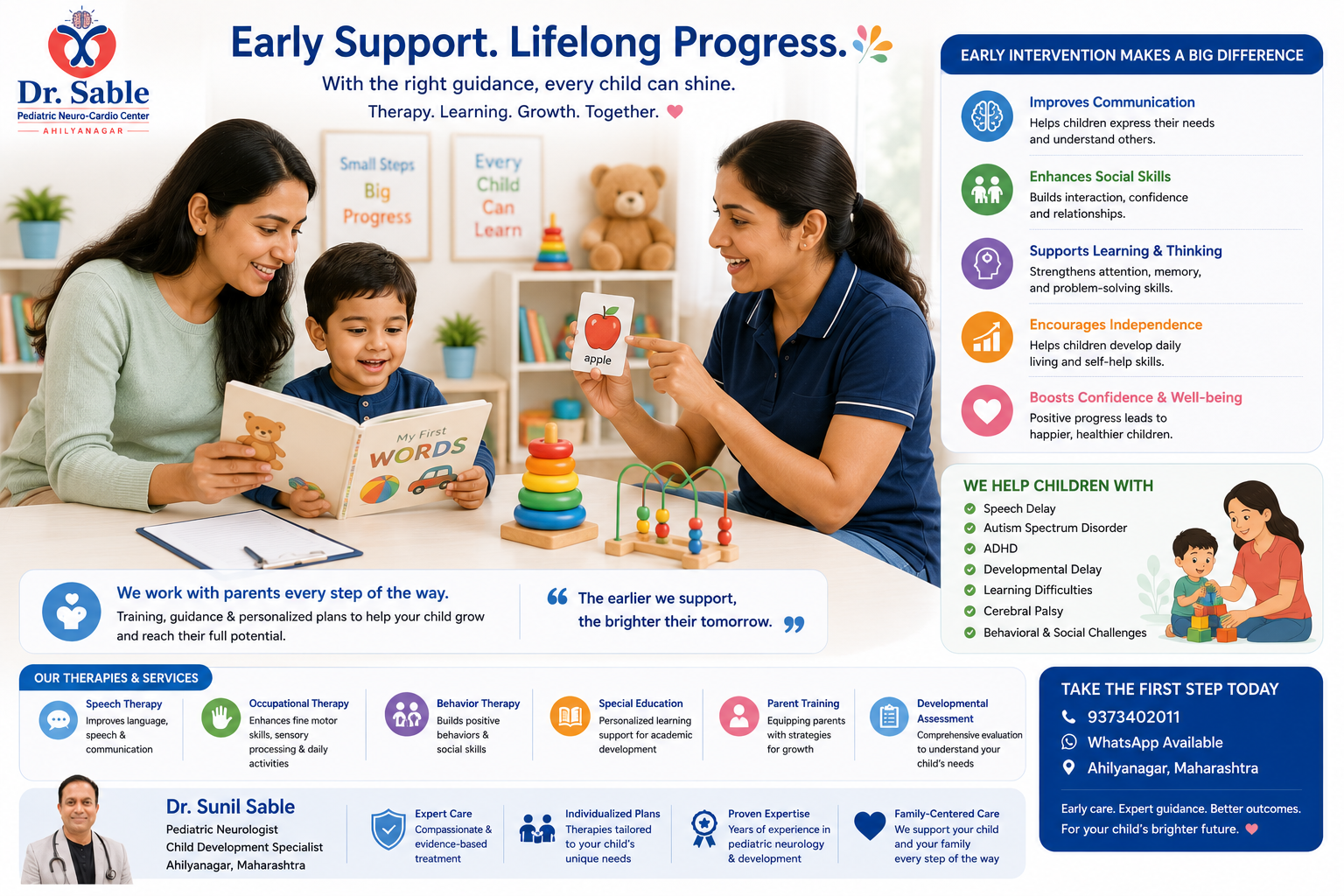
Early Intervention Gives Children the Best Opportunity to Develop Communication Skills
The treatment of speech delay depends on its underlying cause, the child’s age, and the severity of the communication difficulty. Every child is unique, and there is no one-size-fits-all approach. Some children may simply require speech and language stimulation, while others benefit from a multidisciplinary intervention plan involving speech therapists, occupational therapists, physiotherapists, psychologists, educators, and a Pediatric Neurologist.
At Dr. Sunil Sable Pediatric Neurology & Cardiology Centre, Dr. Sunil Sable, Pediatric Neurologist & Epilepsy Specialist, Ahilyanagar (Ahmednagar), Maharashtra, provides comprehensive evaluation and individualized treatment plans based on each child’s developmental needs. The primary goal is to help children develop effective communication, improve learning, and achieve their maximum developmental potential.
Early Intervention
Early intervention is the cornerstone of successful speech delay management. The first five years of life are a period of rapid brain development, during which children respond exceptionally well to therapy and structured learning experiences.
Starting intervention as soon as speech delay is recognized can significantly improve language development, communication skills, social interaction, school readiness, and long-term independence. Parents should not adopt a “wait and watch” approach when significant developmental concerns are present.
Speech and Language Therapy
Speech and language therapy is the most important treatment for children with speech delay. A qualified speech-language pathologist evaluates the child’s communication abilities and develops an individualized therapy program.
Speech therapy focuses on improving:
- Expressive language
- Receptive language
- Vocabulary development
- Sentence formation
- Pronunciation and articulation
- Social communication
- Listening skills
- Non-verbal communication
Parents are encouraged to actively participate in therapy because regular practice at home greatly enhances progress.
Parent Training and Home-Based Language Stimulation
Parents are a child’s first and most important teachers. Daily interaction at home plays a crucial role in language development.
Simple activities include:
- Talking to your child throughout the day
- Reading storybooks together
- Singing rhymes and songs
- Naming everyday objects
- Encouraging conversation during play
- Asking simple open-ended questions
- Giving your child time to respond
- Praising every communication attempt
Consistent parent involvement helps reinforce the skills learned during therapy.
Occupational Therapy
Some children with speech delay also experience difficulties with sensory processing, attention, play skills, fine motor coordination, or daily living activities.
Occupational therapy may help improve:
- Sensory regulation
- Attention and concentration
- Play skills
- Fine motor development
- Self-care skills
- Social participation
This is particularly beneficial for children with Autism Spectrum Disorder, Developmental Delay, or sensory processing challenges.
Behavioural Therapy
Children who have autism or behavioural difficulties may benefit from behavioural interventions that improve communication, attention, social interaction, emotional regulation, and adaptive behaviour.
Behavioural therapy complements speech therapy by encouraging positive communication and reducing behaviours that interfere with learning.
Special Education and School Support
Some children require individualized educational strategies to support language development within the classroom.
This may include:
- Individualized Education Plans (IEPs)
- Classroom accommodations
- Language enrichment activities
- Visual learning supports
- Teacher collaboration
- School-based therapy services
Close communication between parents, therapists, and teachers ensures consistent learning across home and school environments.
Hearing Management
If hearing impairment is identified, early treatment is essential for speech and language development.
Management may include:
- Hearing aids
- Cochlear implantation (when appropriate)
- Medical or surgical treatment of ear disorders
- Auditory rehabilitation
- Ongoing speech and language therapy
Timely intervention can significantly improve communication outcomes.
Treatment of Underlying Medical Conditions
Speech delay is sometimes associated with neurological or developmental conditions that require additional management.
Depending on the diagnosis, treatment may include:
- Management of epilepsy
- Autism intervention programs
- ADHD management
- Treatment of cerebral palsy
- Genetic counselling
- Management of metabolic disorders
- Nutritional assessment and support
Treating the underlying condition is an important part of improving overall development.
Nutritional Support
Good nutrition supports healthy brain development and learning. Children with feeding difficulties or selective eating may require nutritional assessment to ensure adequate intake of calories, protein, vitamins, and minerals.
Families should be cautious about unproven diets or supplements marketed as treatments for speech delay. Dietary interventions should always be guided by qualified healthcare professionals.
Regular Developmental Follow-Up
Speech and language development should be monitored regularly to assess progress and modify therapy goals as needed.
During follow-up visits, Dr. Sunil Sable evaluates:
- Improvement in speech and language skills
- Developmental milestones
- Social communication
- Learning abilities
- Behaviour
- School performance
- Response to therapy
Regular review allows timely adjustments to the treatment plan and ensures that children continue to make meaningful developmental progress.
Family-Centred, Multidisciplinary Care
Successful treatment of speech delay requires collaboration between families and healthcare professionals. Parents, speech-language pathologists, occupational therapists, psychologists, teachers, and pediatric specialists each play an important role in helping a child develop communication skills and reach their full potential.
At Dr. Sunil Sable Pediatric Neurology & Cardiology Centre, every child receives a personalized, evidence-based management plan designed to address their individual strengths and challenges while supporting the entire family’s journey.
Key Takeaway
Speech delay is highly treatable, especially when identified early. With timely evaluation, appropriate therapy, active parent participation, and regular developmental follow-up, many children make significant progress in communication, learning, and social interaction.
If your child has delayed speech, difficulty understanding language, poor communication, or developmental concerns, consult Dr. Sunil Sable, Pediatric Neurologist & Epilepsy Specialist, Ahilyanagar (Ahmednagar), Maharashtra, for a comprehensive evaluation and an individualized treatment plan.
Speech Therapy and Parent Involvement
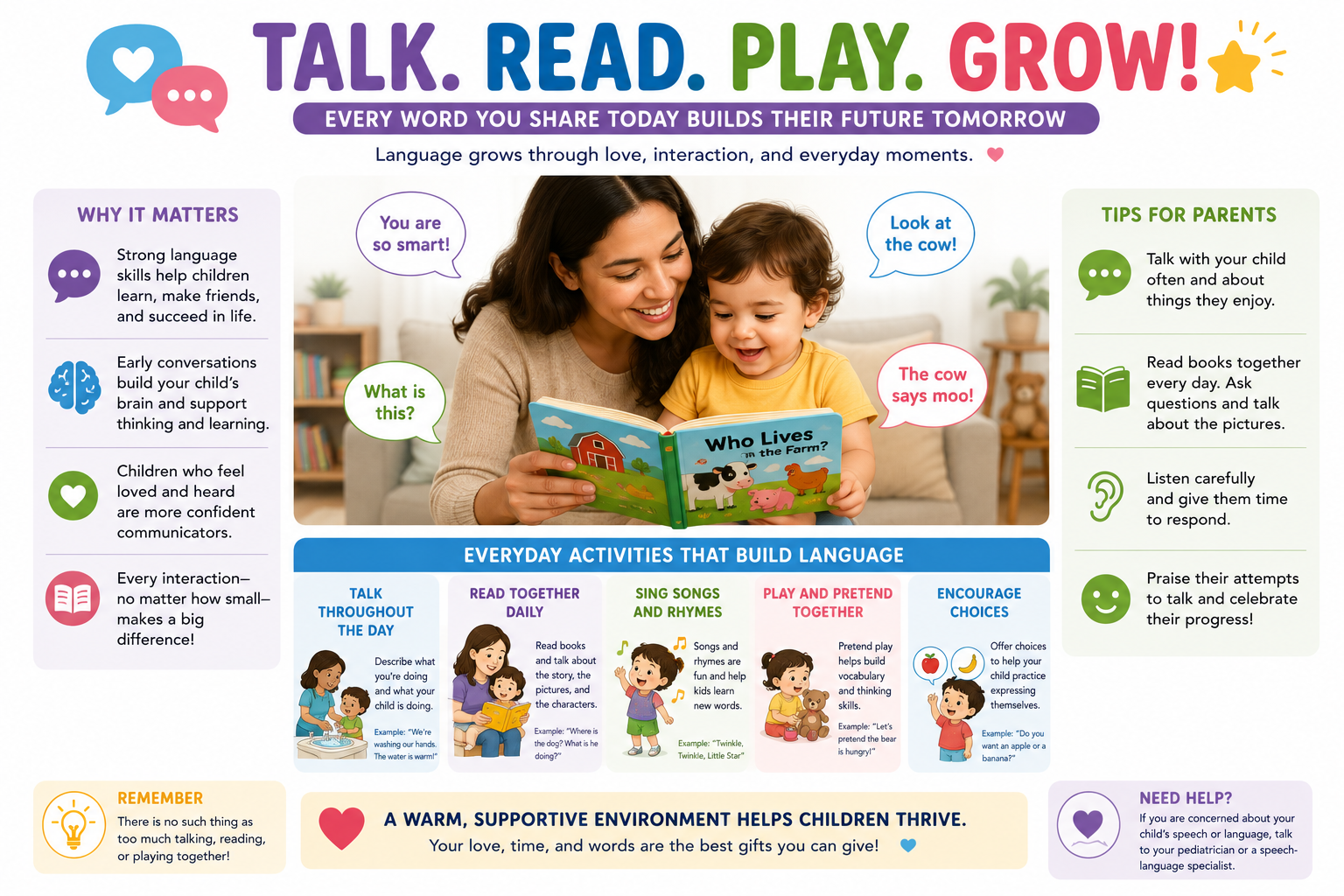
Parents Are the Most Important Partners in a Child’s Communication Journey
Speech therapy is one of the most effective treatments for children with speech delay. However, therapy sessions alone are not enough. A child spends only a small amount of time each week with a speech-language pathologist, while parents and family members interact with the child every day. For this reason, active parent involvement is one of the strongest predictors of successful speech and language development.
At Dr. Sunil Sable Pediatric Neurology & Cardiology Centre, Dr. Sunil Sable, Pediatric Neurologist & Epilepsy Specialist, Ahilyanagar (Ahmednagar), Maharashtra, encourages a family-centred approach in which parents become active participants in their child’s communication journey. Therapy is most effective when the strategies learned during professional sessions are consistently practiced at home through everyday routines and play.
What Is Speech Therapy?
Speech therapy is a specialized intervention designed to help children improve their ability to understand language, express themselves, pronounce words clearly, and communicate effectively. A qualified Speech-Language Pathologist (Speech Therapist) develops an individualized therapy plan based on the child’s age, developmental level, communication abilities, and underlying diagnosis.
Speech therapy may focus on improving:
- Expressive language (using words and sentences)
- Receptive language (understanding spoken language)
- Vocabulary development
- Pronunciation and articulation
- Social communication skills
- Listening and attention
- Play-based communication
- Alternative and Augmentative Communication (AAC), when appropriate
Every therapy program is individualized according to the child’s strengths and needs.
Why Parent Involvement Is So Important
Children learn language through meaningful interactions with the people they spend the most time with. Parents provide countless opportunities each day for learning through conversation, play, meals, bedtime routines, and everyday activities.
Research consistently shows that children make better progress when parents actively participate in therapy and practice communication strategies at home. Parents do not need to become therapists; instead, they learn simple techniques that naturally encourage language development during daily life.
How Parents Can Support Speech Development at Home
Parents can create a language-rich environment by incorporating communication into everyday routines. Simple activities can make a significant difference.
Talk Throughout the Day
Describe what you and your child are doing during meals, bathing, dressing, shopping, and playtime. Frequent exposure to language helps children learn new words naturally.
Read Books Every Day
Reading together introduces children to new vocabulary, improves listening skills, and encourages conversation. Choose age-appropriate picture books and allow your child to point, name objects, and answer simple questions.
Play Together
Children learn best through play. Use toys, pretend play, puzzles, building blocks, and interactive games to encourage communication, turn-taking, and problem-solving.
Sing Songs and Nursery Rhymes
Music, rhymes, and repetitive phrases help children learn sounds, words, and sentence patterns while making learning enjoyable.
Encourage Conversation
Instead of asking only questions that require “yes” or “no” answers, encourage your child to express ideas by using open-ended questions and giving them enough time to respond.
Limit Screen Time
Children learn language through interaction with people—not screens. Reducing unnecessary screen time and increasing face-to-face communication creates more opportunities for speech and language development.
Praise Every Communication Attempt
Celebrate every effort your child makes to communicate, whether through gestures, sounds, words, or sentences. Positive encouragement builds confidence and motivates children to communicate more.
Consistency Is the Key to Success
Speech development does not happen only during therapy sessions. Children make the greatest progress when therapy techniques are practiced consistently at home every day.
Even 15–20 minutes of focused, enjoyable communication activities can reinforce the skills learned during therapy and help children generalize those skills to real-life situations.
Working as a Team
The best outcomes are achieved when parents, speech-language pathologists, teachers, occupational therapists, psychologists, and pediatric specialists work together. Regular communication between family members and healthcare professionals ensures that everyone is working toward the same developmental goals.
At Dr. Sunil Sable Pediatric Neurology & Cardiology Centre, treatment plans are individualized and family-centred. Parents receive practical guidance, home-based language stimulation strategies, and regular developmental reviews to monitor progress and adjust therapy goals as needed.
Every Child Progresses at Their Own Pace
It is important for parents to remember that every child develops differently. Some children respond quickly to therapy, while others require longer-term intervention and continued support. Comparing your child with others may lead to unnecessary anxiety. Instead, focus on celebrating each new milestone and maintaining consistent therapy, practice, and encouragement.
Key Takeaway
Speech therapy is most effective when parents become active partners in their child’s communication journey. Professional therapy combined with daily language-rich interactions at home provides children with the best opportunity to improve speech, language, communication, confidence, and overall development.
If your child has delayed speech, difficulty understanding language, or concerns about communication, consult Dr. Sunil Sable, Pediatric Neurologist & Epilepsy Specialist, Ahilyanagar (Ahmednagar), Maharashtra, for a comprehensive speech and developmental evaluation and a personalized, evidence-based intervention plan.
👉 Watch Videos: Speech Delay in Children
Why Early Intervention Matters
Early Action Can Make a Lifelong Difference in Your Child’s Communication and Development
One of the most important messages for parents is this: do not wait if you are concerned about your child’s speech or language development. Many families are advised to “wait until the child starts talking,” but delaying evaluation may postpone access to therapies that can significantly improve a child’s communication, learning, and social development.
Early intervention means identifying developmental concerns as soon as possible and starting appropriate therapies during the years when a child’s brain is developing most rapidly. The earlier a child receives support, the greater the opportunity to build strong communication skills and achieve their developmental potential.
At Dr. Sunil Sable Pediatric Neurology & Cardiology Centre, Dr. Sunil Sable, Pediatric Neurologist & Epilepsy Specialist, Ahilyanagar (Ahmednagar), Maharashtra, strongly advocates early developmental evaluation because timely diagnosis is often the first step toward better long-term outcomes.
The Developing Brain Is Highly Adaptable
During the first five years of life, a child’s brain undergoes rapid growth and forms millions of new neural connections. This remarkable ability of the brain to learn, adapt, and reorganize in response to experiences is known as brain plasticity or neuroplasticity.
Because of this natural plasticity, young children often respond exceptionally well to evidence-based therapies, language-rich environments, and positive parent-child interactions. Early experiences lay the foundation for future communication, learning, behaviour, and social relationships.
Why Early Intervention Is So Effective
Starting therapy early gives children more opportunities to develop essential life skills before communication difficulties begin to affect learning, behaviour, and social participation.
Early intervention can help improve:
- 🗣️ Speech and language development
- 💬 Communication and social interaction
- 👀 Attention and listening skills
- 🧠 Cognitive and learning abilities
- 😊 Behaviour and emotional regulation
- 🤝 Play and social skills
- 🎒 School readiness
- 🌟 Confidence and independence
The goal is not only to help children speak but also to support their overall development and participation in everyday life.
Early Intervention Benefits the Entire Family
When parents understand their child’s developmental needs early, they are better prepared to support communication at home, work effectively with therapists and teachers, and make informed decisions about education and long-term care.
Early intervention also helps reduce parental anxiety by providing a clear diagnosis, realistic expectations, and a structured management plan.
Every Month Matters
Children do not all develop at the same pace, but persistent delays should never be ignored. Seeking an evaluation does not mean that a child will necessarily require long-term therapy. Instead, it allows developmental concerns to be identified early and appropriate guidance to be provided.
Even if a child is ultimately found to be a “late talker,” parents gain reassurance and practical advice for supporting language development during this important period.
Early Intervention Is More Than Speech Therapy
Depending on the child’s individual needs, early intervention may include:
- Speech and language therapy
- Occupational therapy
- Parent training
- Behavioural interventions
- Developmental stimulation
- Special education support
- Hearing management
- Medical treatment of underlying neurological or developmental conditions
Each child’s intervention plan should be individualized and reviewed regularly as they grow and develop.
Don’t Wait for Your Child to “Outgrow” the Problem
While some children naturally catch up, others may have an underlying developmental condition that requires timely support. Waiting for months or years in the hope that speech will improve on its own can delay diagnosis and reduce valuable opportunities for early intervention.
If your child has:
- No meaningful words by 15–18 months
- No two-word phrases by 2 years
- Poor eye contact or limited social interaction
- Difficulty understanding simple instructions
- Loss of previously acquired speech or language skills
- Any concerns about communication or development
a comprehensive developmental evaluation is recommended.
Our Commitment to Early Childhood Development
At Dr. Sunil Sable Pediatric Neurology & Cardiology Centre, children with speech delay receive comprehensive developmental and neurological assessments to identify the underlying cause and begin evidence-based intervention as early as possible.
Dr. Sunil Sable, Pediatric Neurologist & Epilepsy Specialist, Ahilyanagar (Ahmednagar), Maharashtra, works closely with families, speech-language pathologists, occupational therapists, psychologists, educators, and other healthcare professionals to develop individualized treatment plans that support every child’s communication, learning, and overall development.
Key Takeaway
The first five years of life offer the greatest opportunity to shape a child’s communication, learning, and future independence. Early evaluation, early intervention, and active parent involvement can make a meaningful difference that lasts a lifetime.
How Parents Can Help at Home
Everyday Interactions Can Make a Big Difference in Your Child’s Speech Development
Parents are a child’s first and most important teachers. While professional speech therapy is valuable, children spend far more time at home than in therapy sessions. Every conversation, story, game, meal, and daily routine provides an opportunity to develop speech and language skills.
At Dr. Sunil Sable Pediatric Neurology & Cardiology Centre, Dr. Sunil Sable, Pediatric Neurologist & Epilepsy Specialist, Ahilyanagar (Ahmednagar), Maharashtra, encourages parents to actively participate in their child’s communication journey. Small, consistent efforts at home can significantly enhance the benefits of speech therapy and promote confident communication.
💬 Talk to Your Child Throughout the Day
Narrate everyday activities using simple, clear language. Talk about what you are doing during meals, bathing, dressing, shopping, and playtime. The more language a child hears in meaningful situations, the more opportunities they have to learn new words and sentence patterns.
📖 Read Together Every Day
Reading books is one of the best ways to improve vocabulary, listening skills, imagination, and language development. Choose age-appropriate picture books, point to objects, ask simple questions, and encourage your child to name pictures or finish familiar sentences.
Even 10–15 minutes of daily reading can make a meaningful difference.
🎲 Learn Through Play
Play is a child’s natural way of learning. Use blocks, puzzles, pretend play, toy animals, cars, dolls, and everyday household objects to encourage conversation, turn-taking, and problem-solving.
Follow your child’s interests and make communication enjoyable rather than demanding.
🎵 Sing Songs and Rhymes
Nursery rhymes, action songs, and simple music help children learn new words, improve listening skills, and remember language through repetition and rhythm. Singing together also strengthens parent-child bonding.
❓ Encourage Conversation
Instead of asking questions that can be answered with “yes” or “no,” encourage your child to use words by asking open-ended questions such as:
- “What are you building?”
- “Which toy do you want?”
- “What happened next?”
Give your child enough time to think and respond without rushing or completing every sentence for them.
👏 Praise Every Communication Attempt
Celebrate every effort your child makes to communicate, whether through gestures, sounds, single words, or complete sentences. Positive encouragement builds confidence and motivates children to communicate more frequently.
Avoid criticising pronunciation or repeatedly correcting mistakes during everyday conversations.
📱 Reduce Screen Time
Children develop language by interacting with people—not by passively watching screens. Excessive screen time may reduce opportunities for conversation, play, and social interaction.
Instead of screen-based entertainment, encourage:
- Family conversations
- Outdoor play
- Storytelling
- Drawing and colouring
- Board games
- Interactive toys
- Singing and role-play
These activities provide valuable opportunities for language development.
🧸 Follow Your Child’s Interests
Children learn best when they are engaged in activities they enjoy. Observe what captures your child’s attention and use those moments to introduce new words, ask questions, and encourage interaction.
Learning becomes more meaningful when communication is based on your child’s interests rather than forced practice.
🤝 Be Patient and Give Time to Respond
Some children need extra time to process language before answering. After asking a question, pause and wait patiently. Avoid answering for your child or repeating the question too quickly.
Giving children enough “thinking time” encourages independent communication.
🏫 Work Closely with Your Child’s Therapist and Teachers
Maintain regular communication with your child’s speech therapist and teachers. Practising the same communication strategies at home, school, and therapy sessions provides consistency and helps children learn more effectively.
❤️ Create a Positive and Supportive Environment
Children thrive when they feel encouraged, accepted, and supported. Focus on celebrating progress rather than comparing your child with others. Every child develops at their own pace, and consistent encouragement builds confidence and resilience.
Small Daily Efforts Lead to Big Progress
Improving speech and language does not require expensive equipment or long therapy sessions at home. Simple activities repeated consistently every day can have a lasting impact on your child’s communication skills.
Remember that progress may be gradual, but every new sound, word, gesture, or sentence is an important milestone worth celebrating.
Key Takeaway
The best therapy continues at home. By talking, reading, playing, singing, and spending quality time with your child every day, parents can create a language-rich environment that supports speech development and complements professional therapy.
If your child has delayed speech, difficulty understanding language, or concerns about communication, consult Dr. Sunil Sable, Pediatric Neurologist & Epilepsy Specialist, Ahilyanagar (Ahmednagar), Maharashtra, for a comprehensive developmental assessment and personalized guidance.
When Should You Consult a Pediatric Neurologist?
Early Specialist Evaluation Can Help Identify the Cause of Speech Delay
Many children develop speech at their own pace, but persistent speech delay should never be ignored. While some children are “late talkers,” others may have an underlying neurological, developmental, hearing, genetic, or behavioural condition that requires timely diagnosis and intervention. Consulting a Pediatric Neurologist helps identify the underlying cause and ensures your child receives the most appropriate treatment at the earliest possible stage.
At Dr. Sunil Sable Pediatric Neurology & Cardiology Centre, Dr. Sunil Sable, Pediatric Neurologist & Epilepsy Specialist, Ahilyanagar (Ahmednagar), Maharashtra, provides comprehensive developmental and neurological evaluations for children with speech delay, communication difficulties, developmental concerns, and other neurological disorders.
You Should Consult a Pediatric Neurologist If Your Child:
🗣️ Has Delayed Speech
- No babbling by 9 months
- No meaningful words by 15–18 months
- No two-word phrases by 2 years
- Speech is difficult for family members to understand beyond the expected age
👀 Has Poor Eye Contact or Social Interaction
- Limited eye contact
- Does not respond consistently to their name
- Rarely points to show interest
- Prefers to play alone
- Difficulty interacting with family members or other children
These may be early signs of Autism Spectrum Disorder (ASD) or another developmental condition.
🧠 Has Developmental Delays
Speech delay associated with delays in:
- Walking
- Fine motor skills
- Play skills
- Learning
- Self-care abilities
- Social development
may indicate Developmental Delay or Global Developmental Delay.
👂 Does Not Respond to Sounds or Voices
If your child does not respond consistently to sounds, music, or conversations, hearing loss should be considered and evaluated promptly.
🔄 Loses Previously Acquired Speech or Skills
Loss of previously acquired words, communication skills, or developmental milestones is always a red flag and requires urgent medical evaluation.
⚡ Has Seizures or Unusual Episodes
Consult a Pediatric Neurologist if speech delay is associated with:
- Seizures
- Staring spells
- Abnormal movements
- Episodes of loss of awareness
- Developmental regression
These symptoms may indicate an underlying neurological disorder.
🧬 Has Features Suggestive of a Genetic Disorder
Children with speech delay accompanied by:
- Developmental delay
- Intellectual disability
- Unusual facial features
- Congenital abnormalities
- Family history of developmental disorders
may require further genetic evaluation.
🎒 Has Difficulty Learning or Performing at School
Older children with speech and language difficulties may also experience:
- Reading difficulties
- Poor comprehension
- Learning difficulties
- ADHD
- Behavioural challenges
Early assessment helps provide appropriate educational support.
What Happens During the Consultation?
During your child’s evaluation, Dr. Sunil Sable will perform a comprehensive assessment that may include:
- Detailed developmental history
- Speech and language assessment
- Neurological examination
- Developmental evaluation
- Autism screening
- Hearing and vision review
- Review of school performance (if applicable)
- Recommendations for further investigations such as hearing tests, EEG, MRI, or genetic testing when clinically indicated
The goal is to identify the underlying cause of your child’s speech delay and develop a personalized, evidence-based treatment plan.
Don’t Wait If You Are Concerned
Parents know their child best. If you feel that your child’s speech, language, communication, or overall development is not progressing as expected, trust your instincts and seek professional advice. An evaluation does not necessarily mean there is a serious problem, but it can provide reassurance, identify treatable conditions, and ensure that children who need support receive it without unnecessary delay.
Key Takeaway
Early consultation with a Pediatric Neurologist can make a significant difference in your child’s communication, learning, and future development. Timely diagnosis, evidence-based intervention, and active family participation provide children with the best opportunity to achieve their full potential.
If you are concerned about your child’s speech or developmental milestones, schedule a consultation with Dr. Sunil Sable, Pediatric Neurologist & Epilepsy Specialist, Ahilyanagar (Ahmednagar), Maharashtra, for a comprehensive developmental and neurological assessment.
Why Parents Choose Dr. Sunil Sable

Compassionate, Evidence-Based Care for Children with Speech Delay and Developmental Concerns
Choosing the right specialist is one of the most important decisions parents make when their child has delayed speech or developmental concerns. Families trust Dr. Sunil Sable, Pediatric Neurologist & Epilepsy Specialist, Ahilyanagar (Ahmednagar), Maharashtra, for his expertise in evaluating and managing speech delay, autism, developmental disorders, epilepsy, ADHD, learning difficulties, and other pediatric neurological conditions. Every child receives personalized, evidence-based care in a warm, family-centred environment.
Families Choose Dr. Sunil Sable Because of:
👨⚕️ Specialized Expertise in Pediatric Neurology
With over 20 years of clinical experience, Dr. Sunil Sable specializes exclusively in neurological and developmental disorders affecting infants, children, and adolescents. His expertise helps identify the underlying cause of speech delay and guide appropriate treatment.
🧠 Comprehensive Developmental Assessment
Speech delay is often more than a communication problem. Every child undergoes a thorough evaluation of speech, language, development, behaviour, neurological health, and learning to ensure an accurate diagnosis and individualized treatment plan.
🤝 Family-Centred Care
Parents are valued as active partners in their child’s developmental journey. Families receive clear explanations, practical home-based strategies, and ongoing guidance to support communication and overall development.
📚 Evidence-Based Medical Care
All evaluations and treatment recommendations are based on current scientific evidence and internationally accepted clinical guidelines. Children receive individualized care tailored to their unique developmental strengths and challenges.
👶 Early Diagnosis and Early Intervention
Recognizing developmental concerns early allows children to access timely therapies during the years of greatest brain development. Early intervention can significantly improve communication, learning, behaviour, and long-term outcomes.
🏥 Multidisciplinary Approach
Children with speech delay often benefit from coordinated care. When required, Dr. Sunil Sable works closely with speech-language pathologists, occupational therapists, psychologists, physiotherapists, educators, and other specialists to provide comprehensive developmental support.
🎯 Personalized Treatment Plans
No two children are the same. Every management plan is individualized according to the child’s diagnosis, developmental profile, family goals, and response to therapy.
📍 Trusted by Families Across Maharashtra
Families from Ahilyanagar (Ahmednagar) and surrounding districts, including Pune, Nashik, Chhatrapati Sambhajinagar, Beed, Solapur, Jalna, and neighbouring regions, seek consultation for speech delay, autism, developmental delay, epilepsy, ADHD, learning difficulties, and other pediatric neurological conditions.
🎥 Parent Education Beyond the Clinic
To help families make informed decisions, Dr. Sunil Sable has created a large collection of educational videos, detailed website articles, downloadable parent resources, and awareness programs in Marathi, Hindi, and English, making reliable child neurology information accessible to more families.
Our Commitment
At Dr. Sunil Sable Pediatric Neurology & Cardiology Centre, our mission is to help every child achieve their fullest developmental potential through early diagnosis, evidence-based treatment, compassionate care, and active family participation. We believe that informed parents and timely intervention can make a meaningful difference in a child’s communication, learning, confidence, and future.
Your child’s first words, first conversations, and future success begin with early recognition and the right guidance. We are committed to supporting your family every step of the way.
Frequently Asked Questions (FAQs)
1. What is speech delay?
Speech delay means a child is not developing speech and language skills according to expected developmental milestones for their age. Some children may be late talkers, while others may have an underlying developmental or neurological condition.
2. At what age should a child start talking?
Most children say their first meaningful words by 12 months, use several words by 18 months, and begin combining two-word phrases by 24 months. If these milestones are delayed, a developmental evaluation is recommended.
3. Is every late talker autistic?
No. Many children with speech delay do not have Autism Spectrum Disorder (ASD). However, speech delay can be one of the early signs of autism, so a comprehensive evaluation is important.
4. What causes speech delay in children?
Speech delay may result from hearing loss, Autism Spectrum Disorder, Developmental Delay, neurological disorders, genetic conditions, intellectual disability, environmental factors, or simply a delay in language development.
5. Can excessive screen time cause speech delay?
Excessive passive screen time may reduce opportunities for face-to-face interaction and language learning, which can contribute to delayed speech and communication development.
6. When should I worry about my child's speech?
You should seek medical advice if your child has no babbling by 9 months, no meaningful words by 15–18 months, no two-word phrases by 2 years, or loses previously acquired speech or language skills.
7. Does bilingualism cause speech delay?
No. Learning two languages does not cause speech delay. Children may mix languages during development, but this is a normal part of bilingual language learning.
8. Does my child need a hearing test?
Yes. Every child with significant speech delay should have their hearing evaluated because hearing loss can affect speech and language development.
9. How is speech delay diagnosed?
Diagnosis involves a detailed developmental history, neurological examination, speech and language assessment, hearing evaluation, developmental assessment, and additional investigations if required.
10. Which doctor should I consult for speech delay?
A Pediatric Neurologist can evaluate speech delay, identify underlying neurological or developmental conditions, and coordinate appropriate investigations and treatment.
11. When should speech therapy begin?
Speech therapy should begin as soon as a significant speech or language delay is identified. Early intervention often leads to better outcomes.
Speech therapy should begin as soon as a significant speech or language delay is identified. Early intervention often leads to better outcomes.
The duration varies depending on the child’s age, diagnosis, severity of delay, and participation in therapy and home practice. Every child’s progress is different.
13. Can speech delay improve without therapy?
Some late talkers improve naturally, but others require professional intervention. An early evaluation helps determine whether therapy is needed.
14. How can parents help improve speech at home?
Talking, reading books, singing songs, playing interactive games, limiting screen time, and encouraging conversation every day can support speech and language development.
15. Is speech delay hereditary?
Some speech and language disorders may have a genetic component, particularly when there is a family history of developmental or language difficulties.
16. Is speech delay a sign of low intelligence?
No. Many children with isolated speech delay have normal intelligence. However, some developmental conditions associated with speech delay may also affect learning.
17. Can epilepsy cause speech delay?
Yes. Certain epilepsy syndromes or neurological disorders may affect speech and language development, particularly if seizures occur early in life or are associated with developmental regression.
18. Can premature babies develop speech delay?
Premature infants have a higher risk of developmental delays, including speech and language delay, and should have regular developmental follow-up.
19. What is the difference between speech delay and language delay?
Speech delay affects the production of sounds and words, while language delay affects understanding or using language for communication. Some children may have both.
20. Will my child be able to attend a regular school?
Many children with speech delay attend mainstream schools successfully, especially when they receive early intervention and appropriate educational support.
21. Does thumb sucking or pacifier use cause speech delay?
Prolonged pacifier use or thumb sucking may affect speech sound development in some children, but they are not common causes of language delay.
22. Does my child need brain imaging (MRI)?
Not every child requires an MRI. Brain imaging is recommended only when there are neurological abnormalities, developmental regression, seizures, or other specific clinical indications.
23. Will my child need genetic testing?
Genetic testing may be recommended if speech delay is associated with developmental delay, autism, intellectual disability, congenital anomalies, or a family history of genetic disorders.
24. Can nutrition affect speech development?
Good nutrition supports healthy brain development. However, no specific food or supplement has been proven to cure speech delay.
25. What are the warning signs that need urgent medical attention?
Loss of speech, developmental regression, seizures, poor eye contact, lack of response to name, significant developmental delay, or sudden changes in behaviour should be evaluated promptly.
26. Can children with speech delay recover completely?
Many children make significant progress with early diagnosis, appropriate therapy, and active parent involvement. The outcome depends on the underlying cause and the timeliness of intervention.
27. Does speech delay affect school performance?
If untreated, speech and language difficulties can affect reading, writing, learning, classroom participation, and social interaction. Early intervention improves school readiness.
28. Why is early intervention so important?
The first few years of life are a critical period for brain development. Early intervention takes advantage of the brain’s ability to learn and adapt, improving long-term communication and developmental outcomes.
29. Can speech delay be prevented?
Not all cases can be prevented, but regular developmental monitoring, reducing unnecessary screen time, encouraging conversation, reading daily, and seeking early medical advice when concerns arise can support healthy language development.
30. When should I consult Dr. Sunil Sable?
If your child has delayed speech, poor language development, poor eye contact, developmental concerns, seizures, regression, or learning difficulties, schedule a comprehensive evaluation with Dr. Sunil Sable, Pediatric Neurologist & Epilepsy Specialist, Ahilyanagar (Ahmednagar), Maharashtra. Early diagnosis and evidence-based intervention can make a meaningful difference in your child’s communication, learning, and overall development.
Trusted Resources
Reliable Information from Leading Child Health Organizations
At Dr. Sunil Sable Pediatric Neurology & Cardiology Centre, we believe that parents should have access to accurate, evidence-based information about speech delay and child development. In addition to the educational resources created by Dr. Sunil Sable, Pediatric Neurologist & Epilepsy Specialist, Ahilyanagar (Ahmednagar), Maharashtra, we encourage families to explore these trusted national and international organizations for reliable guidance on speech and language development, developmental milestones, child health, and early intervention.
🇺🇸 American Academy of Pediatrics (AAP)
The American Academy of Pediatrics provides evidence-based information for parents on speech and language development, developmental milestones, early intervention, autism, hearing, and child health.
Recommended Resources:
- HealthyChildren.org – Speech and Language Development
- HealthyChildren.org – Developmental Milestones
- HealthyChildren.org – Early Intervention Services
Website: https://www.healthychildren.org
🌍 World Health Organization (WHO)
The World Health Organization offers trusted global information on early childhood development, nurturing care, disability, developmental delays, and child health.
Recommended Resources:
- Early Childhood Development
- Nurturing Care Framework
- Disability and Child Development
Website: https://www.who.int
🇮🇳 Indian Academy of Pediatrics (IAP)
The Indian Academy of Pediatrics provides clinical guidance and educational resources for parents on child development, developmental disorders, speech delay, autism, and child health.
Recommended Resources:
- Parent Education
- Developmental Pediatrics
- Child Health Guidelines
Website: https://iapindia.org
🇺🇸 Centers for Disease Control and Prevention (CDC)
The CDC provides comprehensive resources on developmental milestones, speech and language development, autism screening, developmental surveillance, and early intervention.
Recommended Resources:
- Learn the Signs. Act Early.
- Developmental Milestones
- Speech and Language Milestones
Website: https://www.cdc.gov/ncbddd/actearly
🌍 International Child Neurology Association (ICNA)
The International Child Neurology Association promotes education and research in pediatric neurology and provides educational resources related to childhood neurological and developmental disorders.
Website: https://www.icnapedia.org
❤️ American Speech-Language-Hearing Association (ASHA)
ASHA is one of the world’s leading organizations dedicated to speech, language, hearing, and communication disorders.
Recommended Resources:
- Speech and Language Development
- Communication Disorders
- Parent Information
Website: https://www.asha.org
Our Commitment to Evidence-Based Care
The information provided on this website is intended to educate and empower families. While these trusted organizations offer valuable educational resources, every child is unique. If your child has delayed speech, developmental concerns, or communication difficulties, a personalized evaluation is essential.
Dr. Sunil Sable, Pediatric Neurologist & Epilepsy Specialist, Ahilyanagar (Ahmednagar), Maharashtra, provides comprehensive developmental and neurological assessments to identify the underlying cause of speech delay and recommend an individualized, evidence-based treatment plan.
Give Your Child the Best Start with Early Speech and Language Support a title
Every Word Matters. Every Conversation Counts. Every Child Deserves the Opportunity to Communicate.
If your child is not speaking as expected, has difficulty understanding language, struggles to communicate, or has delayed developmental milestones, don’t wait for the problem to resolve on its own. Early recognition and timely intervention can have a lasting impact on your child’s communication, learning, confidence, and future success.
At the Speech Delay Clinic at Dr. Sunil Sable Pediatric Neurology & Cardiology Centre, Dr. Sunil Sable, Pediatric Neurologist & Epilepsy Specialist, Ahilyanagar (Ahmednagar), Maharashtra, provides comprehensive evaluation and evidence-based management for children with speech delay, language delay, autism, developmental delay, ADHD, learning difficulties, epilepsy, and other neurological and developmental conditions.
Every child receives an individualized assessment to identify the underlying cause of speech delay and a personalized management plan that may include speech therapy, developmental guidance, parent training, and multidisciplinary care when required. Our goal is not only to help children speak but also to build strong communication, learning, social, and life skills that support their long-term development.
Early intervention can make a meaningful difference. If you have concerns about your child’s speech or overall development, we are here to guide and support your family at every step of the journey.
Take the First Step Today
📅 Book an Appointment
Schedule a comprehensive developmental and neurological evaluation.
📍 Get Directions
Visit Dr. Sunil Sable Pediatric Neurology & Cardiology Centre, Ahilyanagar (Ahmednagar), Maharashtra.
📞 Call Clinic
Speak with our team for appointments and consultation information.
💬 WhatsApp Us
Connect with us quickly for appointment scheduling and assistance.
Together, Let’s Help Your Child Find Their Voice
With early diagnosis, evidence-based care, active parent participation, and compassionate support, many children with speech delay make significant progress and achieve their developmental potential. We look forward to partnering with your family to help your child communicate with confidence and thrive.
Areas We Serve
At Dr. Sunil Sable Pediatric Neurology & Cardiology Centre, we are proud to provide specialized pediatric neurology services to children and families from Ahilyanagar (Ahmednagar) and surrounding regions. Parents trust us for expert evaluation and management of headaches, epilepsy, developmental delay, autism, ADHD, cerebral palsy, genetic neurological disorders, and other childhood neurological conditions.
We regularly welcome families from:
- Ahilyanagar (Ahmednagar)
- Savedi
- Kedgaon
- Pipeline Road
- Rahuri
- Sangamner
- Shrirampur
- Kopargaon
- Pathardi
- Parner
- Shevgaon
- Karjat
- Jamkhed
- Nevasa
- Akole
- Beed
- Nashik
- Pune
- Chhatrapati Sambhajinagar (Aurangabad)
- Osmanabad (Dharashiv)
- Solapur
- Jalna
- Dhule
- Jalgaon
- Satara
- Kolhapur
- Nagpur
- Mumbai
- Thane
- Navi Mumbai
- And across Maharashtra
Our clinic is committed to providing evidence-based, child-friendly, and compassionate neurological care, ensuring that every child receives a thorough evaluation and an individualized treatment plan. Families travel from across Maharashtra because of our expertise in pediatric neurology, personalized approach, and commitment to long-term follow-up.
If your child is experiencing frequent headaches, migraine, seizures, developmental concerns, or other neurological symptoms, Dr. Sunil Sable, Pediatric Neurologist and Epilepsy Specialist, is dedicated to providing comprehensive care to help your child achieve the best possible neurological and developmental outcomes.
What Parents Say About Dr Sunil Sable
Posted on GoogleTrustindex verifies that the original source of the review is Google. माझ्या. मुलीला जन्मताच मेंदूत कावीळ सांगितली होती तर आम्ही डॉक्टर सुनील साबळे यांच्याकडे ट्रीटमेंट घेतली त्यांच्या ट्रीटमेंट नी माझ्या मुलीला 100% फरक पडला आहे जर असा कुणाच्या मुलांना त्रास होत असेल तर dr .सुनील साबळे सरानची विजिट करा अहमदनगर येथे डॉ. सुनील साबळेथँक्यू सर 🙏🙏Posted on GoogleTrustindex verifies that the original source of the review is Google. Very nice concaltancy service and very supportive staffPosted on GoogleTrustindex verifies that the original source of the review is Google. Mazya mulala Chakkar yaychi Mg Amhi Dr Sunil Sable Siranna Dakhavle Tyanchya Aaushadani Tyachi Chakkar Band zali to Atta Thik Zala Ahe Dhanyawad SirPosted on GoogleTrustindex verifies that the original source of the review is Google. Majha bala la chagala farak padala ahe pahale ryala samjat navate atta tyala barech samjatePosted on GoogleTrustindex verifies that the original source of the review is Google. बाळाला 100% गुण आलाय डाॅ साहेबांना धन्यवाद मी आयुष्य भर आपले ऋणी आहेPosted on GoogleTrustindex verifies that the original source of the review is Google. 100℅ farak padla ahe sir khup chan treatment ahe thanku🙏👍Posted on GoogleTrustindex verifies that the original source of the review is Google. I have good experiencePosted on GoogleTrustindex verifies that the original source of the review is Google. 100% रिजल्ट आहे सरPosted on GoogleTrustindex verifies that the original source of the review is Google. my child is recover 80% All family members are happy.Posted on GoogleTrustindex verifies that the original source of the review is Google. Mazya mulala zhatke yet hote amhi khup thikani dakhavl tyala kahi farakch padla nahi amhala amcya javlcyani dr.sunil sable siranca adrees dila tyala amhi Sirnachi treatment calu keli jhevha pasun Sirnachi treatment calu keli tevha pasun tyala zhatkyaca trass nahi zhala Sirnachi treatment khup chan ahe thank you si👍🙏Load more