Genetic & Neuromuscular Disorder Clinic Ahilyanagar
Dr Sunil Sable
Pediatric Neurologist in Ahmednagar (Ahilyanagar)
Expert evaluation and management of genetic neurological disorders, muscular dystrophy, spinal muscular atrophy, neuromuscular disorders, developmental delays and inherited neurological conditions by Dr. Sunil Sable,
Pediatric Neurologist & Epilepsy Specialist in Ahilyanagar.
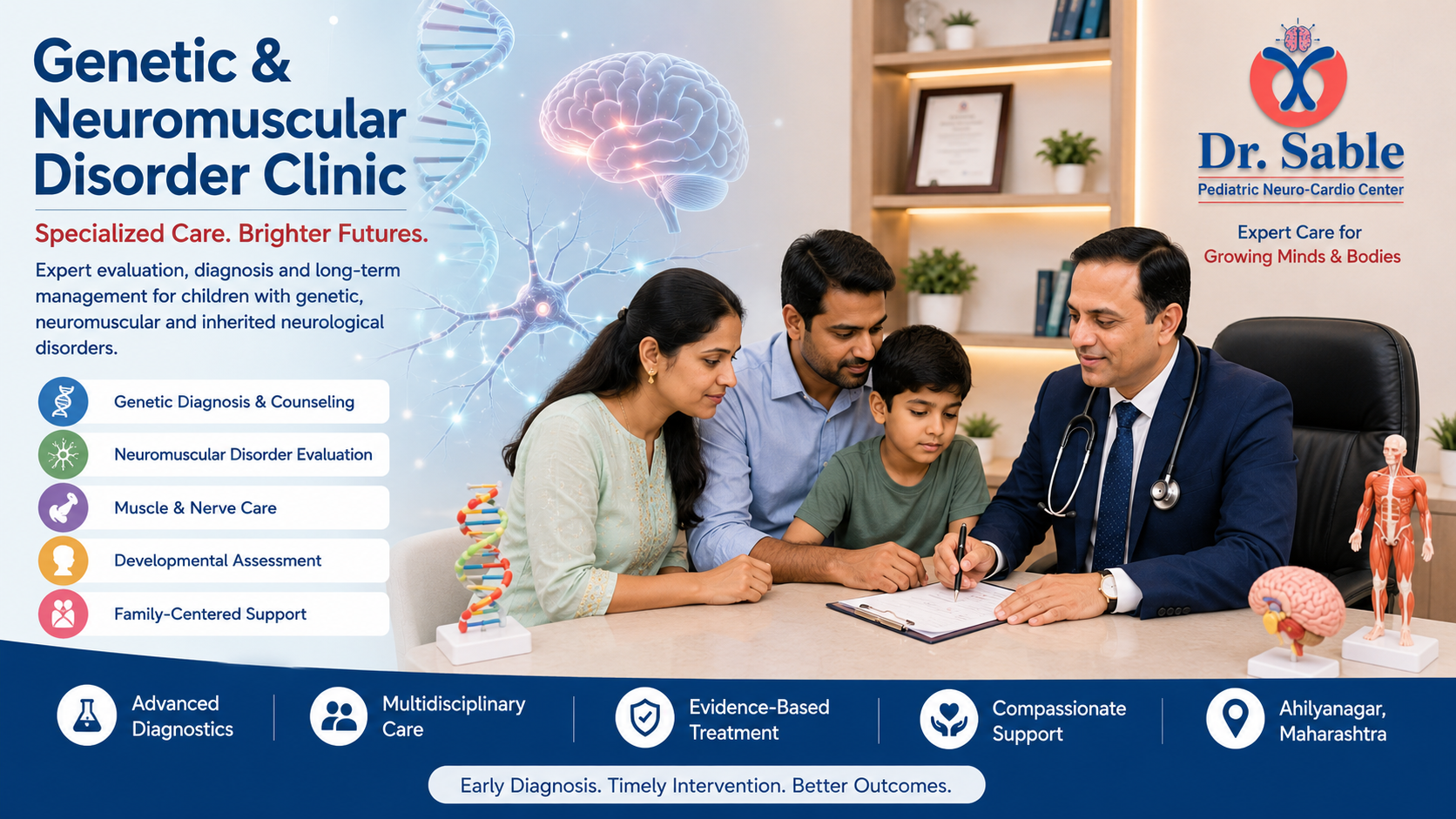
At our Genetic and Neuromuscular Disorder Clinic Ahilyanagar, Dr. Sunil Sable provides comprehensive evaluation, diagnosis, genetic counseling guidance, developmental assessment, and long-term management for children affected by inherited neurological and neuromuscular disorders.
Our goal is to identify the underlying cause early, optimize development, improve quality of life, and support families through every stage of care.
What Are Genetic and Neuromuscular Disorders?
Genetic and neuromuscular disorders are conditions that affect the brain, nerves, muscles, or movement due to changes in genes or inherited conditions.
These disorders may affect:
- Muscle strength
- Walking ability
- Development
- Speech
- Learning
- Breathing
- Feeding
- Coordination
- Neurological function
Early diagnosis can help guide treatment, rehabilitation, and family planning.
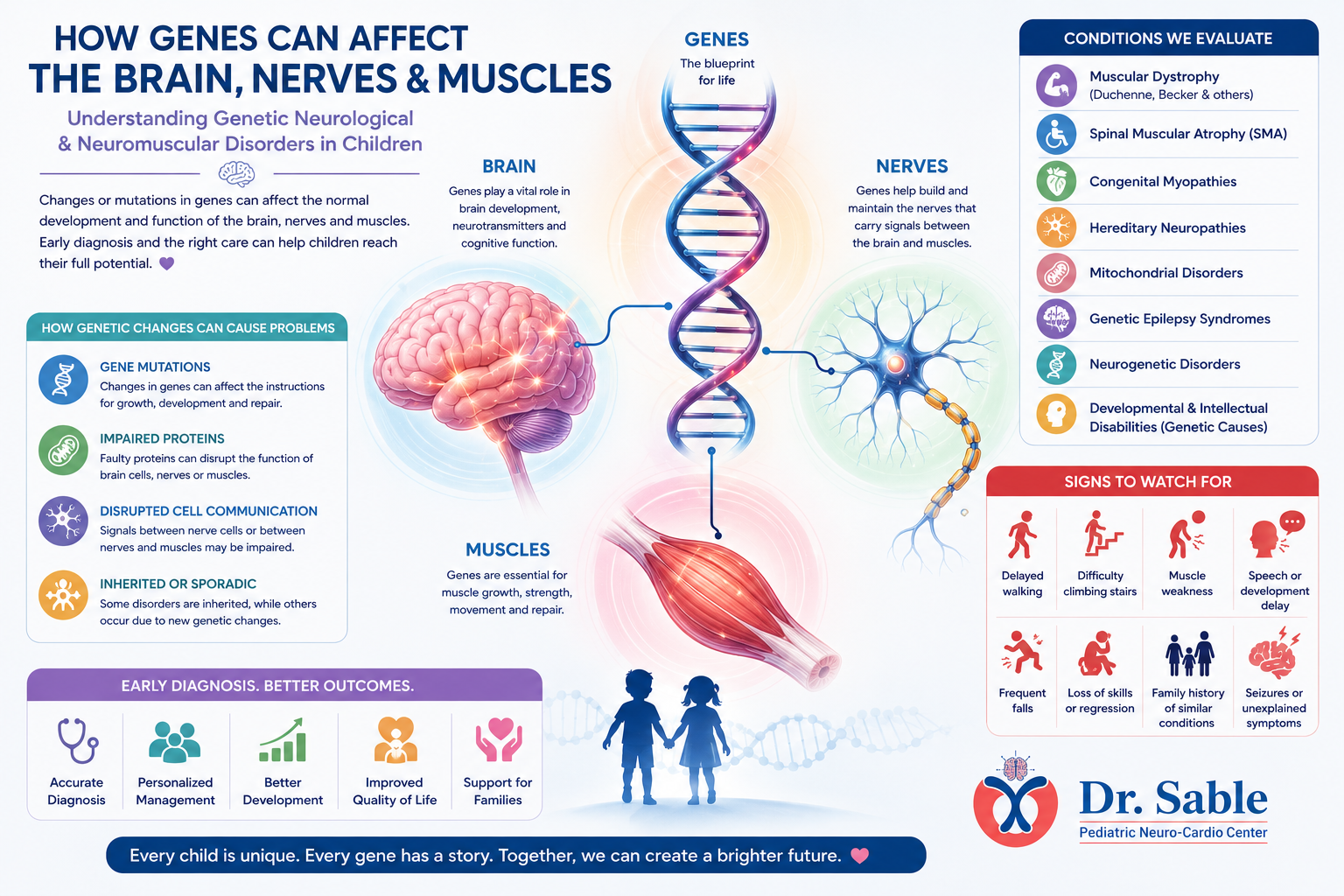
Conditions Evaluated at Our Genetic and Neuromuscular Disorder Clinic
Muscular Dystrophy
A group of inherited disorders causing progressive muscle weakness.
Duchenne Muscular Dystrophy (DMD)
The most common childhood muscular dystrophy affecting boys.
Becker Muscular Dystrophy
A milder form of muscular dystrophy.
Spinal Muscular Atrophy (SMA)
A genetic disorder affecting motor nerve cells responsible for movement.
Congenital Myopathies
Inherited muscle disorders present from birth.
Hereditary Neuropathies
Conditions affecting peripheral nerves and muscle function.
Mitochondrial Disorders
Genetic conditions affecting cellular energy production.
Genetic Epilepsy Syndromes
Inherited conditions associated with seizures and developmental concerns.
Neurogenetic Disorders
Complex genetic conditions affecting brain development and neurological function.
Signs That May Suggest a Genetic or Neuromuscular Disorder
Parents should seek evaluation if a child has:
- Delayed walking
- Frequent falls
- Difficulty climbing stairs
- Progressive muscle weakness
- Toe walking
- Loss of previously acquired skills
- Speech delay
- Developmental delay
- Poor coordination
- Muscle wasting
- Family history of neurological disorders
- Recurrent unexplained seizures
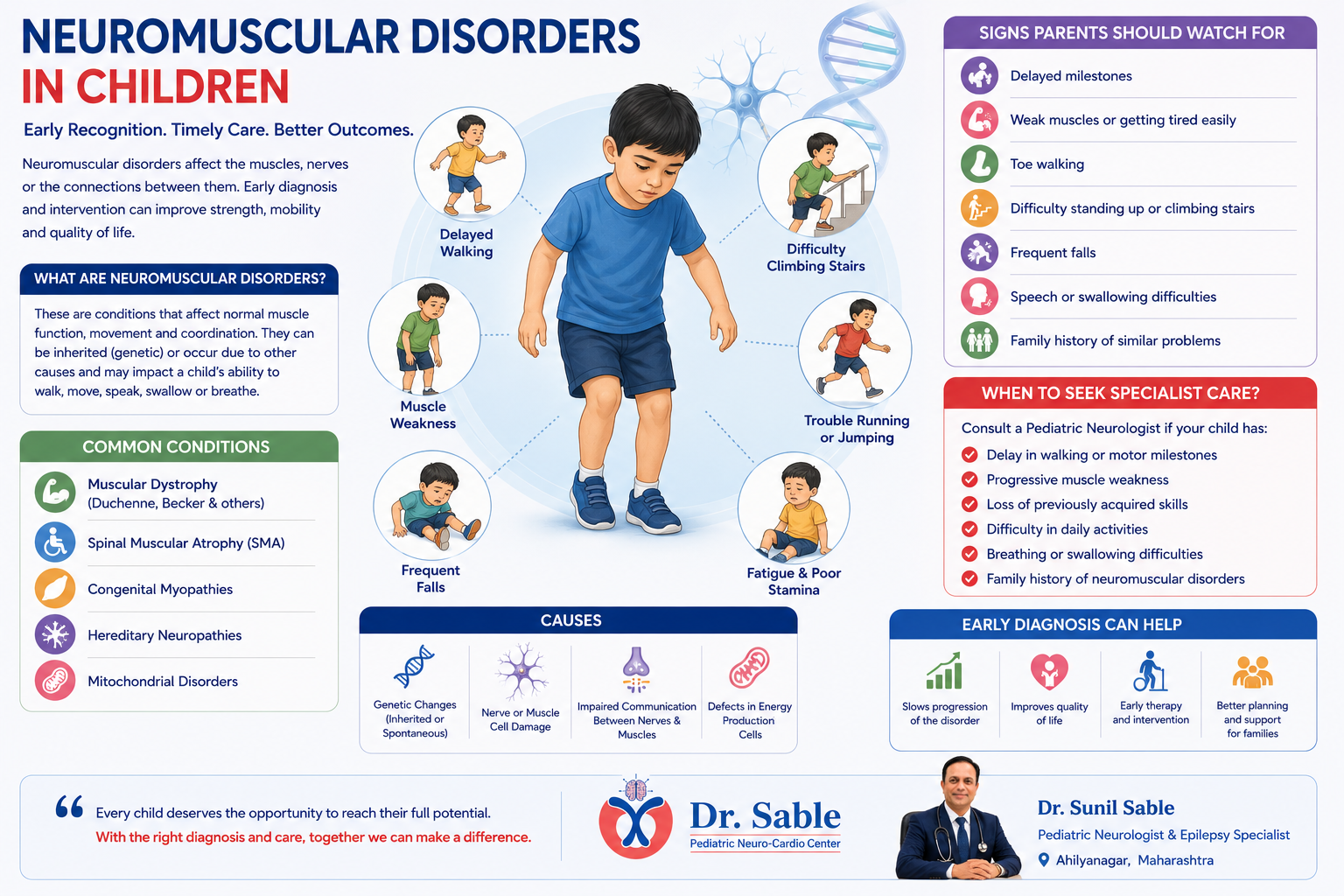
When Should Parents Seek Specialist Evaluation?
Consult a Pediatric Neurologist if your child:
- Walks significantly later than expected
- Has persistent muscle weakness
- Struggles with running or jumping
- Shows developmental regression
- Has unexplained seizures
- Has a family history of genetic disorders
- Experiences unexplained developmental delays
Early diagnosis often allows better planning and management.
Evaluation at Our Genetic and Neuromuscular Disorder Clinic Ahilyanagar
Detailed Clinical Assessment
Comprehensive neurological and developmental evaluation.
Family History Review
Assessment of inherited patterns and genetic risks.
Neurological Examination
Evaluation of strength, reflexes, muscle tone, coordination and gait.
Developmental Assessment
Assessment of speech, cognition, social interaction and learning.
Genetic Testing Guidance
When appropriate, genetic testing may help identify the underlying diagnosis.
Neuroimaging & Laboratory Investigations
Including MRI and specialized tests when indicated.
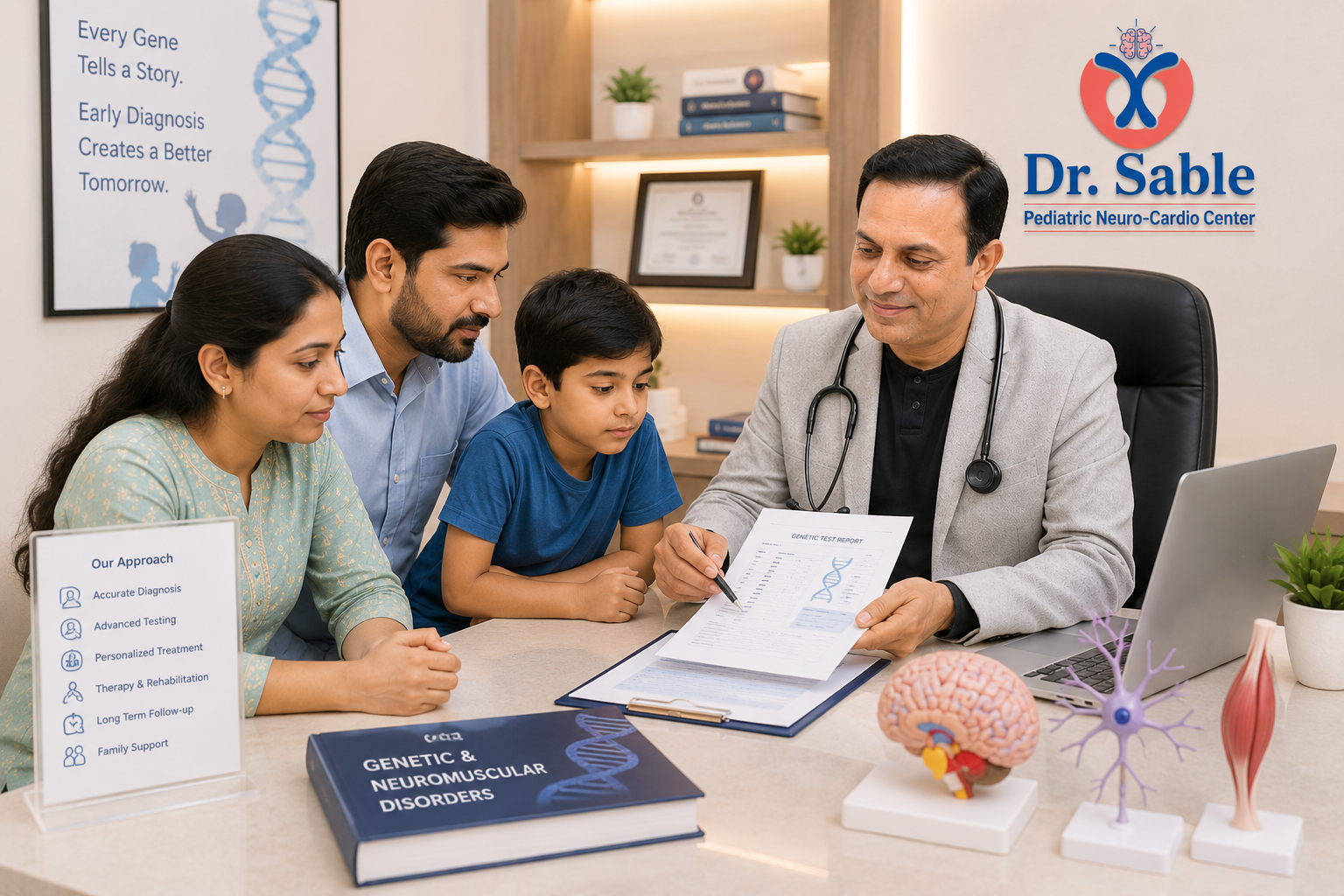
Treatment and Long-Term Management
While many genetic disorders cannot currently be cured, early intervention and multidisciplinary care can significantly improve outcomes.
Management may include:
Physiotherapy
Improves mobility, strength and flexibility.
Occupational Therapy
Supports independence and daily activities.
Speech Therapy
Improves communication and feeding abilities.
Seizure Management
Treatment of associated epilepsy when present.
Nutritional Support
Optimizing growth and health.
Genetic Counseling Guidance
Helping families understand diagnosis and future implications.
Why Early Diagnosis Matters
Early diagnosis helps:
- Improve developmental outcomes
- Begin rehabilitation sooner
- Prevent complications
- Provide genetic counseling
- Support educational planning
- Improve quality of life
Parent Resources
Downloadable Resources:
- Muscular Dystrophy Parent Guide
- Developmental Milestone Checklist
- Genetic Testing Guide
- Therapy Progress Tracker
- Seizure Monitoring Diary
Why Choose Dr. Sunil Sable?
Dr. Sunil Sable
Pediatric Neurologist & Epilepsy Specialist
Ahilyanagar, Maharashtra
✔ Pediatric Neurology Expertise
✔ Developmental Neurology Specialist
✔ Cerebral Palsy Management
✔ Epilepsy Management
✔ Family-Centered Care
✔ Long-Term Follow-Up
✔ Evidence-Based Treatment
Frequently Asked Questions About Child Development
1. What are genetic neurological disorders?
Genetic neurological disorders are conditions caused by changes in genes that affect the brain, nerves, muscles, or development.
2. What are neuromuscular disorders?
Neuromuscular disorders affect the muscles, nerves, or the connection between nerves and muscles, leading to weakness and movement difficulties.
3. Are genetic disorders inherited?
Many genetic disorders are inherited, while others occur due to new genetic changes without a family history.
4. What is muscular dystrophy?
Muscular dystrophy is a group of inherited conditions that cause progressive muscle weakness and loss of muscle function.
5. What is Duchenne Muscular Dystrophy?
Duchenne Muscular Dystrophy (DMD) is a genetic disorder affecting muscle strength, primarily in boys, usually becoming noticeable in early childhood.
6. What is Spinal Muscular Atrophy (SMA)?
SMA is a genetic condition affecting motor nerve cells that control muscle movement, leading to muscle weakness.
7. Can genetic disorders cause developmental delay
Yes. Many genetic conditions can affect speech, learning, motor development, and behavior.
8. What are the warning signs of neuromuscular disorders?
Delayed walking, frequent falls, difficulty climbing stairs, muscle weakness, and loss of skills should be evaluated.
9. Can genetic disorders cause epilepsy?
Yes. Some genetic conditions are associated with epilepsy and recurrent seizures.
10. When should genetic testing be considered?
Genetic testing may be recommended when a child has unexplained developmental delay, muscle weakness, epilepsy, or a family history of genetic disorders.
11. Is genetic testing painful?
Most genetic tests require only a blood sample or saliva sample.
12. Can genetic disorders be cured?
Some conditions have specific treatments, while many require long-term supportive management and rehabilitation.
13. Can physiotherapy help neuromuscular disorders?
Yes. Physiotherapy plays a major role in maintaining mobility and preventing complications.
14. Can children with genetic disorders attend school?
Many children attend regular schools with appropriate educational support and accommodations.
15. Why should I consult a Pediatric Neurologist?
A Pediatric Neurologist can help diagnose the underlying condition, guide investigations, manage symptoms, and coordinate multidisciplinary care.
16. What is consanguinity, and how can it affect a child's health?
Consanguinity refers to marriage between close biological relatives, such as first or second cousins. Consanguineous marriages increase the risk of certain inherited genetic disorders because both parents may carry the same altered gene. While most children born to related parents are healthy, the risk of rare genetic and metabolic disorders is higher compared to the general population.
17. Does consanguineous marriage always cause genetic disorders?
No. Most children born to consanguineous couples are healthy. However, the risk of autosomal recessive genetic disorders is significantly increased when both parents carry the same genetic mutation. Genetic counseling can help families understand these risks.
18. If one child has a genetic disorder, what is the risk in the next pregnancy?
The recurrence risk depends on the specific diagnosis and inheritance pattern. In some genetic disorders, the risk may be as high as 25% in every pregnancy, while in others it may be much lower. Accurate diagnosis and genetic testing help determine the recurrence risk.
19. Can genetic disorders be prevented in future pregnancies?
In many cases, future pregnancies can be planned more safely through genetic counseling, carrier testing, prenatal diagnosis, and advanced reproductive options. Early consultation with a Pediatric Neurologist and Clinical Geneticist is highly recommended.
20. What is genetic counseling?
Genetic counseling is a process in which families receive information about inherited disorders, recurrence risks, available genetic tests, prenatal diagnosis options, and family planning. It helps parents make informed decisions regarding future pregnancies.
21. What is Chorionic Villus Sampling (CVS)?
Chorionic Villus Sampling (CVS) is a prenatal diagnostic test usually performed between 11 and 13 weeks of pregnancy. A small sample of placental tissue is analyzed to determine whether the fetus has inherited a known genetic disorder. CVS allows early diagnosis during pregnancy.
22. What is amniocentesis?
Amniocentesis is a prenatal diagnostic procedure usually performed after 15 weeks of pregnancy. A small amount of amniotic fluid surrounding the baby is tested for genetic abnormalities, chromosomal disorders, and certain inherited conditions. It is commonly used when a known genetic diagnosis exists in the family.
23. When should prenatal testing be considered?
Prenatal testing may be recommended when:
- A previous child has a genetic disorder.
- Parents are known carriers of a genetic mutation.
- There is a strong family history of inherited disease.
- Consanguinity is present.
- Previous pregnancies were affected by genetic conditions.
Early prenatal diagnosis allows informed decision-making and pregnancy planning.
24. What are metabolic disorders, and how do they affect children?
Metabolic disorders are genetic conditions in which the body cannot properly process certain nutrients, proteins, fats, or sugars. These disorders can affect brain development, muscle function, growth, energy production, and neurological health. Early diagnosis is critical because some metabolic disorders are treatable.
25. Can environmental factors worsen genetic or neuromuscular disorders?
Yes. While genetic changes are the primary cause, environmental factors such as poor nutrition, infections, toxin exposure, lack of rehabilitation, sleep deprivation, and delayed diagnosis may worsen symptoms or affect a child’s overall development. Early intervention and comprehensive care help optimize outcomes.
26. Why is early diagnosis important in genetic and neuromuscular disorders?
Early diagnosis helps identify the underlying cause, allows timely rehabilitation, guides treatment decisions, provides genetic counseling for the family, and may improve long-term developmental and neurological outcomes. In some conditions, early treatment can significantly alter the disease course.
Areas We Serve
At Dr. Sunil Sable Pediatric Neurology & Cardiology Centre, we are proud to provide specialized pediatric neurology services to children and families from Ahilyanagar (Ahmednagar) and surrounding regions. Parents trust us for expert evaluation and management of headaches, epilepsy, developmental delay, autism, ADHD, cerebral palsy, genetic neurological disorders, and other childhood neurological conditions.
We regularly welcome families from:
- Ahilyanagar (Ahmednagar)
- Savedi
- Kedgaon
- Pipeline Road
- Rahuri
- Sangamner
- Shrirampur
- Kopargaon
- Pathardi
- Parner
- Shevgaon
- Karjat
- Jamkhed
- Nevasa
- Akole
- Beed
- Nashik
- Pune
- Chhatrapati Sambhajinagar (Aurangabad)
- Osmanabad (Dharashiv)
- Solapur
- Jalna
- Dhule
- Jalgaon
- Satara
- Kolhapur
- Nagpur
- Mumbai
- Thane
- Navi Mumbai
- And across Maharashtra
Our clinic is committed to providing evidence-based, child-friendly, and compassionate neurological care, ensuring that every child receives a thorough evaluation and an individualized treatment plan. Families travel from across Maharashtra because of our expertise in pediatric neurology, personalized approach, and commitment to long-term follow-up.
If your child is experiencing frequent headaches, migraine, seizures, developmental concerns, or other neurological symptoms, Dr. Sunil Sable, Pediatric Neurologist and Epilepsy Specialist, is dedicated to providing comprehensive care to help your child achieve the best possible neurological and developmental outcomes.
What Parents Say About Dr Sunil Sable
Posted on GoogleTrustindex verifies that the original source of the review is Google. माझ्या. मुलीला जन्मताच मेंदूत कावीळ सांगितली होती तर आम्ही डॉक्टर सुनील साबळे यांच्याकडे ट्रीटमेंट घेतली त्यांच्या ट्रीटमेंट नी माझ्या मुलीला 100% फरक पडला आहे जर असा कुणाच्या मुलांना त्रास होत असेल तर dr .सुनील साबळे सरानची विजिट करा अहमदनगर येथे डॉ. सुनील साबळेथँक्यू सर 🙏🙏Posted on GoogleTrustindex verifies that the original source of the review is Google. Very nice concaltancy service and very supportive staffPosted on GoogleTrustindex verifies that the original source of the review is Google. Mazya mulala Chakkar yaychi Mg Amhi Dr Sunil Sable Siranna Dakhavle Tyanchya Aaushadani Tyachi Chakkar Band zali to Atta Thik Zala Ahe Dhanyawad SirPosted on GoogleTrustindex verifies that the original source of the review is Google. Majha bala la chagala farak padala ahe pahale ryala samjat navate atta tyala barech samjatePosted on GoogleTrustindex verifies that the original source of the review is Google. बाळाला 100% गुण आलाय डाॅ साहेबांना धन्यवाद मी आयुष्य भर आपले ऋणी आहेPosted on GoogleTrustindex verifies that the original source of the review is Google. 100℅ farak padla ahe sir khup chan treatment ahe thanku🙏👍Posted on GoogleTrustindex verifies that the original source of the review is Google. I have good experiencePosted on GoogleTrustindex verifies that the original source of the review is Google. 100% रिजल्ट आहे सरPosted on GoogleTrustindex verifies that the original source of the review is Google. my child is recover 80% All family members are happy.Posted on GoogleTrustindex verifies that the original source of the review is Google. Mazya mulala zhatke yet hote amhi khup thikani dakhavl tyala kahi farakch padla nahi amhala amcya javlcyani dr.sunil sable siranca adrees dila tyala amhi Sirnachi treatment calu keli jhevha pasun Sirnachi treatment calu keli tevha pasun tyala zhatkyaca trass nahi zhala Sirnachi treatment khup chan ahe thank you si👍🙏Load more