
Headache in Children
Dr Sunil Sable
Pediatric Neurologist,(Ahmednagar) Ahilyanagar
Expert Diagnosis and Treatment for Childhood Headaches

Headaches are one of the most common neurological complaints in children and adolescents. Although many headaches are harmless and resolve with rest or simple treatment, recurrent or severe headaches should never be ignored. Frequent headaches can interfere with a child’s school performance, concentration, sleep, sports, and overall quality of life. In some cases, they may be a sign of an underlying medical condition that requires prompt evaluation.
Headaches in children can result from many causes, including migraine, tension-type headache, viral infections, dehydration, lack of sleep, stress, vision problems, or, less commonly, serious neurological disorders.
At Dr. Sunil Sable Pediatric Neurology & Cardiology Centre, Dr. Sunil Sable, Pediatric Neurologist and Epilepsy Specialist, provides comprehensive evaluation and evidence-based treatment for children with headaches, migraine, and other neurological conditions. Our goal is to identify the underlying cause, relieve symptoms, and help children return to healthy, active lives.
What Is a Headache?
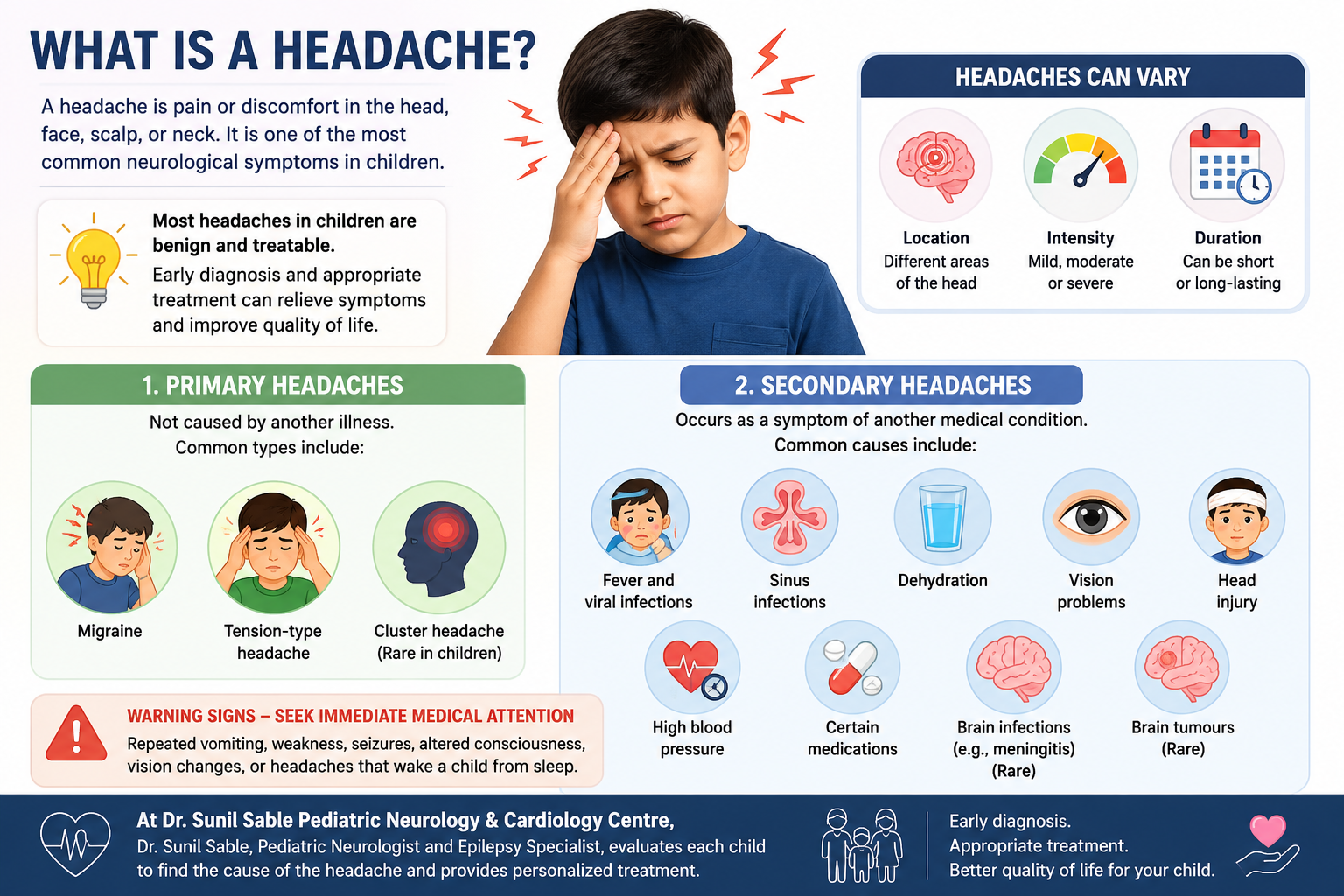
A headache is pain or discomfort felt in the head, face, scalp, or neck. It is one of the most common neurological symptoms experienced by children and adolescents. While occasional headaches are usually not a cause for concern, frequent, severe, or persistent headaches may indicate an underlying medical condition and should be evaluated by a Pediatric Neurologist.
Headaches can vary in intensity, duration, and location. Some children describe the pain as a dull ache, while others may experience throbbing, pressure, or sharp pain. Depending on the cause, headaches may occur occasionally or become recurrent, affecting a child’s daily activities, school performance, sleep, and overall quality of life.
Headaches are broadly classified into two main categories:
Primary Headaches
Primary headaches are not caused by another illness or structural problem. Instead, they result from changes in the way the brain, nerves, and blood vessels process pain. The most common primary headaches in children include:
- Migraine
- Tension-type headache
- Cluster headache (rare in children)
Secondary Headaches
Secondary headaches occur as a symptom of another medical condition. Common causes include:
- Fever and viral infections
- Sinus infections
- Dehydration
- Vision problems
- Head injury
- High blood pressure
- Certain medications
- Brain infections such as meningitis (rare)
- Brain tumours (rare)
Most headaches in children are benign and treatable. However, headaches associated with warning signs—such as repeated vomiting, weakness, seizures, altered consciousness, vision changes, or headaches that wake a child from sleep—require prompt medical evaluation.
At Dr. Sunil Sable Pediatric Neurology & Cardiology Centre, Dr. Sunil Sable, Pediatric Neurologist and Epilepsy Specialist, carefully evaluates each child to determine the underlying cause of the headache and develops an individualized treatment plan. Early diagnosis and appropriate management can relieve symptoms, improve quality of life, and help children return to their normal daily activities.
How Common Are Headaches in Children?
Headaches are among the most common neurological complaints in children and adolescents. While many parents associate headaches with adults, they can occur at any age, including in preschool and school-aged children. The frequency of headaches tends to increase as children grow older, particularly during adolescence.
Studies suggest that:
- Approximately 30–50% of school-aged children experience at least one significant headache each year.
- By the age of 15 years, up to 75% of children have experienced a headache.
- Migraine affects approximately 8–12% of children and adolescents, making it one of the most common causes of recurrent headaches.
- Before puberty, boys and girls are affected at similar rates. After puberty, headaches—especially migraines—become more common in girls, likely due to hormonal changes.
Most headaches in children are primary headaches, such as migraine or tension-type headache, and are not caused by a serious underlying disease. However, recurrent headaches can significantly affect a child’s daily life by reducing concentration, causing school absenteeism, limiting participation in sports and extracurricular activities, and affecting emotional well-being.
Fortunately, the majority of childhood headaches can be effectively managed with accurate diagnosis, healthy lifestyle changes, appropriate medications when needed, and regular follow-up. Early evaluation is especially important when headaches become frequent, severe, or are associated with warning signs such as vomiting, seizures, weakness, vision changes, or headaches that wake a child from sleep.
Headache & migraine Clinic at Dr. Sunil Sable Pediatric Neurology & Cardiology Centre, Dr. Sunil Sable, Pediatric Neurologist and Epilepsy Specialist, provides comprehensive assessment and evidence-based treatment for children with recurrent headaches, helping families understand the cause and develop an effective long-term management plan.
Key Facts at a Glance
| Statistic | Approximate Prevalence |
|---|---|
| Children experiencing at least one significant headache each year | 30–50% |
| Adolescents who have experienced a headache by age 15 | Up to 75% |
| Children and adolescents with migraine | 8–12% |
| Most common types | Migraine and Tension-Type Headache |
Did You Know?
Most headaches in children are not caused by a brain tumour or other serious neurological disease. However, persistent, worsening, or unusual headaches should always be evaluated by a Pediatric Neurologist to identify the cause and guide appropriate treatment.
Types of Headaches in Children
Headaches in children are broadly classified into primary headaches and secondary headaches. Understanding the type of headache is important because it helps determine the underlying cause, appropriate investigations, and the most effective treatment.
Most children have primary headaches, which are not caused by another disease. Secondary headaches occur because of an underlying medical condition, such as an infection, dehydration, or head injury.
The most common types of headaches in children include:
1. Migraine
Migraine is one of the most common causes of recurrent headaches in children. Unlike an ordinary headache, migraine is a neurological disorder that often causes moderate to severe throbbing pain and may interfere with a child’s daily activities.
Common symptoms include:
- Moderate to severe headache
- Throbbing or pulsating pain
- Pain on one or both sides of the head
- Nausea or vomiting
- Sensitivity to light (photophobia)
- Sensitivity to sound (phonophobia)
- Headache worsened by physical activity
- Some children experience an aura before the headache, such as flashing lights, blurred vision, or tingling sensations.
Migraine attacks may last from 2 to 72 hours and can significantly affect school attendance, concentration, and quality of life.
👉 Read our detailed guide: Migraine in Children
2. Tension-Type Headache
Tension-type headache is another common primary headache in children. It is usually associated with stress, anxiety, poor posture, prolonged screen time, inadequate sleep, or muscle tightness around the head and neck.
Common symptoms include:
- Mild to moderate pain
- Dull, aching sensation
- Tight band-like pressure around the forehead
- Pain on both sides of the head
- Usually no nausea or vomiting
- Children can often continue normal daily activities
Although less disabling than migraine, frequent tension-type headaches can affect school performance and emotional well-being.
3. Cluster Headache (Rare)
Cluster headache is very uncommon in children but causes extremely severe pain.
Typical features include:
- Sudden, intense pain around one eye
- Redness or watering of the eye
- Blocked or runny nose on the same side
- Restlessness during attacks
- Attacks lasting 15 minutes to 3 hours
- Occurring in clusters over several weeks
Children with suspected cluster headache should be evaluated by a Pediatric Neurologist because this condition requires specialized treatment.
4. Secondary Headaches
Secondary headaches occur as a result of another medical condition. Treating the underlying cause usually improves the headache.
Common causes include:
- Fever and viral infections
- Sinusitis
- Ear infections
- Dehydration
- Vision problems requiring glasses
- Lack of sleep
- High blood pressure
- Head injury or concussion
- Meningitis or encephalitis (rare)
- Brain tumours (rare)
- Certain medications
Most secondary headaches are not serious, but some may require urgent medical attention, particularly if accompanied by neurological symptoms or warning signs.
5. Chronic Daily Headache
A headache is considered chronic daily headache when it occurs on 15 or more days each month for at least three months.
Children with chronic daily headaches may experience:
- Frequent or continuous head pain
- Difficulty concentrating
- Reduced school attendance
- Poor sleep
- Mood changes
- Reduced participation in sports and daily activities
This condition often requires a comprehensive evaluation, identification of triggers, lifestyle modification, and, in some cases, preventive medications.
6. Medication Overuse Headache
Medication overuse headache, also called rebound headache, develops when pain-relieving medicines are taken too frequently.
Children who regularly use pain medications for headaches may develop:
- Near-daily headaches
- Headaches that return when the medicine wears off
- Reduced effectiveness of pain medications over time
Common medicines associated with medication overuse include:
- Paracetamol (when used excessively)
- Ibuprofen
- Combination pain-relief medications
Management involves careful medical supervision, limiting unnecessary pain medication, identifying the underlying headache disorder, and implementing preventive strategies.
Summary of the Different Types of Headaches in Children
| Type | Common Features | How Common? |
|---|---|---|
| Migraine | Throbbing headache, nausea, vomiting, sensitivity to light and sound | Very common |
| Tension-Type Headache | Dull, pressure-like pain, often related to stress | Very common |
| Cluster Headache | Severe pain around one eye with tearing and nasal congestion | Rare |
| Secondary Headache | Caused by another illness such as infection, dehydration, or injury | Common |
| Chronic Daily Headache | Headache on ≥15 days per month for ≥3 months | Less common |
| Medication Overuse Headache | Rebound headaches due to frequent use of pain-relieving medicines | Uncommon but preventable |
Key Point: Most headaches in children are treatable and not caused by serious brain disease. However, frequent, severe, worsening headaches or headaches associated with warning signs should be evaluated promptly by a Pediatric Neurologist. Accurate diagnosis helps ensure the most appropriate treatment and prevents unnecessary investigations or prolonged suffering.
Symptoms of Headache in Children
Headache symptoms in children can vary depending on the child’s age, the type of headache, and the underlying cause. Younger children may not be able to describe their pain clearly and may instead become irritable, cry, or stop playing. Older children and adolescents are usually able to explain the location, intensity, and associated symptoms of their headache.
Most headaches are temporary and improve with appropriate treatment. However, headaches that are frequent, severe, or accompanied by neurological symptoms should be evaluated by a Pediatric Neurologist.
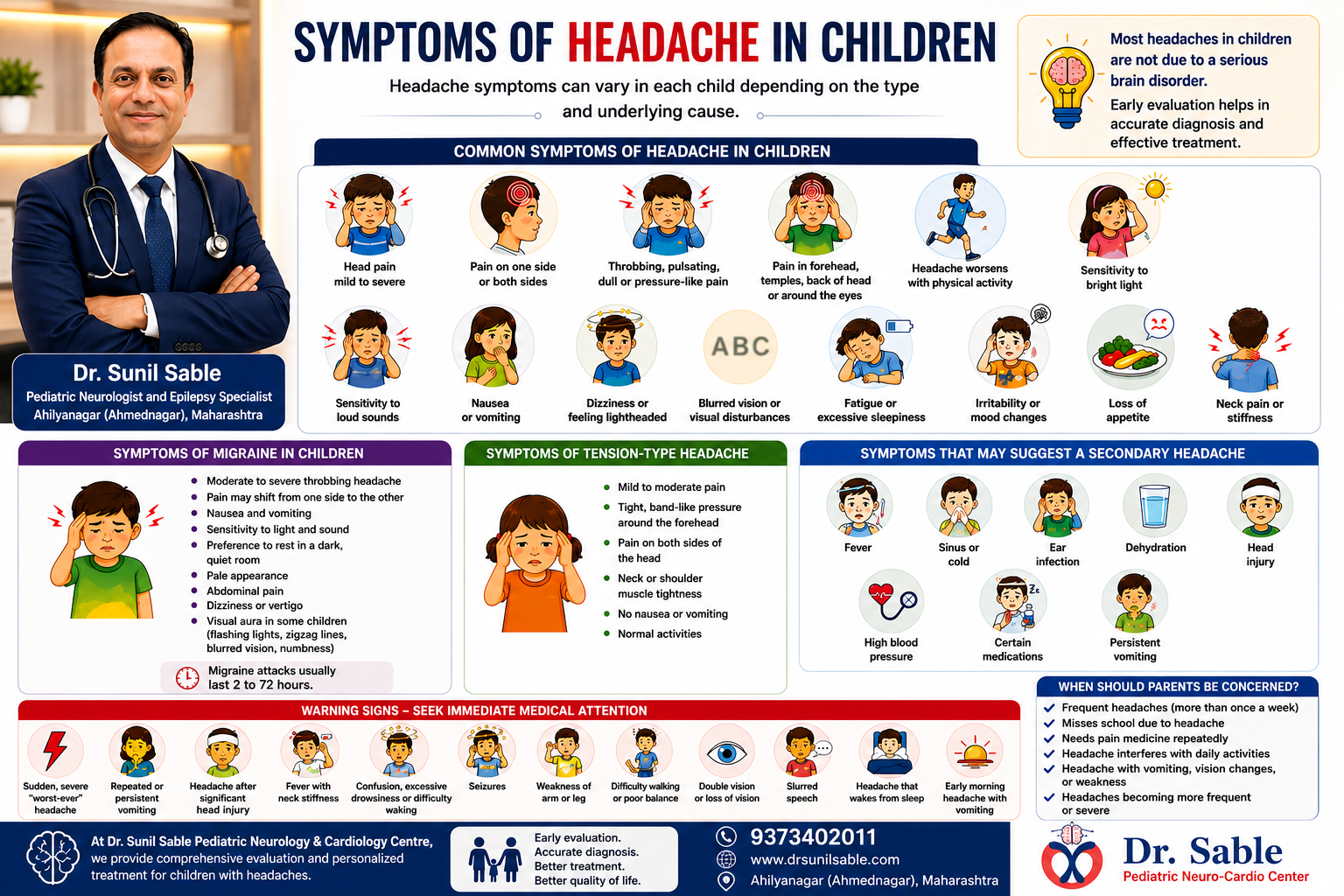
Common Symptoms of Headache in Children
Children with headaches may experience one or more of the following symptoms:
- Head pain that may be mild, moderate, or severe
- Pain on one side or both sides of the head
- Throbbing, pulsating, dull, or pressure-like pain
- Pain in the forehead, temples, back of the head, or around the eyes
- Headache that worsens with physical activity
- Sensitivity to bright light (photophobia)
- Sensitivity to loud sounds (phonophobia)
- Nausea or vomiting
- Dizziness or feeling lightheaded
- Blurred vision or temporary visual disturbances
- Fatigue or excessive sleepiness
- Difficulty concentrating
- Irritability or mood changes
- Loss of appetite
- Neck pain or stiffness (especially with certain types of headaches)
Symptoms of Migraine in Children
Children with migraine often experience additional symptoms besides headache.
Common migraine symptoms include:
- Moderate to severe throbbing headache
- Pain that may shift from one side of the head to the other
- Nausea and vomiting
- Sensitivity to light and sound
- Preference to rest in a dark, quiet room
- Pale appearance
- Abdominal pain
- Dizziness or vertigo
- Visual aura, such as flashing lights, zigzag lines, blind spots, or blurred vision (in some children)
Migraine attacks usually last 2–72 hours and may recur over weeks or months.
Symptoms of Tension-Type Headache
Tension-type headaches usually cause:
- Mild to moderate pain
- Tight, band-like pressure around the forehead
- Pain on both sides of the head
- Neck or shoulder muscle tightness
- No nausea or vomiting
- Normal ability to continue school or play in many cases
Symptoms That May Suggest a Secondary Headache
Some symptoms may indicate that the headache is caused by another medical condition.
These include:
- Fever
- Runny nose or sinus congestion
- Ear pain
- Recent head injury
- Signs of dehydration
- High blood pressure
- Persistent vomiting
- Headache associated with certain medications
Treating the underlying illness usually improves the headache.
Warning Signs That Need Immediate Medical Attention
Seek urgent medical evaluation if your child has a headache along with any of the following:
- Sudden, severe “worst-ever” headache
- Repeated or persistent vomiting
- Headache after a significant head injury
- Fever with neck stiffness
- Confusion, excessive drowsiness, or difficulty waking
- Seizures
- Weakness of an arm or leg
- Difficulty walking or poor balance
- Double vision or loss of vision
- Slurred speech
- Headache that wakes the child from sleep
- Early morning headaches with repeated vomiting
- Progressive worsening of headache over days or weeks
- Personality or behaviour changes
These symptoms may indicate a serious neurological condition that requires immediate medical assessment.
When Should Parents Be Concerned?
Parents should consult a Pediatric Neurologist if their child:
- Has frequent headaches (more than once a week)
- Misses school because of headaches
- Needs pain medicine repeatedly
- Has headaches that interfere with sports or daily activities
- Develops headaches associated with vomiting, vision changes, or weakness
- Has a family history of severe migraine with disabling symptoms
- Experiences headaches that are becoming more frequent or more severe
Early evaluation helps identify the underlying cause, provides effective treatment, and prevents headaches from affecting your child’s education, development, and quality of life.
Key Takeaway
While most headaches in children are caused by migraine or tension-type headache and are not due to a serious brain disorder, persistent, severe, or unusual headaches should never be ignored. Prompt evaluation allows accurate diagnosis, appropriate treatment, and reassurance for families.
At Dr. Sunil Sable Pediatric Neurology & Cardiology Centre, Dr. Sunil Sable, Pediatric Neurologist and Epilepsy Specialist, offers comprehensive evaluation and personalized treatment for children with headaches, helping them return to healthy, active, and pain-free lives.
Migraine in Children
Migraine is one of the most common causes of recurrent headaches in children and adolescents. It is a neurological disorder that causes repeated episodes of moderate to severe headache, often accompanied by nausea, vomiting, and sensitivity to light or sound. Unlike a regular headache, migraine can interfere with a child’s school performance, concentration, sleep, sports, and daily activities.
Although migraine is often thought of as an adult condition, it can occur at any age, including early childhood. In younger children, migraine pain is frequently felt on both sides of the head, whereas older children and adolescents may experience pain on one side. Migraine attacks can last from 2 to 72 hours and may occur occasionally or several times a month.
Children with migraine may also experience an aura before the headache begins. An aura consists of temporary neurological symptoms such as flashing lights, zigzag lines, blurred vision, numbness, or tingling sensations that usually last for a few minutes before the headache starts.
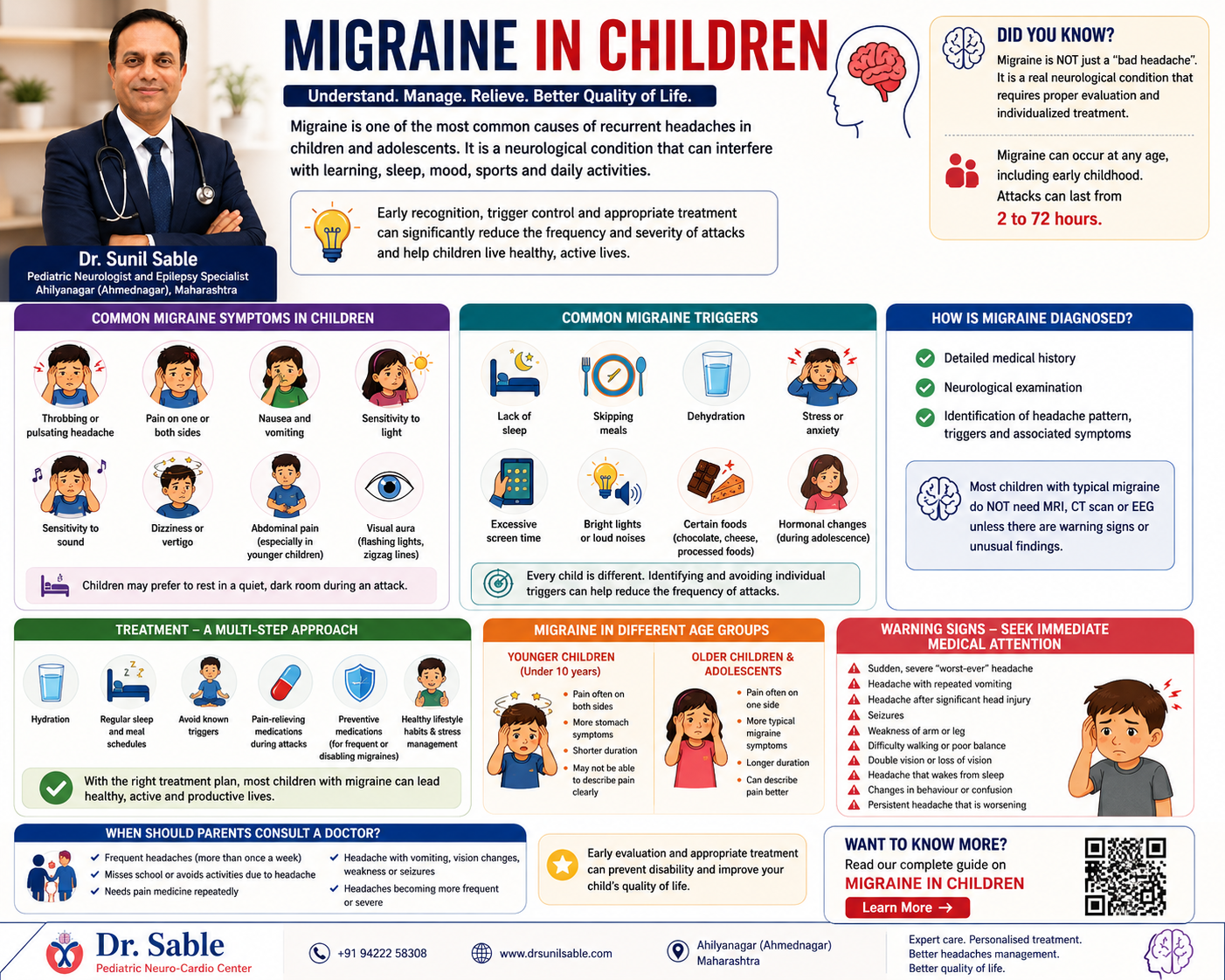
Common Symptoms of Migraine in Children
Children with migraine may experience:
- Moderate to severe throbbing or pulsating headache
- Pain on one or both sides of the head
- Nausea and vomiting
- Sensitivity to bright light (photophobia)
- Sensitivity to loud sounds (phonophobia)
- Headache that worsens with physical activity
- Dizziness or vertigo
- Abdominal pain (especially in younger children)
- Pale appearance
- Blurred vision or visual aura
- Preference to rest in a quiet, dark room
Common Migraine Triggers
Migraine attacks may be triggered by:
- Lack of sleep
- Skipping meals
- Dehydration
- Stress or anxiety
- Excessive screen time
- Bright lights or loud noises
- Certain foods in susceptible children
- Hormonal changes during adolescence
Identifying and avoiding individual triggers can help reduce the frequency of migraine attacks.
Diagnosis
Migraine is primarily diagnosed based on a detailed medical history and neurological examination. Most children with typical migraine do not require MRI, CT scan, or EEG unless there are warning signs or findings suggesting another neurological condition.
Treatment
Treatment aims to relieve pain, reduce the frequency of attacks, and improve the child’s quality of life. Depending on the severity and frequency of migraine, treatment may include:
- Adequate hydration
- Regular sleep and meal schedules
- Limiting excessive screen time
- Avoiding known migraine triggers
- Pain-relieving medications during attacks
- Preventive medications for frequent or disabling migraines
- Stress management and healthy lifestyle habits
With early diagnosis and appropriate treatment, most children with migraine can lead healthy, active, and productive lives.
Tension-Type Headache
Tension-type headache (TTH) is one of the most common primary headaches in children and adolescents. It usually causes a mild to moderate, dull, pressure-like pain that feels like a tight band around the head. Unlike migraine, tension-type headaches are generally less severe and are not usually associated with nausea or vomiting.
These headaches often occur during school-going years and may be triggered by stress, anxiety, poor posture, inadequate sleep, prolonged screen time, eye strain, or muscle tension in the neck and shoulders. Although tension-type headaches are usually not dangerous, frequent episodes can affect a child’s concentration, school performance, and quality of life.
Symptoms of Tension-Type Headache
Children with tension-type headache may experience:
- Mild to moderate headache
- Dull, aching, or pressure-like pain
- Tight or band-like sensation around the forehead or head
- Pain affecting both sides of the head
- Neck or shoulder muscle tightness
- Headache that gradually develops during the day
- Pain that is not worsened by routine physical activity
- Usually no nausea or vomiting
- Mild sensitivity to light or sound may occur occasionally, but not both together
Most children remain able to attend school and continue their normal daily activities despite the headache
Common Causes and Triggers
Several factors can contribute to tension-type headaches, including:
- Emotional stress or anxiety
- Academic pressure or examination stress
- Lack of sleep
- Skipping meals
- Dehydration
- Excessive screen time
- Poor posture while studying or using electronic devices
- Eye strain due to uncorrected vision problems
- Neck and shoulder muscle tension
- Fatigue
Identifying and managing these triggers often helps reduce the frequency of headaches.
How Is Tension-Type Headache Diagnosed?
Diagnosis is based on:
- A detailed medical history
- Description of headache characteristics
- Neurological examination
- Assessment of lifestyle factors and headache triggers
Most children with a typical tension-type headache do not require MRI, CT scan, or EEG, unless there are warning signs suggesting another neurological condition.
Treatment of Tension-Type Headache
Treatment focuses on relieving symptoms and preventing future headaches.
Management may include:
- Adequate hydration
- Regular sleep schedule
- Healthy, balanced meals
- Limiting excessive screen time
- Maintaining good posture
- Regular physical activity
- Stress management and relaxation techniques
- Neck and shoulder stretching exercises
- Occasional use of pain-relieving medication under medical guidance
Children with frequent headaches may benefit from a headache diary to identify triggers and monitor treatment response.
When Should Parents Seek Medical Advice?
Consult a Pediatric Neurologist if your child:
- Has headaches occurring more than once a week
- Experiences headaches that interfere with school or daily activities
- Requires frequent pain medication
- Develops headaches with vomiting, weakness, seizures, or vision changes
- Has headaches that become progressively more severe
- Has headaches associated with other neurological symptoms
Early evaluation helps confirm the diagnosis, rule out other causes, and provide appropriate treatment.
Key Point
Tension-type headache is generally a benign and treatable condition. Simple lifestyle modifications, stress management, and healthy daily habits can significantly reduce headache frequency and improve your child’s quality of life.
Common Causes of Headache in Children
Headaches in children can occur for many different reasons. While most childhood headaches are caused by benign conditions such as migraine or tension-type headache, some headaches may be a symptom of an underlying illness that requires medical attention.
Understanding the cause of your child’s headache helps ensure appropriate treatment and prevents unnecessary investigations. A careful medical history and neurological examination are often sufficient to identify the underlying cause.
Below are some of the most common causes of headache in children.
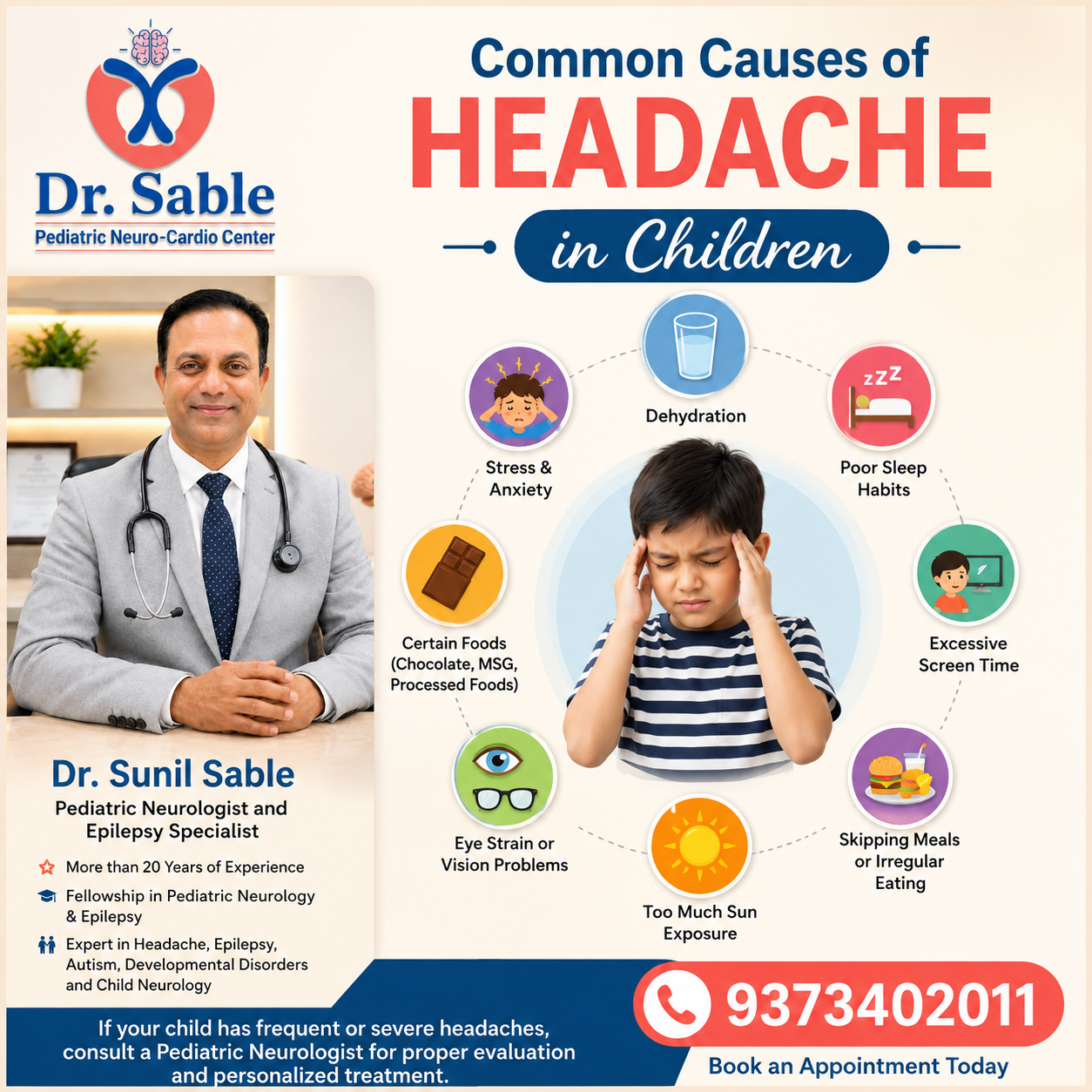
1. Migraine
Migraine is one of the leading causes of recurrent headaches in children. It is a neurological disorder that often causes throbbing headache, nausea, vomiting, and sensitivity to light and sound. Migraine attacks may last from 2 to 72 hours and can significantly affect school performance and daily activities.
2. Viral Infections
Common viral illnesses such as the common cold, influenza, COVID-19, or viral fever frequently cause headaches. These headaches usually improve as the infection resolves and are often associated with fever, sore throat, cough, or body aches.
3. Fever
Fever itself can trigger headaches by causing dehydration, increased inflammation, and changes in blood circulation. Treating the fever and ensuring adequate fluid intake usually relieves the headache.
4. Sinusitis
Inflammation or infection of the sinuses may cause pain around the forehead, cheeks, nose, or eyes. Children with sinusitis often have:
- Nasal congestion
- Thick nasal discharge
- Facial pressure
- Fever
- Headache that worsens when bending forward
5. Dehydration
Not drinking enough fluids is a common and preventable cause of headache, particularly during hot weather, sports, or illnesses with vomiting and diarrhea.
Children with dehydration may also experience:
- Dry mouth
- Fatigue
- Dizziness
- Reduced urine output
Encouraging regular water intake helps prevent dehydration-related headaches.
6. Eye Strain
Uncorrected vision problems or prolonged focusing on books, computers, tablets, or mobile phones can lead to headaches.
Eye strain is more likely if the child has:
- Blurred vision
- Squinting
- Difficulty reading
- Headache after prolonged near work
Regular eye examinations are important for children with recurrent headaches.
7. Poor Sleep
Insufficient or poor-quality sleep is a frequent trigger for headaches in children and adolescents.
Common causes include:
- Late bedtime
- Irregular sleep schedule
- Sleep disorders
- Excessive screen use before bedtime
Maintaining healthy sleep habits can significantly reduce headache frequency.
8. Stress and Anxiety
Emotional stress is a common cause of both migraine and tension-type headaches.
Stress may result from:
- School examinations
- Academic pressure
- Family problems
- Bullying
- Social anxiety
- Emotional difficulties
Helping children develop healthy coping strategies often improves headache control.
9. Excessive Screen Time
Spending long hours on mobile phones, tablets, computers, or television may contribute to headaches by causing:
- Eye strain
- Poor posture
- Neck muscle tension
- Reduced sleep quality
Limiting recreational screen time and encouraging regular breaks can help prevent headaches.
10. Head Injury
Headaches are common after a concussion or other head injury.
Medical evaluation is recommended if a child develops headache after a head injury, especially when associated with:
- Loss of consciousness
- Repeated vomiting
- Confusion
- Drowsiness
- Seizures
- Behavioural changes
11. High Blood Pressure
Although uncommon in children, elevated blood pressure can sometimes cause headaches, particularly when the blood pressure is significantly high.
Blood pressure should be checked in children with recurrent headaches or other concerning symptoms.
12. Brain Infections
Serious infections such as meningitis or encephalitis can cause severe headaches.
Warning symptoms include:
- High fever
- Neck stiffness
- Persistent vomiting
- Drowsiness
- Seizures
- Confusion
- Rash (in some infections)
Brain infections require urgent medical treatment.
13. Brain Tumours (Rare)
A brain tumour is a rare cause of headache in children. Most children with headaches do not have a brain tumour.
However, urgent medical evaluation is needed if headaches are associated with:
- Progressive worsening over weeks
- Early morning vomiting
- Headaches that wake the child from sleep
- Persistent neurological deficits
- Vision problems
- Weakness
- Balance difficulties
- Personality or behavioural changes
These symptoms require prompt assessment by a Pediatric Neurologist.
14. Certain Medications
Some medicines can cause headaches as a side effect, while excessive use of pain-relieving medications may lead to medication overuse (rebound) headache.
Always inform your doctor about:
- Prescription medicines
- Over-the-counter medications
- Herbal supplements
- Recent medication changes
Quick Summary of Common Causes
| Cause | Typical Features |
|---|---|
| Migraine | Throbbing headache, nausea, vomiting, light and sound sensitivity |
| Viral Infections | Fever, cough, cold, body aches |
| Fever | Generalized headache during illness |
| Sinusitis | Facial pain, nasal congestion, headache on bending forward |
| Dehydration | Poor fluid intake, dizziness, fatigue |
| Eye Strain | Headache after reading or screen use, blurred vision |
| Poor Sleep | Irregular sleep schedule, sleep deprivation |
| Stress & Anxiety | School stress, emotional factors |
| Excessive Screen Time | Eye strain, neck pain, poor posture |
| Head Injury | Headache following trauma or concussion |
| High Blood Pressure | Persistent headache with elevated blood pressure |
| Brain Infections | Fever, neck stiffness, vomiting, altered consciousness |
| Brain Tumours (Rare) | Progressive headaches with neurological symptoms |
| Certain Medications | Drug-related or rebound headaches |
Key Point
The vast majority of headaches in children are caused by migraine, tension-type headache, viral illnesses, dehydration, or lifestyle-related factors—not by brain tumours. However, headaches that are severe, persistent, progressively worsening, or associated with neurological symptoms should be evaluated promptly by a Pediatric Neurologist.
At Dr. Sunil Sable Pediatric Neurology & Cardiology Centre, Dr. Sunil Sable, Pediatric Neurologist and Epilepsy Specialist, provides comprehensive evaluation to identify the underlying cause of headaches and develops individualized treatment plans to help children return to healthy, active lives.
Headache Red Flags: When Should Parents Seek Immediate Medical Attention?
Most headaches in children are not serious and are commonly caused by migraine, tension-type headache, viral infections, or dehydration. However, certain headache symptoms may indicate a serious underlying medical condition that requires urgent medical evaluation.
Parents should never ignore headaches associated with neurological symptoms, persistent vomiting, or changes in consciousness. Recognizing these “red flag” symptoms can help ensure early diagnosis and prompt treatment.
Warning Signs That Require Immediate Medical Attention
1. Sudden, Severe Headache
A headache that begins suddenly and reaches maximum intensity within seconds or minutes (“thunderclap headache”) is unusual in children and requires emergency medical evaluation.
It may indicate:
- Bleeding around the brain (rare)
- Blood vessel disorders
- Serious neurological conditions
2. Headache After a Head Injury
Any child who develops a headache after a fall, sports injury, road traffic accident, or other head injury should be assessed promptly, especially if accompanied by:
- Loss of consciousness
- Repeated vomiting
- Excessive sleepiness
- Confusion
- Seizures
- Behavioural changes
These symptoms may suggest a concussion or more serious brain injury.
3. Early Morning Headache with Vomiting
Headaches that occur soon after waking, especially when accompanied by repeated vomiting without nausea, require medical evaluation.
Although this symptom can occur in migraine, it may also indicate raised intracranial pressure, which can occur in conditions such as hydrocephalus or, rarely, a brain tumour.
4. Progressive Worsening Headaches
Seek medical attention if headaches:
- Become more frequent
- Become more severe
- Last longer than usual
- Stop responding to usual treatment
A progressive pattern always deserves further evaluation.
5. Headache That Wakes the Child from Sleep
A headache severe enough to wake a child from sleep or occurring repeatedly during the night is not typical and should be evaluated by a Pediatric Neurologist.
6. Fever with Neck Stiffness
A severe headache associated with:
- High fever
- Neck stiffness
- Sensitivity to light
- Persistent vomiting
- Drowsiness
may indicate meningitis or encephalitis, both of which are medical emergencies requiring immediate treatment.
7. Seizures
A headache occurring before, during, or after a seizure requires prompt neurological evaluation, particularly if:
- The seizure is the child’s first
- Headache persists after the seizure
- The child remains confused or sleepy
8. Weakness or Difficulty Walking
Headaches associated with neurological symptoms such as:
- Weakness of an arm or leg
- Difficulty walking
- Loss of balance
- Poor coordination
- Numbness
may indicate a serious neurological disorder and require urgent assessment.
9. Vision Changes
Seek immediate medical care if the headache is associated with:
- Double vision
- Blurred vision
- Loss of vision
- Persistent visual disturbances
- New onset squint
These symptoms may suggest increased pressure inside the skull or another neurological condition.
10. Altered Consciousness
Emergency medical attention is needed if a child with headache becomes:
- Excessively sleepy
- Difficult to wake
- Confused
- Disoriented
- Unresponsive
- Behaviourally abnormal
Changes in consciousness should never be ignored.
Other Warning Signs
Parents should also seek urgent medical evaluation if the headache is associated with:
- Persistent or repeated vomiting
- Headache in a child younger than 5 years with no clear explanation
- Personality or behavioural changes
- Headache triggered by coughing, sneezing, or straining
- New headache in a child with cancer, immune deficiency, or a bleeding disorder
- Headache with high blood pressure
- Headache that interferes significantly with normal daily activities
Red Flag Symptoms at a Glance
| 🚩 Warning Sign | Why It Is Concerning |
|---|---|
| Sudden severe headache | May indicate bleeding or a vascular emergency |
| Headache after head injury | Possible concussion or brain injury |
| Morning headache with vomiting | May suggest increased intracranial pressure |
| Progressive worsening headaches | Requires evaluation for an underlying disorder |
| Headache waking the child from sleep | Unusual pattern that needs assessment |
| Fever with neck stiffness | Possible meningitis or encephalitis |
| Seizures | May indicate a neurological disorder |
| Weakness or difficulty walking | Possible brain or spinal cord involvement |
| Vision changes | May indicate raised intracranial pressure or neurological disease |
| Altered consciousness | Medical emergency requiring immediate care |
When to Go to the Emergency Department
Do not wait for a routine appointment. Go to the nearest emergency department immediately if your child has:
- A sudden, severe headache
- A headache after a significant head injury
- Headache with repeated vomiting
- Fever and neck stiffness
- Seizures
- Weakness or inability to walk
- Vision loss or double vision
- Confusion, excessive drowsiness, or difficulty waking
- A rapidly worsening headache
Key Takeaway
While most headaches in children are caused by migraine, tension-type headache, or common viral illnesses, the presence of any red flag symptom requires urgent medical evaluation. Early recognition and prompt treatment of serious conditions can be lifesaving and help prevent long-term complications.
At Dr. Sunil Sable Pediatric Neurology & Cardiology Centre, Dr. Sunil Sable, Pediatric Neurologist and Epilepsy Specialist, provides comprehensive evaluation of children with headaches, including emergency neurological assessment when warning signs are present, ensuring timely diagnosis and evidence-based treatment.
How Is Headache Diagnosed?
Diagnosing headaches in children begins with a careful medical evaluation. In most cases, the cause of a child’s headache can be identified through a detailed history and physical examination, without the need for extensive investigations.
At Dr. Sunil Sable Pediatric Neurology & Cardiology Centre, every child with recurrent or severe headaches undergoes a comprehensive assessment to determine the type of headache, identify possible triggers, rule out serious neurological conditions, and develop an individualized treatment plan.
1. Detailed Medical History
A thorough medical history is the most important step in diagnosing childhood headaches.
Your Pediatric Neurologist may ask questions such as:
- When did the headaches begin?
- How often do the headaches occur?
- How long does each headache last?
- Where is the pain located?
- What does the pain feel like (throbbing, pressure, stabbing)?
- How severe is the headache?
- Are there associated symptoms such as nausea, vomiting, dizziness, or vision changes?
- Does anything trigger the headache?
- What makes the headache better or worse?
- Is there a family history of migraine or other neurological disorders?
- Does the headache interfere with school, sports, or sleep?
These details help differentiate migraine, tension-type headache, and secondary headaches.
2. Headache Diary
A headache diary is a simple but valuable tool that helps identify patterns and triggers.
Parents or older children are encouraged to record:
- Date and time of each headache
- Duration of the headache
- Pain severity (0–10 scale)
- Location of pain
- Associated symptoms
- Possible triggers (stress, lack of sleep, skipped meals, screen time, certain foods)
- Medications taken
- Response to treatment
A headache diary helps monitor progress and guides treatment decisions during follow-up visits.
3. Neurological Examination
A comprehensive neurological examination is performed to assess whether the headache is likely to be a primary headache (such as migraine) or a sign of another neurological condition.
The examination includes assessment of:
- Mental status and alertness
- Cranial nerves
- Muscle strength
- Muscle tone
- Reflexes
- Sensation
- Coordination
- Balance and gait
- Speech and language
- Signs of increased intracranial pressure
In most children with migraine or tension-type headache, the neurological examination is completely normal.
4. Eye Examination
An eye examination helps identify eye-related causes of headache and detect signs of increased pressure inside the skull.
The evaluation may include:
- Visual acuity testing
- Eye alignment assessment
- Eye movement examination
- Fundus (retinal) examination to look for papilledema
- Referral to an ophthalmologist if needed
Correcting vision problems can often relieve headaches caused by eye strain.
5. Blood Pressure Measurement
Although uncommon, high blood pressure can cause headaches in children.
Blood pressure should be measured in all children with recurrent or severe headaches, especially if they have:
- Obesity
- Kidney disease
- Heart disease
- Family history of hypertension
- Other risk factors
Identifying and treating hypertension can help resolve headache symptoms.
6. Growth and Developmental Assessment
Your Pediatric Neurologist will also assess your child’s overall growth and development.
This includes:
- Height and weight measurement
- Head circumference (in younger children)
- Developmental milestones
- School performance
- Behaviour and learning
- Sleep habits
- Nutritional status
Developmental concerns or regression may provide important clues to an underlying neurological disorder.
7.Are Investigations Always Needed? Seizures
No. Most children with a typical history of migraine or tension-type headache and a normal neurological examination do not require MRI, CT scan, or EEG.
Investigations are recommended only when there are red flag symptoms, abnormal examination findings, or suspicion of an underlying medical condition.
Summary of Headache Evaluation
| Assessment | Why It Is Important |
|---|---|
| Medical History | Identifies headache type, frequency, severity, and triggers |
| Headache Diary | Helps recognize patterns, triggers, and treatment response |
| Neurological Examination | Detects neurological abnormalities and red flags |
| Eye Examination | Identifies vision problems and signs of raised intracranial pressure |
| Blood Pressure Measurement | Screens for hypertension as a possible cause of headache |
| Growth & Developmental Assessment | Evaluates overall health, development, and associated neurological concerns |
Key Point
A detailed medical history and neurological examination are the cornerstones of diagnosing headaches in children. Most childhood headaches can be accurately diagnosed without extensive testing, allowing timely treatment while avoiding unnecessary investigations.
At Dr. Sunil Sable Pediatric Neurology & Cardiology Centre, Dr. Sunil Sable, Pediatric Neurologist and Epilepsy Specialist, provides a comprehensive, child-friendly evaluation to determine the cause of headaches and create a personalized treatment plan that helps children return to school, play, and everyday activities with confidence.
When Are MRI or CT Scans Needed?
One of the most common concerns among parents is whether their child with headaches needs a brain MRI or CT scan. The reassuring news is that most children with headaches do not require brain imaging. In children with a typical history of migraine or tension-type headache and a normal neurological examination, MRI or CT scans usually do not provide additional useful information.
At Dr. Sunil Sable Pediatric Neurology & Cardiology Centre, imaging studies are recommended only when there are specific warning signs (red flags) or abnormal examination findings that suggest an underlying structural or neurological disorder. This evidence-based approach helps avoid unnecessary radiation exposure, sedation, anxiety, and healthcare costs.
Most Children Do Not Need MRI or CT Scans
Brain imaging is generally NOT required if a child has:
- Typical migraine symptoms
- Typical tension-type headache
- Normal neurological examination
- Stable headache pattern
- No red flag symptoms
- Family history of migraine
- Normal growth and development
In these situations, treatment can usually begin without any brain scan
When Is an MRI of the Brain Recommended?
An MRI (Magnetic Resonance Imaging) is the preferred imaging test because it provides detailed images of the brain without exposing the child to radiation.
MRI may be recommended if a child has:
- Progressive worsening headaches
- Headaches that wake the child from sleep
- Early morning headaches with repeated vomiting
- Persistent neurological abnormalities on examination
- Weakness, numbness, or difficulty walking
- Persistent vision changes or double vision
- Papilledema (swelling of the optic nerve)
- New-onset seizures associated with headache
- Abnormal head growth or developmental regression
- Signs of increased intracranial pressure
- Headaches associated with known neurological disorders
- Persistent headaches that do not fit the pattern of migraine or tension-type headache
MRI helps evaluate conditions such as:
- Brain tumours
- Hydrocephalus
- Brain malformations
- Stroke
- Demyelinating disorders
- Brain inflammation or infection
- Vascular abnormalities
When Is a CT Scan Needed?
A CT (Computed Tomography) scan is not routinely performed for recurrent headaches because it involves exposure to ionizing radiation.
However, a CT scan may be recommended in emergency situations when rapid imaging is required, such as:
- Significant head injury
- Suspected skull fracture
- Sudden severe headache (“thunderclap headache”)
- Suspected brain bleeding
- Acute neurological deterioration
- Emergency evaluation after trauma
In these situations, CT is often preferred because it is faster and widely availa
MRI vs CT Scan
| MRI Scan | CT Scan |
|---|---|
| No radiation exposure | Uses X-ray radiation |
| Best for detailed brain evaluation | Best for emergencies and trauma |
| Excellent for brain tumours and structural abnormalities | Excellent for detecting acute bleeding and skull fractures |
| Takes longer (20–45 minutes) | Usually completed within a few minutes |
| Younger children may require sedation | Usually does not require sedation |
Will My Child Need Sedation for an MRI?
Young children often find it difficult to remain completely still during an MRI.
Sedation may be needed for:
- Infants
- Toddlers
- Preschool-aged children
- Children with developmental disorders
- Children with severe anxiety or claustrophobia
Older cooperative children can usually undergo MRI without sedation.
Risks of Unnecessary Imaging
Routine MRI or CT scans are not recommended for every child with headaches because they may:
- Cause unnecessary anxiety
- Detect harmless incidental findings that do not explain the headache
- Increase healthcare costs
- Delay appropriate treatment
- Expose children to unnecessary radiation (CT scans)
For these reasons, imaging should only be performed when medically indicated.
When Should Parents Discuss Brain Imaging with a Pediatric Neurologist?
Brain imaging may be considered if your child has:
- A new, severe, or unusual headache pattern
- Progressive worsening headaches
- Headaches with seizures
- Persistent vomiting
- Weakness or difficulty walking
- Double vision or loss of vision
- Altered consciousness
- Abnormal neurological examination
- Headaches after a significant head injury
- Persistent headaches that do not improve with appropriate treatment
Your Pediatric Neurologist will determine whether imaging is necessary based on your child’s history and examination.
Key Takeaway
Most children with headaches do not need an MRI or CT scan. A careful medical history and neurological examination are usually sufficient to diagnose migraine or tension-type headache. Brain imaging is reserved for children with red flag symptoms, abnormal neurological findings, or suspicion of an underlying brain disorder.
At Dr. Sunil Sable Pediatric Neurology & Cardiology Centre, Dr. Sunil Sable, Pediatric Neurologist and Epilepsy Specialist, follows international evidence-based guidelines to determine when MRI or CT imaging is truly necessary. This ensures that every child receives the appropriate investigations while avoiding unnecessary tests and radiation exposure.
Do All Children With Headaches Need an EEG?
No. An EEG (Electroencephalogram) is not routinely recommended for children who have headaches alone. This is one of the most common misconceptions among parents. Although headaches and seizures are both neurological conditions, an EEG does not help diagnose the cause of most headaches, including migraine and tension-type headache.
International guidelines recommend that an EEG should not be performed routinely in children with recurrent headaches who have a normal neurological examination and no features suggestive of epilepsy.
What Is an EEG?
An Electroencephalogram (EEG) is a painless, non-invasive test that records the brain’s electrical activity using small electrodes placed on the scalp.
An EEG is primarily used to:
- Diagnose epilepsy and seizure disorders
- Classify different types of seizures
- Monitor certain neurological conditions
- Assess abnormal brain electrical activity
It is not a test to diagnose migraine, tension-type headache, or other common causes of childhood headaches.
Why Isn’t an EEG Helpful for Most Headaches?
Migraine and tension-type headaches are diagnosed based on:
- A detailed medical history
- Headache characteristics
- Neurological examination
- Associated symptoms
- Identification of headache triggers
An EEG usually appears normal in children with primary headaches. Even if minor EEG abnormalities are found, they often do not explain the headache and rarely change the treatment plan.
Ordering an EEG without a clear indication may lead to unnecessary anxiety, additional investigations, and increased healthcare costs.
When Is an EEG Recommended?
Your Pediatric Neurologist may recommend an EEG if the headache is accompanied by symptoms suggesting seizures or another neurological condition, such as:
- Episodes of loss of consciousness
- Convulsions or seizures
- Staring spells or unresponsive episodes
- Sudden abnormal movements
- Brief jerking of the arms or legs
- Unexplained confusion or altered awareness
- Headaches occurring immediately before or after a suspected seizure
- Developmental regression associated with abnormal neurological episodes
- Clinical suspicion of epilepsy
In these situations, an EEG can help determine whether abnormal electrical activity in the brain is present.
Migraine and EEG
Some children with migraine may experience symptoms such as:
- Visual aura
- Temporary numbness
- Tingling sensations
- Speech difficulty
- Dizziness
These symptoms can occasionally resemble seizures. A Pediatric Neurologist will carefully evaluate the child’s history and examination to determine whether an EEG is necessary to distinguish between migraine and epilepsy.
EEG vs MRI: What’s the Difference?
| EEG | MRI Brain |
|---|---|
| Records the brain’s electrical activity | Produces detailed images of the brain’s structure |
| Used to diagnose epilepsy and seizure disorders | Used to detect structural abnormalities such as tumours, stroke, or hydrocephalus |
| Does not diagnose migraine or tension-type headache | May be indicated when headache red flags are present |
| Usually lasts 20–60 minutes | Usually takes 20–45 minutes |
These tests serve different purposes and are ordered only when clinically indicated.
When Is an EEG Not Needed?
An EEG is generally not recommended if a child has:
- Typical migraine
- Typical tension-type headache
- Normal neurological examination
- No history of seizures
- No episodes of loss of consciousness
- No abnormal movements or altered awareness
In these children, an EEG is unlikely to provide useful information or change management.
Key Takeaway
Most children with headaches do not need an EEG. Migraine and tension-type headaches are diagnosed through a careful medical history and neurological examination—not by EEG. An EEG is reserved for children who have headaches along with features suggestive of seizures or another neurological disorder, ensuring that investigations are used appropriately and only when they will influence diagnosis or treatment.
At Dr. Sunil Sable Pediatric Neurology & Cardiology Centre, Dr. Sunil Sable, Pediatric Neurologist and Epilepsy Specialist, carefully evaluates every child with headaches to determine whether investigations such as EEG or MRI are truly necessary. This evidence-based approach helps avoid unnecessary tests while ensuring that serious neurological conditions are identified and treated promptly.
Treatment of Headache in Children
The treatment of headaches in children depends on the type of headache, its severity, frequency, underlying cause, and its impact on the child’s daily life. The goals of treatment are to relieve pain, reduce the frequency of headaches, improve quality of life, and enable children to participate fully in school, sports, and other activities.
Most children respond well to a combination of healthy lifestyle habits, trigger management, and appropriate medications when required. Treatment should always be individualized and supervised by a Pediatric Neurologist.
Acute Pain Relief
The primary goal during a headache attack is to relieve pain as early as possible.
Treatment may include:
- Resting in a quiet, dark room
- Drinking plenty of fluids
- Early administration of appropriate pain-relieving medication as prescribed by your doctor
- Treating associated symptoms such as nausea or vomiting when present
Parents should avoid giving pain medications too frequently, as excessive use may lead to medication overuse (rebound) headache.
Hydration
Dehydration is a common and preventable trigger for headaches in children.
Encourage your child to:
- Drink adequate water throughout the day
- Increase fluid intake during hot weather and sports activities
- Replace fluids lost during fever, vomiting, or diarrhoea
- Avoid excessive sugary or caffeinated drinks
Maintaining good hydration can significantly reduce headache frequency.
Sleep Hygiene
Poor sleep is one of the most common triggers for headaches and migraine.
Healthy sleep habits include:
- Going to bed and waking up at the same time every day
- Getting age-appropriate sleep
- Avoiding screens for at least one hour before bedtime
- Maintaining a quiet, dark, and comfortable sleeping environment
- Avoiding caffeinated beverages in the evening
Improving sleep quality often leads to fewer headaches.
Lifestyle Modification
Simple lifestyle changes play a major role in preventing recurrent headaches.
Children should be encouraged to:
- Eat regular, balanced meals without skipping breakfast
- Stay physically active every day
- Maintain a healthy body weight
- Limit excessive screen time
- Take regular breaks during reading or computer work
- Maintain good posture while studying and using electronic devices
These healthy habits help reduce both migraine and tension-type headaches.
Preventive Medications (When Indicated)
Some children experience headaches so frequently that preventive (prophylactic) medication may be recommended.
Preventive treatment may be considered if:
- Headaches occur frequently (typically four or more disabling headaches per month)
- Headaches significantly interfere with school or daily activities
- Acute medications are ineffective or required too often
- The child has prolonged or severe migraine attacks
Preventive medications are selected based on the child’s age, headache type, associated medical conditions, and potential side effects. They should always be prescribed and monitored by a Pediatric Neurologist.
Trigger Avoidance
Many headaches can be prevented by identifying and avoiding individual triggers.
Common triggers include:
- Lack of sleep
- Dehydration
- Skipping meals
- Emotional stress
- Excessive screen time
- Bright lights
- Loud noise
- Certain foods (in susceptible children)
Keeping a headache diary can help identify patterns and guide preventive strategies.
Stress Management
Emotional stress and anxiety are common contributors to headaches in school-aged children and adolescents.
Helpful stress-management strategies include:
- Relaxation and deep breathing exercises
- Yoga or mindfulness techniques
- Regular physical activity
- Maintaining a healthy balance between school and leisure activities
- Encouraging open communication about emotional concerns
- Seeking psychological support when needed
Reducing stress can significantly improve headache control and overall well-being.
Key Takeaway
Most childhood headaches can be effectively managed through healthy lifestyle habits, adequate hydration, proper sleep, trigger avoidance, and appropriate medical treatment when necessary. Early diagnosis and individualized care help reduce headache frequency, improve school attendance, and enhance a child’s quality of life.
At Dr. Sunil Sable Pediatric Neurology & Cardiology Centre, Dr. Sunil Sable, Pediatric Neurologist and Epilepsy Specialist, provides comprehensive evaluation and personalized treatment plans for children with recurrent headaches, ensuring evidence-based care tailored to each child’s needs.
Home Care Tips for Parents
Most headaches in children can be managed successfully at home with simple lifestyle measures and supportive care. While medications may be needed for some children, healthy daily habits play a crucial role in preventing headaches and reducing their frequency.
Here are some practical tips that parents can follow to help their child manage headaches effectively.
Encourage Adequate Hydration
Ensure your child drinks enough water throughout the day. Dehydration is a common trigger for headaches, especially during hot weather, sports activities, or illnesses associated with fever, vomiting, or diarrhoea.
Maintain a Regular Sleep Schedule
Good-quality sleep is essential for preventing headaches.
Encourage your child to:
- Go to bed and wake up at the same time every day.
- Get the recommended amount of sleep for their age.
- Avoid using mobile phones, tablets, or television before bedtime.
Provide Regular, Balanced Meals
Skipping meals can trigger headaches, particularly migraines.
Help your child by:
- Eating breakfast every day.
- Having regular meal times.
- Including fruits, vegetables, whole grains, and protein-rich foods in the diet.
- Avoiding excessive sugary drinks and processed snacks.
Limit Excessive Screen Time
Long periods of screen use can contribute to headaches through eye strain, poor posture, and reduced sleep quality.
Encourage your child to:
- Take a break every 20–30 minutes during screen use.
- Sit at an appropriate viewing distance.
- Maintain good posture while using digital devices.
- Spend time in outdoor physical activities every day.
Identify and Avoid Headache Triggers
Every child may have different headache triggers.
Common triggers include:
- Lack of sleep
- Dehydration
- Skipping meals
- Emotional stress
- Excessive screen time
- Bright lights
- Loud noises
- Certain foods (in susceptible children)
Keeping a headache diary can help identify these triggers and reduce future headache episodes.
Encourage Stress Management
School pressure, examinations, family issues, or social concerns can contribute to headaches.
Parents can help by:
- Talking openly with their child about their feelings.
- Encouraging relaxation techniques such as deep breathing or mindfulness.
- Promoting regular physical activity and outdoor play.
- Maintaining a healthy balance between studies and recreation.
Use Medicines Only as Directed
Pain-relieving medicines should be given only as advised by your doctor.
Avoid:
- Giving medicines more frequently than recommended.
- Using over-the-counter pain medications repeatedly without medical advice.
Frequent use of pain medicines can sometimes cause medication overuse (rebound) headaches.
Keep a Headache Diary
Recording headache episodes helps both parents and doctors understand the pattern of headaches.
Include details such as:
- Date and time of the headache
- Duration
- Pain severity
- Associated symptoms
- Possible triggers
- Medicines taken
- Response to treatment
A headache diary is especially useful for monitoring migraine and evaluating treatment effectiveness.
Know the Warning Signs
Seek immediate medical attention if your child develops:
- A sudden, severe headache
- Repeated vomiting
- Fever with neck stiffness
- Seizures
- Weakness or difficulty walking
- Vision changes
- Confusion or excessive drowsiness
- Headache after a significant head injury
- Headaches that progressively worsen or wake the child from sleep
These symptoms require prompt evaluation by a healthcare professional.
Key Takeaway
Most childhood headaches improve with adequate hydration, regular sleep, healthy eating habits, stress management, limited screen time, and avoidance of known triggers. Parents play an important role in recognizing headache patterns, encouraging healthy lifestyle habits, and knowing when to seek medical attention.
At Dr. Sunil Sable Pediatric Neurology & Cardiology Centre, Dr. Sunil Sable, Pediatric Neurologist and Epilepsy Specialist, provides comprehensive evaluation, parent education, and personalized treatment plans to help children with headaches lead healthy, active, and pain-free lives.
Can Headaches Be Prevented?
Yes. Many headaches in children can be prevented by adopting healthy lifestyle habits, identifying personal headache triggers, and following an individualized treatment plan. While not every headache can be avoided—especially in children with migraine—the frequency and severity of headaches can often be significantly reduced with the right preventive measures.
Prevention is particularly important for children who experience recurrent headaches that interfere with school attendance, sports, sleep, or daily activities.
Maintain a Regular Sleep Routine
Adequate sleep is one of the most effective ways to prevent headaches.
Encourage your child to:
- Go to bed and wake up at the same time every day.
- Get the recommended amount of sleep for their age.
- Avoid screen use for at least one hour before bedtime.
- Maintain a calm and comfortable sleep environment.
Keep Your Child Well Hydrated
Dehydration is a common trigger for headaches.
Help your child by:
- Drinking water regularly throughout the day.
- Carrying a water bottle to school.
- Increasing fluid intake during hot weather, exercise, or illness.
Encourage Healthy Eating Habits
Regular, nutritious meals help maintain stable blood sugar levels and reduce headache risk.
Encourage your child to:
- Never skip breakfast.
- Eat balanced meals rich in fruits, vegetables, whole grains, and protein.
- Limit processed foods, sugary beverages, and excessive caffeine.
Limit Excessive Screen Time
Prolonged use of mobile phones, tablets, computers, and television can contribute to headaches.
To reduce the risk:
- Encourage regular breaks during screen use.
- Maintain proper posture while using digital devices.
- Ensure appropriate lighting to reduce eye strain.
- Balance screen time with outdoor activities and exercise.
Identify and Avoid Personal Triggers
Each child may have different headache triggers.
Common triggers include:
- Lack of sleep
- Dehydration
- Skipping meals
- Emotional stress
- Excessive screen time
- Bright lights
- Loud noises
- Certain foods (in susceptible children)
A headache diary can help identify these triggers, allowing families to take preventive steps.
Encourage Regular Physical Activity
Daily exercise supports overall health and may reduce the frequency of headaches.
Children should be encouraged to:
- Participate in outdoor play.
- Engage in sports or age-appropriate physical activities.
- Avoid prolonged sitting throughout the day.
Help Your Child Manage Stress
Stress is a common trigger for both migraine and tension-type headaches.
Helpful strategies include:
- Maintaining a healthy balance between school and recreation.
- Teaching relaxation and deep breathing exercises.
- Encouraging open communication about worries or anxiety.
- Seeking counselling or psychological support when needed.
Follow the Treatment Plan
If your child has been diagnosed with recurrent migraine or another headache disorder:
- Take prescribed medications exactly as advised.
- Attend regular follow-up appointments.
- Do not stop preventive medications without consulting your doctor.
- Avoid frequent use of pain-relieving medicines unless recommended.
Following the treatment plan consistently can greatly improve headache control.
Attend Regular Medical Reviews
Children with frequent or severe headaches should have periodic follow-up with their Pediatric Neurologist to:
- Monitor headache frequency and severity.
- Review the headache diary.
- Assess response to treatment.
- Modify medications if necessary.
- Identify any new warning signs.
Key Takeaway
Although headaches cannot always be completely prevented, most children experience fewer and less severe headaches through healthy lifestyle habits, trigger avoidance, regular sleep, adequate hydration, balanced nutrition, stress management, and appropriate medical care. Early intervention and consistent follow-up can significantly improve a child’s quality of life and reduce the impact of headaches on school and daily activities.
At Dr. Sunil Sable Pediatric Neurology & Cardiology Centre, Dr. Sunil Sable, Pediatric Neurologist and Epilepsy Specialist, works closely with families to identify headache triggers, implement effective preventive strategies, and develop personalized treatment plans that help children stay healthy, active, and headache-free whenever possible.
When Should You Consult a Pediatric Neurologist?
While most headaches in children are caused by common conditions such as migraine, tension-type headache, viral infections, or dehydration, some children require evaluation by a Pediatric Neurologist. Early specialist assessment helps identify the underlying cause, rule out serious neurological disorders, and provide the most appropriate treatment.
You should consult a Pediatric Neurologist if your child experiences any of the following:
Frequent Headaches
Medical evaluation is recommended if your child:
- Has headaches more than once a week
- Experiences recurrent headaches over several months
- Needs pain-relieving medication frequently
- Develops headaches that are becoming more frequent
Frequent headaches may require preventive treatment and lifestyle modifications.
Severe Headaches
Seek specialist care if your child has:
- Very intense headaches
- Headaches that prevent normal daily activities
- Recurrent migraine attacks
- Headaches that do not improve with routine treatment
Severe headaches should always be properly evaluated to determine their cause.
Recurrent Vomiting
Headaches accompanied by repeated vomiting—particularly early morning vomiting—should not be ignored.
Although vomiting can occur with migraine, persistent or unexplained vomiting may indicate increased pressure inside the skull or another neurological condition that requires further evaluation.
Headaches Affecting School Performance
Consult a Pediatric Neurologist if headaches:
- Cause frequent school absences
- Affect concentration and learning
- Interfere with sports or extracurricular activities
- Reduce your child’s quality of life
Effective treatment can help children return to normal academic and social activities.
Neurological Symptoms
Immediate specialist evaluation is recommended if headaches are associated with:
- Weakness of an arm or leg
- Difficulty walking or poor balance
- Vision changes or double vision
- Seizures
- Confusion or altered consciousness
- Persistent dizziness
- Difficulty speaking
- Numbness or tingling
These symptoms may indicate an underlying neurological disorder requiring prompt assessment.
Persistent Headaches Despite Treatment
If your child’s headaches continue despite:
- Adequate hydration
- Healthy sleep habits
- Lifestyle modifications
- Appropriate medications
a Pediatric Neurologist can reassess the diagnosis, identify overlooked triggers, and recommend advanced treatment options.
Headaches with Developmental Concerns
Headaches occurring in children with developmental or neurological concerns require careful evaluation, particularly if associated with:
- Developmental delay
- Regression of previously acquired skills
- Autism spectrum disorder with new neurological symptoms
- Cerebral palsy
- Epilepsy
- Genetic or metabolic disorders
These children may need a more comprehensive neurological assessment to identify associated conditions.
What to Expect During the Consultation
During the visit, your Pediatric Neurologist will:
- Take a detailed headache history
- Review your child’s medical, developmental, and family history
- Perform a comprehensive neurological examination
- Assess headache triggers and lifestyle factors
- Review any headache diary
- Decide whether investigations such as MRI or EEG are necessary
- Develop an individualized treatment and follow-up plan
Key Takeaway
Parents should seek consultation with a Pediatric Neurologist whenever headaches are frequent, severe, persistent, associated with vomiting or neurological symptoms, interfere with school performance, or occur alongside developmental concerns. Early evaluation allows accurate diagnosis, timely treatment, and reassurance for families while ensuring that serious neurological conditions are not overlooked.
At Dr. Sunil Sable Pediatric Neurology & Cardiology Centre, Dr. Sunil Sable, Pediatric Neurologist and Epilepsy Specialist, provides comprehensive evaluation and evidence-based management for children with all types of headaches, from common migraines to complex neurological disorders. With a child-centred approach and individualized care plans, the goal is to help every child achieve better health, improved school performance, and an enhanced quality of life.
Why Choose Dr. Sunil Sable?
When your child experiences recurrent or severe headaches, choosing an experienced Pediatric Neurologist is essential for accurate diagnosis, timely treatment, and long-term care. At Dr. Sunil Sable Pediatric Neurology & Cardiology Centre, we are committed to providing compassionate, evidence-based neurological care tailored to every child’s unique needs.
More Than 20 Years of Experience
With over 20 years of clinical experience, Dr. Sunil Sable has cared for thousands of children with neurological conditions, including migraine, tension-type headaches, epilepsy, developmental disorders, and other complex pediatric neurological problems. This extensive experience helps ensure accurate diagnosis and effective treatment.
Fellowship-Trained Pediatric Neurologist
Dr. Sunil Sable completed a specialized Fellowship in Pediatric Neurology and Epilepsy at the prestigious B.J. Wadia Hospital for Children, Mumbai, after completing postgraduate training in Pediatrics. His advanced training enables him to manage both common and rare neurological disorders in children.
Expertise in Childhood Headache Disorders
Children’s headaches are different from adult headaches and require specialized evaluation. Dr. Sunil Sable has extensive experience in diagnosing and treating:
- Migraine
- Tension-type headache
- Chronic daily headache
- Secondary headaches
- Headaches associated with neurological disorders
Every child receives a thorough evaluation to identify the underlying cause and the most appropriate treatment.
Evidence-Based Treatment
Diagnosis and treatment follow current international guidelines and evidence-based practices. Investigations such as MRI, CT scans, or EEG are recommended only when medically indicated, helping children avoid unnecessary tests while ensuring serious conditions are not missed.
Individualized Management Plans
No two children experience headaches in the same way.
Each treatment plan is personalized based on:
- The type and frequency of headaches
- Age of the child
- Lifestyle and headache triggers
- School performance
- Associated medical conditions
- Family preferences and treatment goals
This individualized approach improves long-term outcomes and quality of life.
Child-Friendly Consultation
Children often feel anxious during medical visits. The clinic provides a calm, supportive, and child-friendly environment where children feel comfortable discussing their symptoms. Parents are encouraged to participate actively in the evaluation and treatment process.
Long-Term Follow-Up
Headache management often requires ongoing monitoring and adjustments to treatment.
Regular follow-up appointments help to:
- Monitor headache frequency and severity
- Review headache diaries
- Assess response to treatment
- Modify medications when necessary
- Reinforce healthy lifestyle habits
- Prevent headache recurrence
This continuity of care ensures the best possible long-term results.
Trusted by Families Across Maharashtra
Families from Ahilyanagar (Ahmednagar) and across Maharashtra trust Dr. Sunil Sable for expert pediatric neurological care. His commitment to clinical excellence, clear communication, and compassionate care has made him a trusted choice for children with headaches and other neurological disorders.
Why Parents Trust Dr. Sunil Sable
- ✔️ Over 20 years of experience in Pediatric Neurology
- ✔️ Fellowship-trained Pediatric Neurologist and Epilepsy Specialist
- ✔️ Expertise in diagnosing and treating childhood headache disorders
- ✔️ Evidence-based, internationally aligned treatment approach
- ✔️ Personalized care for every child
- ✔️ Child-friendly consultations with family-centered care
- ✔️ Comprehensive long-term follow-up and support
- ✔️ Trusted by families across Maharashtra
Schedule a Consultation
If your child has frequent, severe, or persistent headaches, early evaluation can help identify the cause and provide effective treatment before headaches begin to affect school performance, daily activities, and overall well-being.
Dr. Sunil Sable, Pediatric Neurologist and Epilepsy Specialist, offers comprehensive evaluation and personalized management for children with all types of headache disorders at Dr. Sunil Sable Pediatric Neurology & Cardiology Centre, helping children lead healthier, happier, and more active lives.
Why Choose Dr. Sunil Sable?
When your child experiences recurrent or severe headaches, choosing an experienced Pediatric Neurologist is essential for accurate diagnosis, timely treatment, and long-term care. At Dr. Sunil Sable Pediatric Neurology & Cardiology Centre, we are committed to providing compassionate, evidence-based neurological care tailored to every child’s unique needs.
More Than 20 Years of Experience
With over 20 years of clinical experience, Dr. Sunil Sable has cared for thousands of children with neurological conditions, including migraine, tension-type headaches, epilepsy, developmental disorders, and other complex pediatric neurological problems. This extensive experience helps ensure accurate diagnosis and effective treatment.
Fellowship-Trained Pediatric Neurologist
Dr. Sunil Sable completed a specialized Fellowship in Pediatric Neurology and Epilepsy at the prestigious B.J. Wadia Hospital for Children, Mumbai, after completing postgraduate training in Pediatrics. His advanced training enables him to manage both common and rare neurological disorders in children.
Expertise in Childhood Headache Disorders
Children’s headaches are different from adult headaches and require specialized evaluation. Dr. Sunil Sable has extensive experience in diagnosing and treating:
- Migraine
- Tension-type headache
- Chronic daily headache
- Secondary headaches
- Headaches associated with neurological disorders
Every child receives a thorough evaluation to identify the underlying cause and the most appropriate treatment.
Evidence-Based Treatment
Diagnosis and treatment follow current international guidelines and evidence-based practices. Investigations such as MRI, CT scans, or EEG are recommended only when medically indicated, helping children avoid unnecessary tests while ensuring serious conditions are not missed.
Individualized Management Plans
No two children experience headaches in the same way.
Each treatment plan is personalized based on:
- The type and frequency of headaches
- Age of the child
- Lifestyle and headache triggers
- School performance
- Associated medical conditions
- Family preferences and treatment goals
This individualized approach improves long-term outcomes and quality of life.
Child-Friendly Consultation
Children often feel anxious during medical visits. The clinic provides a calm, supportive, and child-friendly environment where children feel comfortable discussing their symptoms. Parents are encouraged to participate actively in the evaluation and treatment process.
Long-Term Follow-Up
Headache management often requires ongoing monitoring and adjustments to treatment.
Regular follow-up appointments help to:
- Monitor headache frequency and severity
- Review headache diaries
- Assess response to treatment
- Modify medications when necessary
- Reinforce healthy lifestyle habits
- Prevent headache recurrence
This continuity of care ensures the best possible long-term results.
Trusted by Families Across Maharashtra
Families from Ahilyanagar (Ahmednagar) and across Maharashtra trust Dr. Sunil Sable for expert pediatric neurological care. His commitment to clinical excellence, clear communication, and compassionate care has made him a trusted choice for children with headaches and other neurological disorders.
Why Parents Trust Dr. Sunil Sable
- ✔️ Over 20 years of experience in Pediatric Neurology
- ✔️ Fellowship-trained Pediatric Neurologist and Epilepsy Specialist
- ✔️ Expertise in diagnosing and treating childhood headache disorders
- ✔️ Evidence-based, internationally aligned treatment approach
- ✔️ Personalized care for every child
- ✔️ Child-friendly consultations with family-centered care
- ✔️ Comprehensive long-term follow-up and support
- ✔️ Trusted by families across Maharashtra
Schedule a Consultation
If your child has frequent, severe, or persistent headaches, early evaluation can help identify the cause and provide effective treatment before headaches begin to affect school performance, daily activities, and overall well-being.
Dr. Sunil Sable, Pediatric Neurologist and Epilepsy Specialist, offers comprehensive evaluation and personalized management for children with all types of headache disorders at Dr. Sunil Sable Pediatric Neurology & Cardiology Centre, helping children lead healthier, happier, and more active lives.
Frequently Asked Questions
1. Why does my child have frequent headaches?
Frequent headaches may be caused by migraine, tension-type headache, dehydration, poor sleep, stress, excessive screen time, skipped meals, or less commonly, an underlying medical condition. A Pediatric Neurologist can identify the exact cause.
2. Are headaches common in children?
Yes. Headaches are very common in school-aged children and adolescents. Most are caused by migraine or tension-type headaches and are not related to serious brain diseases.
3. Can stress cause headaches in children?
Yes. Emotional stress, examination pressure, anxiety, bullying, and family-related stress are common triggers for both migraine and tension-type headaches.
4. Does excessive screen time cause headaches?
Yes. Prolonged use of mobile phones, tablets, computers, or television can contribute to headaches by causing eye strain, poor posture, neck muscle tension, and inadequate sleep.
5. Can dehydration cause headaches?
Yes. Not drinking enough water is one of the most common and easily preventable causes of headaches in children.
6. Can poor sleep trigger headaches?
Yes. Irregular sleep schedules, inadequate sleep, and poor sleep quality are well-known headache triggers, particularly for migraine.
7. Are headaches hereditary?
Yes. Migraine often runs in families. If one or both parents have migraine, their child has a higher chance of developing migraine headaches.
8. Can migraine occur without a headache?
Yes. Some children experience migraine aura with visual disturbances, dizziness, numbness, or speech difficulty, with little or no headache. This is uncommon and should be evaluated by a Pediatric Neurologist.
9. Which foods can trigger headaches?
Triggers vary from child to child. Some susceptible children may develop headaches after consuming:
- Chocolate
- Processed meats
- Foods containing monosodium glutamate (MSG)
- Artificial sweeteners
- Caffeinated drinks
A headache diary can help identify individual food triggers.
10. Can skipping meals cause headaches?
Yes. Skipping meals, especially breakfast, may trigger headaches or migraine by lowering blood sugar levels.
11. Can headaches affect school performance?
Yes. Frequent headaches can reduce concentration, impair learning, increase school absenteeism, and affect participation in sports and extracurricular activities.
12. When does my child need an MRI?
An MRI is recommended only when there are red flag symptoms, such as progressive worsening headaches, neurological abnormalities, early morning vomiting, persistent vision changes, or abnormal neurological examination findings
13. When is a CT scan required?
CT scans are mainly used in emergency situations, such as after a significant head injury or when brain bleeding is suspected. They are not routinely required for recurrent headaches.
14. Does every child with headaches need an EEG?
No. An EEG is not routinely recommended for headaches alone. It is considered only if there are symptoms suggesting seizures or another neurological disorder.
15. Can headaches be a sign of a brain tumour?
Brain tumours are a rare cause of headaches in children. Most childhood headaches are caused by migraine, tension-type headache, or common illnesses. However, headaches associated with neurological symptoms or progressive worsening require prompt evaluation.
16. How can I tell if my child's headache is serious?
Seek urgent medical attention if the headache is associated with:
- Sudden severe pain
- Repeated vomiting
- Fever with neck stiffness
- Seizures
- Weakness
- Difficulty walking
- Vision changes
- Altered consciousness
17. When should I take my child to the emergency department?
Visit the nearest emergency department immediately if your child develops:
- A sudden, severe headache
- Headache after a significant head injury
- Fever with neck stiffness
- Repeated vomiting
- Seizures
- Confusion or excessive drowsiness
- Weakness or difficulty walking
- Loss of vision or double vision
18. Can headaches be prevented?
Yes. Many headaches can be prevented by:
- Drinking enough water
- Sleeping well
- Eating regular meals
- Limiting screen time
- Managing stress
- Identifying and avoiding headache triggers
19. Should my child keep a headache diary?
Yes. A headache diary helps identify headache patterns, triggers, response to treatment, and the need for preventive therapy.
20. Are headaches related to eye problems?
Sometimes. Uncorrected vision problems or prolonged eye strain can contribute to headaches. An eye examination may be recommended if vision problems are suspected
21. Can sinus infections cause headaches?
Yes. Sinusitis can cause headaches along with nasal congestion, facial pain, thick nasal discharge, and fever.
22. Can high blood pressure cause headaches in children?
Although uncommon, significantly elevated blood pressure can cause headaches. Blood pressure should be checked in children with recurrent or severe headaches.
23. When are preventive medicines needed?
Preventive medications may be recommended when headaches are frequent, severe, interfere with daily activities, or do not respond adequately to lifestyle measures and acute treatment.
24. Can my child continue playing sports if they have headaches?
Most children with migraine or tension-type headaches can continue sports and physical activity once their headaches are well controlled. However, headaches occurring after a head injury or during exercise should be evaluated before returning to sports.
25. What is the most common type of headache in children?
The most common primary headache disorders in children are migraine and tension-type headache
26. Can viral infections cause headaches?
Yes. Viral illnesses such as the common cold, influenza, and other viral infections frequently cause temporary headaches that usually improve as the infection resolves.
27. Should I give pain medicines every time my child has a headache?
Pain-relieving medicines should be used only as advised by your doctor. Frequent use of pain medications may lead to medication overuse (rebound) headaches.
28. When should I consult a Pediatric Neurologist?
You should consult a Pediatric Neurologist if your child has:
- Frequent or severe headaches
- Headaches affecting school performance
- Recurrent vomiting
- Neurological symptoms
- Persistent headaches despite treatment
- Developmental concerns along with headaches
29. Can anxiety and emotional problems worsen headaches?
Yes. Anxiety, emotional stress, depression, and school-related pressures can increase both the frequency and severity of headaches. Addressing emotional well-being is an important part of treatment
30. Why should I choose a Pediatric Neurologist for my child's headaches?
A Pediatric Neurologist has specialized training in diagnosing and treating childhood headache disorders, including migraine and complex neurological conditions. They can determine whether investigations such as MRI or EEG are necessary, identify headache triggers, and develop an individualized treatment plan based on the latest evidence
Related Conditions
Children with headaches may sometimes have other neurological or medical conditions that are related to, mimic, or coexist with headache disorders. Understanding these conditions helps parents recognize symptoms early and seek appropriate medical care.
Migraine in Children
Migraine is one of the most common causes of recurrent headaches in children. Unlike adults, migraines in children may be shorter in duration and can affect both sides of the head. They are often accompanied by nausea, vomiting, sensitivity to light or sound, and may significantly affect school performance and daily activities.
Tension-Type Headache
Tension-type headache is another common primary headache disorder in children. It usually presents as a dull, pressure-like pain affecting both sides of the head and is often triggered by stress, poor posture, inadequate sleep, or prolonged screen time. Most children improve with lifestyle modifications and stress management.
Epilepsy
Although headaches and epilepsy are different neurological conditions, they can sometimes occur together. Some children experience headaches before or after seizures (pre-ictal or post-ictal headaches), while certain migraine symptoms may resemble seizures. A Pediatric Neurologist can differentiate between these conditions and determine whether investigations such as an EEG are necessary.
Syncope (Fainting)
Syncope is a temporary loss of consciousness caused by a brief reduction in blood flow to the brain. Some children may experience headache before or after a fainting episode. Because fainting can occasionally resemble seizures or other neurological disorders, specialist evaluation may be required to identify the underlying cause.
Sleep Disorders
Poor sleep is a well-recognized trigger for headaches and migraines in children. Conditions such as inadequate sleep, obstructive sleep apnea, irregular sleep schedules, or insomnia can increase both the frequency and severity of headaches. Improving sleep quality is an important part of headache prevention.
Brain Tumours
Brain tumours are a rare cause of headaches in children. The vast majority of childhood headaches are caused by migraine, tension-type headaches, viral illnesses, or lifestyle factors. However, persistent headaches associated with early morning vomiting, progressive worsening, seizures, weakness, vision changes, or altered consciousness require prompt neurological evaluation to rule out serious underlying conditions.
Key Takeaway
Many neurological conditions can present with headaches or occur alongside headache disorders. While most childhood headaches are benign and treatable, persistent, severe, or unusual symptoms should always be assessed by a Pediatric Neurologist. Early diagnosis and appropriate management help ensure the best possible outcomes for your child.
For expert evaluation and comprehensive care, consult Dr. Sunil Sable, Pediatric Neurologist and Epilepsy Specialist, at Dr. Sunil Sable Pediatric Neurology & Cardiology Centre, where children receive evidence-based, compassionate, and individualized neurological care.
Related Services
At Dr. Sunil Sable Pediatric Neurology & Cardiology Centre, we offer comprehensive neurological services for infants, children, and adolescents. Whether your child has recurrent headaches, seizures, developmental concerns, or other neurological symptoms, our goal is to provide accurate diagnosis, evidence-based treatment, and compassionate long-term care.
Pediatric Neurology Consultation
A comprehensive consultation is the first step in diagnosing and managing neurological conditions in children. During the consultation, Dr. Sunil Sable performs a detailed medical history, neurological examination, developmental assessment, and reviews previous medical records and investigations. Personalized treatment plans are developed based on each child’s individual needs.
EEG Review & Interpretation
Electroencephalography (EEG) is an important diagnostic tool for evaluating epilepsy and other seizure disorders. Dr. Sunil Sable provides expert EEG review and interpretation, correlating the EEG findings with the child’s clinical history to ensure accurate diagnosis and appropriate treatment. EEG is recommended only when clinically indicated.
Developmental Assessment
Early identification of developmental concerns can significantly improve long-term outcomes. Comprehensive developmental assessments help evaluate a child’s motor, language, cognitive, social, and behavioural development. This service is particularly valuable for children with developmental delay, autism spectrum disorder, learning difficulties, ADHD, cerebral palsy, or genetic neurological disorders.
Parent Resource Centre
Our Parent Resource Centre provides reliable, evidence-based educational resources to help families better understand their child’s neurological condition. Parents can access information on developmental milestones, epilepsy, autism, speech delay, headaches, ADHD, seizure first aid, and practical home care strategies, empowering them to actively participate in their child’s care.
Comprehensive Pediatric Neurology Care
Whether your child requires evaluation for recurrent headaches, epilepsy, developmental concerns, or other neurological conditions, Dr. Sunil Sable, Pediatric Neurologist and Epilepsy Specialist, is committed to providing compassionate, child-friendly, and evidence-based care. Every child receives individualized attention with a focus on achieving the best possible neurological and developmental outcomes.
Trusted Resources
The information provided on this page is based on evidence-based recommendations from internationally recognized medical organizations dedicated to pediatric neurology and headache disorders. Parents and healthcare professionals can refer to the following resources for reliable and up-to-date information.
- American Academy of Neurology (AAN): https://www.aan.com
- American Academy of Pediatrics (AAP): https://www.aap.org
- International Headache Society (IHS): https://ihs-headache.org
- International Classification of Headache Disorders (ICHD-3): https://ichd-3.org
- Indian Academy of Pediatrics (IAP): https://iapindia.org
- Centers for Disease Control and Prevention (CDC) – Children’s Health: https://www.cdc.gov/children
- World Health Organization (WHO): https://www.who.int
Our Commitment to Evidence-Based Care
At Dr. Sunil Sable Pediatric Neurology & Cardiology Centre, we follow internationally accepted clinical guidelines and recommendations from these trusted organizations while tailoring every treatment plan to each child’s unique needs. Our commitment is to provide accurate diagnosis, evidence-based treatment, and compassionate care for children with headaches and other neurological disorders.
Areas We Serve
At Dr. Sunil Sable Pediatric Neurology & Cardiology Centre, we are proud to provide specialized pediatric neurology services to children and families from Ahilyanagar (Ahmednagar) and surrounding regions. Parents trust us for expert evaluation and management of headaches, epilepsy, developmental delay, autism, ADHD, cerebral palsy, genetic neurological disorders, and other childhood neurological conditions.
We regularly welcome families from:
- Ahilyanagar (Ahmednagar)
- Savedi
- Kedgaon
- Pipeline Road
- Rahuri
- Sangamner
- Shrirampur
- Kopargaon
- Pathardi
- Parner
- Shevgaon
- Karjat
- Jamkhed
- Nevasa
- Akole
- Beed
- Nashik
- Pune
- Chhatrapati Sambhajinagar (Aurangabad)
- Osmanabad (Dharashiv)
- Solapur
- Jalna
- Dhule
- Jalgaon
- Satara
- Kolhapur
- Nagpur
- Mumbai
- Thane
- Navi Mumbai
- And across Maharashtra
Our clinic is committed to providing evidence-based, child-friendly, and compassionate neurological care, ensuring that every child receives a thorough evaluation and an individualized treatment plan. Families travel from across Maharashtra because of our expertise in pediatric neurology, personalized approach, and commitment to long-term follow-up.
If your child is experiencing frequent headaches, migraine, seizures, developmental concerns, or other neurological symptoms, Dr. Sunil Sable, Pediatric Neurologist and Epilepsy Specialist, is dedicated to providing comprehensive care to help your child achieve the best possible neurological and developmental outcomes.
Don't Ignore Recurrent Headaches in Children
Recurring headaches are not something children should simply “learn to live with.” While most childhood headaches are caused by conditions such as migraine or tension-type headache, frequent or severe headaches can affect your child’s learning, school attendance, sleep, sports participation, and overall quality of life. In some cases, headaches may also be a sign of an underlying neurological condition that requires prompt medical attention.
If your child experiences:
- Frequent or recurrent headaches
- Severe or disabling headaches
- Vomiting associated with headaches
- Headaches that interfere with school or daily activities
- Headaches that wake them from sleep
- Headaches with seizures, weakness, vision changes, or other neurological symptoms
- Persistent headaches despite treatment
Timely evaluation by a Pediatric Neurologist is essential. Early diagnosis allows appropriate treatment, prevents unnecessary investigations, and helps children return to a healthy, active, and fulfilling life.
At Dr. Sunil Sable Pediatric Neurology & Cardiology Centre, Dr. Sunil Sable, Pediatric Neurologist and Epilepsy Specialist, provides comprehensive evaluation, accurate diagnosis, and personalized, evidence-based treatment for children with headaches, migraine, tension-type headaches, and other neurological disorders. Every child receives compassionate, child-friendly care with individualized management plans and long-term follow-up to achieve the best possible outcomes.
Schedule an appointment today and take the first step toward helping your child live a healthier, happier, and headache-free life.
What Parents Say About Dr Sunil Sable
Posted on GoogleTrustindex verifies that the original source of the review is Google. माझ्या. मुलीला जन्मताच मेंदूत कावीळ सांगितली होती तर आम्ही डॉक्टर सुनील साबळे यांच्याकडे ट्रीटमेंट घेतली त्यांच्या ट्रीटमेंट नी माझ्या मुलीला 100% फरक पडला आहे जर असा कुणाच्या मुलांना त्रास होत असेल तर dr .सुनील साबळे सरानची विजिट करा अहमदनगर येथे डॉ. सुनील साबळेथँक्यू सर 🙏🙏Posted on GoogleTrustindex verifies that the original source of the review is Google. Very nice concaltancy service and very supportive staffPosted on GoogleTrustindex verifies that the original source of the review is Google. Mazya mulala Chakkar yaychi Mg Amhi Dr Sunil Sable Siranna Dakhavle Tyanchya Aaushadani Tyachi Chakkar Band zali to Atta Thik Zala Ahe Dhanyawad SirPosted on GoogleTrustindex verifies that the original source of the review is Google. Majha bala la chagala farak padala ahe pahale ryala samjat navate atta tyala barech samjatePosted on GoogleTrustindex verifies that the original source of the review is Google. बाळाला 100% गुण आलाय डाॅ साहेबांना धन्यवाद मी आयुष्य भर आपले ऋणी आहेPosted on GoogleTrustindex verifies that the original source of the review is Google. 100℅ farak padla ahe sir khup chan treatment ahe thanku🙏👍Posted on GoogleTrustindex verifies that the original source of the review is Google. I have good experiencePosted on GoogleTrustindex verifies that the original source of the review is Google. 100% रिजल्ट आहे सरPosted on GoogleTrustindex verifies that the original source of the review is Google. my child is recover 80% All family members are happy.Posted on GoogleTrustindex verifies that the original source of the review is Google. Mazya mulala zhatke yet hote amhi khup thikani dakhavl tyala kahi farakch padla nahi amhala amcya javlcyani dr.sunil sable siranca adrees dila tyala amhi Sirnachi treatment calu keli jhevha pasun Sirnachi treatment calu keli tevha pasun tyala zhatkyaca trass nahi zhala Sirnachi treatment khup chan ahe thank you si👍🙏Load more