
ADHD Clinic Ahilyanagar
Dr Sunil Sable Pediatric Neurologist Ahilyanagar
Expert Evaluation and Evidence-Based Care for Children with Attention, Hyperactivity, and Behavioural Challenges
Attention-Deficit/Hyperactivity Disorder (ADHD) is one of the most common neurodevelopmental disorders affecting children and adolescents. Children with ADHD may have persistent difficulties with attention, concentration, hyperactivity, impulsive behaviour, organization, and self-control, which can affect their learning, relationships, confidence, and everyday life. While many children are naturally active and energetic, ADHD goes beyond normal childhood behaviour and often interferes with academic performance, social interactions, and family life.
At the ADHD Assessment & Treatment Clinic at Dr. Sunil Sable Pediatric Neurology & Cardiology Centre, Dr. Sunil Sable, Pediatric Neurologist & Epilepsy Specialist, Ahilyanagar (Ahmednagar), Maharashtra, we provide comprehensive evaluation and evidence-based management for children and adolescents with attention, behavioural, and executive functioning difficulties. Every child is unique, and our goal is to understand the underlying cause of their symptoms rather than simply treating the behaviour.
Many parents first notice concerns such as poor concentration, excessive activity, inability to sit still, impulsive behaviour, frequent school complaints, careless mistakes, forgetfulness, difficulty completing homework, or declining academic performance. These symptoms may be caused by ADHD, but they can also occur due to learning difficulties, anxiety, sleep disorders, autism spectrum disorder, hearing problems, excessive screen time, or other neurological and developmental conditions. A thorough specialist assessment is therefore essential before making a diagnosis.
Early identification of ADHD can make a meaningful difference. With timely diagnosis, appropriate behavioural strategies, school support, parent training, and medication when clinically indicated, many children with ADHD improve significantly and go on to perform well academically, socially, and emotionally. Early intervention also helps reduce frustration, improve self-esteem, strengthen family relationships, and prevent long-term educational and behavioural challenges.
Families choose Dr. Sunil Sable because of his over 20 years of experience in Pediatric Neurology and his expertise in evaluating children with ADHD, autism, speech delay, developmental delay, learning difficulties, epilepsy, headaches, and other neurological conditions. At our ADHD Clinic, every child receives a comprehensive developmental and neurological evaluation, personalized treatment plan, and compassionate, family-centred care based on current scientific evidence and international clinical guidelines.
Whether you are concerned that your child is easily distracted, constantly restless, impulsive, struggling in school, or experiencing behavioural difficulties, the ADHD Assessment & Treatment Clinic at Dr. Sunil Sable Pediatric Neurology & Cardiology Centre is here to help. Our mission is to identify each child’s strengths and challenges, provide an accurate diagnosis, and work closely with families and schools to help every child reach their fullest potential.
What is ADHD?
Understanding Attention-Deficit/Hyperactivity Disorder (ADHD) in Children
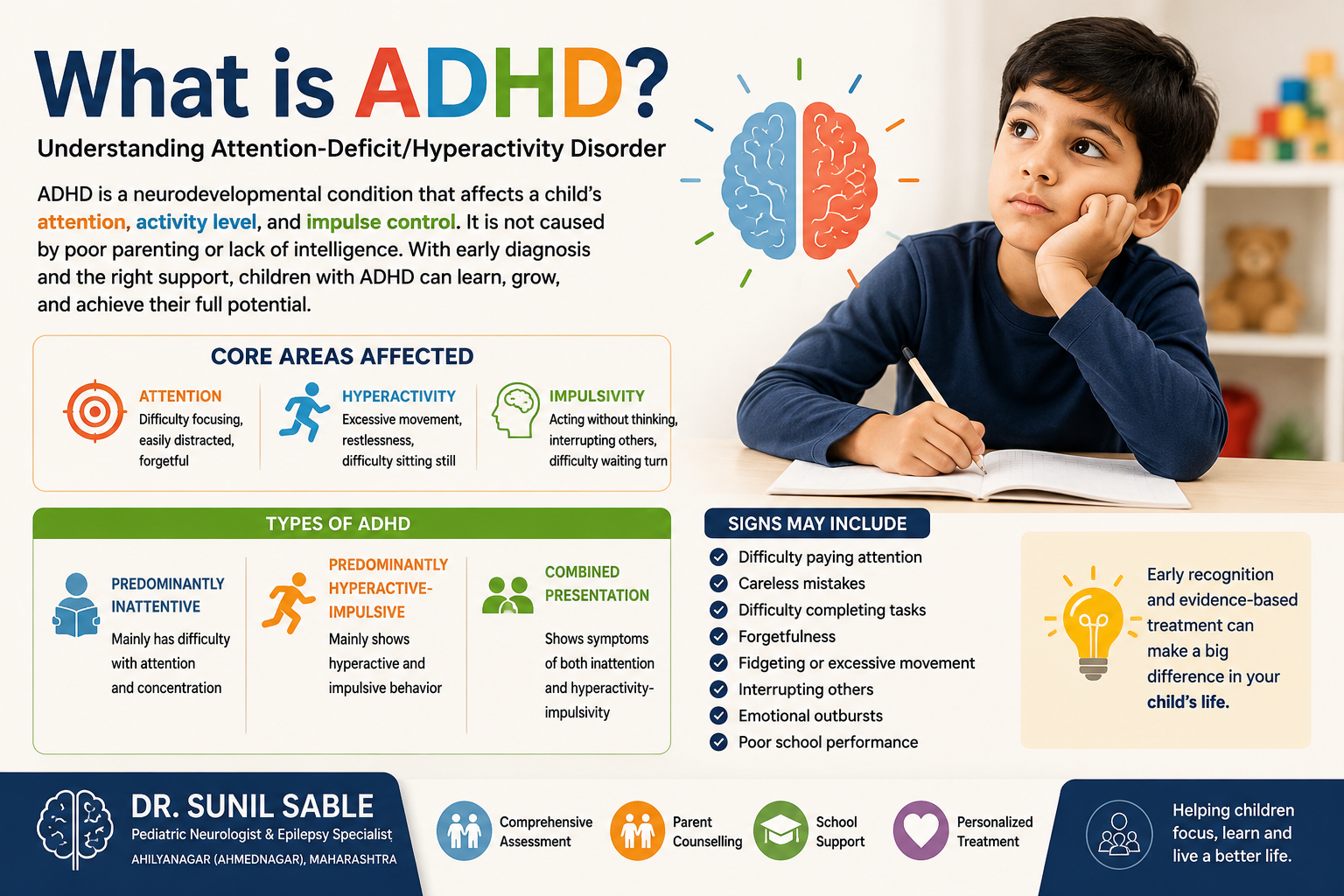
Attention-Deficit/Hyperactivity Disorder (ADHD) is a common neurodevelopmental disorder that affects a child’s ability to pay attention, control impulses, regulate behaviour, and manage activity levels. It is not caused by poor parenting, laziness, lack of intelligence, or a child’s unwillingness to behave. ADHD is a medical condition that affects the developing brain and can influence how children learn, think, organize tasks, and interact with others.
Children with ADHD may have difficulty staying focused, following instructions, completing homework, sitting still, waiting for their turn, or controlling impulsive behaviour. These challenges can affect their performance at school, relationships with family and friends, and self-confidence. However, with early diagnosis and appropriate treatment, most children with ADHD can succeed academically, socially, and emotionally.
At the ADHD Assessment & Treatment Clinic at Dr. Sunil Sable Pediatric Neurology & Cardiology Centre, Dr. Sunil Sable, Pediatric Neurologist & Epilepsy Specialist, Ahilyanagar (Ahmednagar), Maharashtra, provides comprehensive evaluation to determine whether a child’s symptoms are due to ADHD or another condition that may present with similar difficulties.
ADHD Is More Than Being "Hyperactive"
Many children are naturally active, energetic, and curious. ADHD is different because the symptoms are persistent, occur in more than one setting (such as home and school), are not appropriate for the child’s developmental age, and interfere with daily functioning.
Children with ADHD may struggle to:
- 🎯 Maintain attention during schoolwork or conversations
- ⚡ Sit still for age-appropriate periods
- 🚶 Control excessive movement or restlessness
- 💬 Think before speaking or acting
- 📚 Complete homework and classroom tasks
- 🧩 Organize schoolwork and daily activities
- ⏰ Manage time and follow routines
- 🤝 Build and maintain friendships
Types of ADHD
ADHD is classified into three main presentations:
1. Predominantly Inattentive Presentation
Children mainly have difficulty with attention and concentration. They may appear forgetful, easily distracted, disorganized, and may frequently lose things or make careless mistakes.
2. Predominantly Hyperactive-Impulsive Presentation
Children are unusually active and impulsive. They may constantly fidget, run or climb excessively, interrupt conversations, have difficulty waiting their turn, and act without thinking.
3. Combined Presentation
This is the most common form of ADHD. Children have significant symptoms of both inattention and hyperactivity-impulsivity.
What Causes ADHD?
The exact cause of ADHD is not fully understood, but research shows that it results from a combination of genetic, biological, and environmental factors. ADHD tends to run in families, and differences in brain development and function are believed to play an important role.
Several factors may increase the risk of ADHD, including:
- Family history of ADHD
- Premature birth or low birth weight
- Prenatal exposure to tobacco, alcohol, or certain drugs
- Brain injury (rare)
- Certain environmental risk factors
Importantly, ADHD is not caused by eating sugar, poor discipline, or bad parenting.
ADHD Is Common
ADHD is one of the most common childhood neurodevelopmental disorders worldwide. It affects approximately 5–7% of school-aged children, although the exact prevalence varies between populations and diagnostic methods. Boys are diagnosed more frequently than girls, but girls may present with less obvious symptoms, particularly the inattentive type, and therefore remain undiagnosed for longer.
ADHD Often Occurs with Other Conditions
Many children with ADHD also have other developmental or medical conditions, such as:
- Autism Spectrum Disorder (ASD)
- Specific Learning Disorders (Dyslexia, Dysgraphia, Dyscalculia)
- Speech and Language Disorders
- Anxiety Disorders
- Sleep Disorders
- Oppositional Defiant Disorder (ODD)
- Tic Disorders
- Epilepsy
- Developmental Coordination Disorder (DCD)
Identifying these associated conditions is an important part of a comprehensive ADHD assessment.
Early Recognition Makes a Difference
ADHD is a treatable condition. Early diagnosis, evidence-based treatment, parent education, school support, and behavioural strategies can significantly improve attention, learning, behaviour, self-esteem, and quality of life.
At the ADHD Assessment & Treatment Clinic, Dr. Sunil Sable provides individualized assessments and personalized management plans to help children thrive at home, in school, and in everyday life.
ADHD is not a reflection of a child’s intelligence or potential. With the right support, children with ADHD can become confident learners, develop strong life skills, and achieve remarkable success.
Signs and Symptoms of ADHD
Recognizing the Early Signs of Attention-Deficit/Hyperactivity Disorder in Children
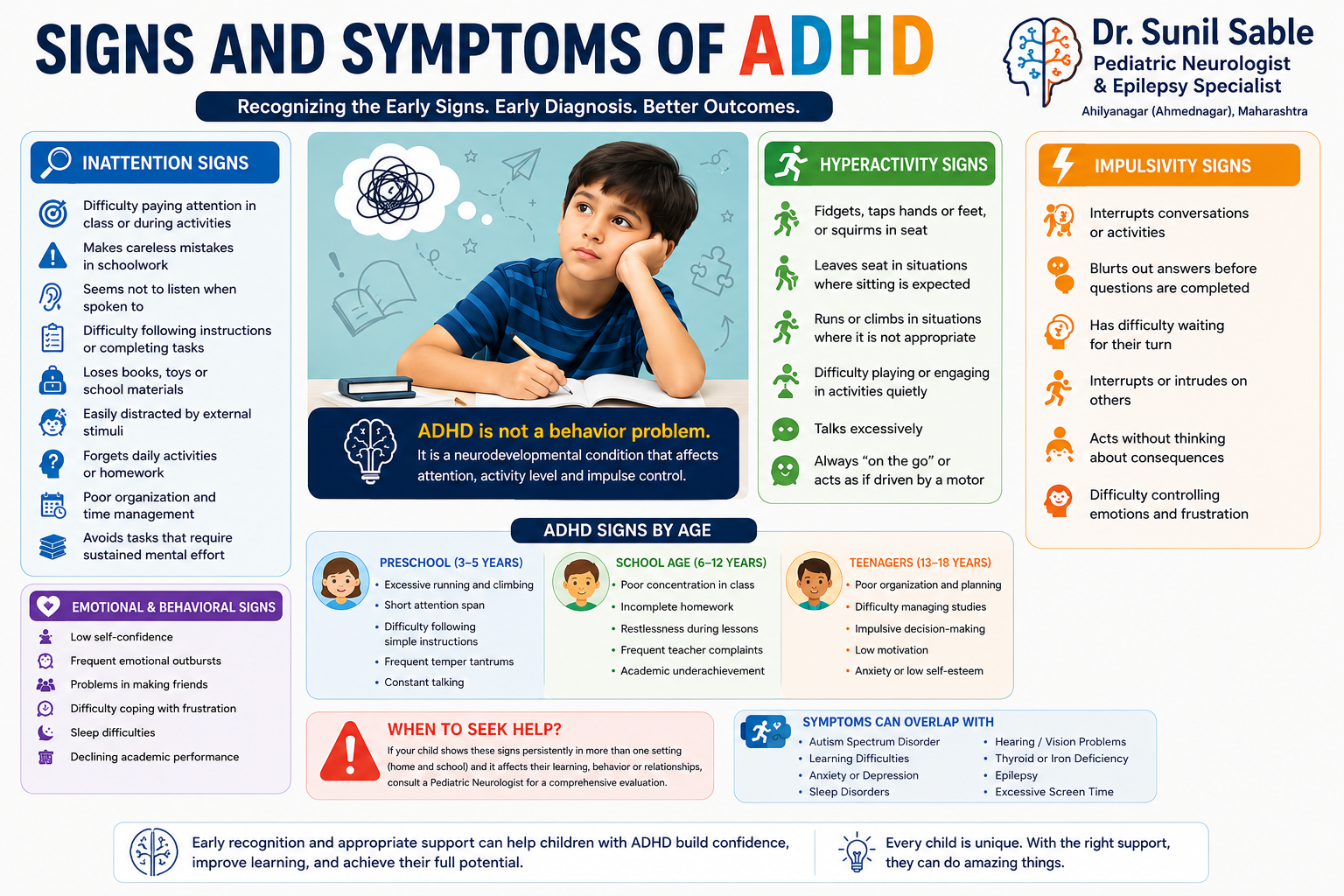
Every child can be active, curious, forgetful, or easily distracted from time to time. However, when these behaviours are persistent, occur in multiple settings such as home and school, and interfere with learning, social interactions, or daily activities, they may be signs of Attention-Deficit/Hyperactivity Disorder (ADHD).
ADHD symptoms often become more noticeable when children start preschool or school, where they are expected to sit quietly, follow instructions, stay organized, and complete tasks independently. Early recognition allows children to receive appropriate evaluation and support before academic, behavioural, and emotional difficulties become more significant.
At the ADHD Assessment & Treatment Clinic, Dr. Sunil Sable, Pediatric Neurologist & Epilepsy Specialist, Ahilyanagar (Ahmednagar), Maharashtra, performs a comprehensive evaluation to determine whether a child’s symptoms are due to ADHD or another medical, developmental, or behavioural condition.
Common Symptoms of Inattention
Children with predominantly inattentive symptoms may:
- 🎯 Have difficulty paying attention during conversations or classroom activities.
- 📚 Make frequent careless mistakes in schoolwork.
- 👂 Seem not to listen even when spoken to directly.
- 📝 Have difficulty following instructions or completing tasks.
- 🎒 Frequently lose books, pencils, toys, or school materials.
- ⏰ Forget daily activities, homework, or important tasks.
- 🧩 Become easily distracted by sounds, people, or surrounding activities.
- 📂 Have poor organization and time-management skills.
- 🚫 Avoid tasks that require sustained mental effort, such as homework or reading.
Common Symptoms of Hyperactivity
Children with hyperactivity may:
- 🚶 Constantly fidget, tap their hands or feet, or squirm in their seat.
- 🏃 Run, climb, or move excessively when it is inappropriate.
- 🪑 Have difficulty remaining seated during class or meals.
- 🔊 Talk excessively or make frequent noises.
- ⚡ Appear to be “always on the go” or unable to relax.
- 🎮 Find it difficult to participate quietly in games or activities.
Common Symptoms of Impulsivity
Children with impulsive behaviour may:
- 💬 Interrupt conversations or answer questions before they are completed.
- ⏳ Have difficulty waiting for their turn during games or classroom activities.
- 🤝 Interrupt or intrude on other people’s activities.
- ⚠️ Act without considering the consequences.
- 😠 Become easily frustrated when things do not go as expected.
- 🎯 Make quick decisions that may result in accidents or injuries.
Emotional and Behavioural Signs
Some children with ADHD may also experience:
- 😟 Low self-confidence
- 😤 Frequent emotional outbursts
- 😢 Difficulty coping with frustration
- 🤝 Problems making or maintaining friendships
- 🏫 Poor classroom behaviour
- 📉 Declining academic performance
- 😴 Sleep difficulties
- 📱 Difficulty limiting screen time
These symptoms may become more noticeable as academic demands increase.
ADHD Symptoms at Different Ages
👶 Preschool Children (3–5 Years)
- Excessive running and climbing
- Difficulty sitting for stories or meals
- Constant talking
- Short attention span
- Difficulty following simple instructions
- Frequent temper tantrums
🧒 School-Aged Children (6–12 Years)
- Poor concentration in class
- Incomplete homework
- Forgetting books and assignments
- Frequent teacher complaints
- Restlessness during lessons
- Difficulty following classroom rules
- Academic underachievement despite normal intelligence
👦 Teenagers (13–18 Years)
- Poor organization and planning
- Difficulty managing studies
- Forgetfulness
- Restlessness rather than obvious hyperactivity
- Impulsive decision-making
- Low motivation
- Anxiety or reduced self-esteem related to academic difficulties
When Should Parents Seek an ADHD Assessment?
You should consider a specialist evaluation if your child:
- Has persistent attention or concentration problems.
- Is significantly more hyperactive or impulsive than other children of the same age.
- Receives repeated complaints from teachers.
- Struggles academically despite adequate intelligence.
- Has difficulty completing homework or following instructions.
- Frequently loses belongings or forgets important tasks.
- Has behavioural difficulties affecting family or school life.
- Shows symptoms in more than one setting, such as both home and school.
A comprehensive evaluation helps determine whether the symptoms are caused by ADHD or another condition that may require different management.
ADHD Symptoms Can Overlap with Other Conditions
Not every child with attention or behavioural problems has ADHD. Similar symptoms may occur in children with:
- Autism Spectrum Disorder
- Learning Difficulties
- Speech and Language Disorders
- Anxiety Disorders
- Depression
- Sleep Disorders
- Hearing or Vision Problems
- Thyroid Disorders
- Iron Deficiency
- Epilepsy
- Excessive Screen Time
This is why an expert evaluation is essential before making a diagnosis.
Early Recognition Leads to Better Outcomes
Recognizing ADHD early allows children to receive appropriate support through behavioural strategies, parent training, school accommodations, and medication when indicated. With timely intervention, children with ADHD can improve their attention, behaviour, academic performance, confidence, and social relationships.
At the ADHD Assessment & Treatment Clinic, Dr. Sunil Sable provides comprehensive, evidence-based assessments to help families understand their child’s strengths, identify challenges, and develop an individualized treatment plan that supports long-term success.
Every child with ADHD has unique strengths. Early diagnosis and the right support can help them reach their full academic, social, and emotional potential.
When Should Parents Worry?
When Is It Time to Seek an ADHD Evaluation?
It is normal for children to be energetic, curious, and occasionally distracted. However, when difficulties with attention, hyperactivity, or impulsive behaviour become persistent and begin to affect learning, behaviour, relationships, or everyday functioning, parents should consider seeking a professional evaluation.
Many children with ADHD are initially labelled as “naughty,” “lazy,” or “careless.” In reality, these behaviours may reflect an underlying neurodevelopmental condition rather than a lack of discipline or intelligence. Early recognition and timely assessment can help children receive appropriate support before academic, behavioural, and emotional problems become more significant.
At the ADHD Assessment & Treatment Clinic, Dr. Sunil Sable, Pediatric Neurologist & Epilepsy Specialist, Ahilyanagar (Ahmednagar), Maharashtra, provides comprehensive evaluations to determine whether your child’s symptoms are due to ADHD or another developmental, behavioural, or neurological condition.
Warning Signs That Should Not Be Ignored
Parents should consider an ADHD assessment if their child:
- 🎯 Has difficulty concentrating on age-appropriate activities.
- 📚 Frequently leaves homework or classwork incomplete.
- 🚶 Cannot sit still during meals, classes, or quiet activities.
- 💬 Interrupts conversations or speaks excessively.
- ⏰ Frequently forgets homework, books, or daily responsibilities.
- 🎒 Regularly loses school supplies, toys, or personal belongings.
- 📝 Makes repeated careless mistakes despite understanding the work.
- 🚫 Has difficulty following instructions or completing multi-step tasks.
- 🤝 Frequently gets into trouble at school because of impulsive behaviour.
- 😟 Appears frustrated, anxious, or has low self-confidence because of school or behaviour.
Symptoms Should Be Present in More Than One Setting
One of the key features of ADHD is that symptoms usually occur in more than one environment, such as:
- 🏠 At home
- 🏫 At school
- ⚽ During sports or extracurricular activities
- 👨👩👧 During social interactions with family and friends
If the behaviour occurs only in one setting, other causes may need to be considered.
ADHD Can Affect More Than Academics
Without appropriate support, ADHD may impact several areas of a child’s life, including:
- 📖 Academic performance
- 🤝 Friendships and social skills
- ❤️ Self-esteem and confidence
- 👨👩👧 Family relationships
- 😴 Sleep routines
- 🎯 Emotional regulation
- 🧩 Daily organization and independence
Don't Wait for "They Will Grow Out of It"
Many parents are advised to “wait and see” or are told that their child will eventually outgrow these behaviours. While children naturally mature over time, persistent ADHD symptoms often continue unless they are recognized and appropriately managed. Delaying assessment may lead to increasing academic difficulties, behavioural problems, emotional stress, and reduced self-confidence.
Seeking an evaluation does not mean your child will automatically require medication. The first step is understanding the cause of the symptoms and developing an individualized management plan.
Seek Immediate Medical Attention If Your Child Has
Although ADHD itself is not an emergency, urgent medical evaluation is needed if your child develops:
- ⚠️ Sudden loss of previously acquired developmental skills.
- ⚠️ Seizures or episodes of loss of consciousness.
- ⚠️ Severe headaches with vomiting or changes in vision.
- ⚠️ Sudden weakness, difficulty walking, or abnormal movements.
- ⚠️ Significant behavioural changes associated with confusion or altered consciousness.
These symptoms may indicate conditions other than ADHD and require prompt medical assessment.
Early Evaluation Can Make a Lifelong Difference
Children with ADHD often have remarkable creativity, curiosity, intelligence, and problem-solving abilities. With early diagnosis, evidence-based treatment, parent education, school support, and individualized strategies, they can develop the skills needed to succeed academically, socially, and emotionally.
If you are concerned about your child’s attention, behaviour, or learning, an early consultation can provide clarity, reassurance, and the right plan for moving forward.
If you have concerns about your child’s attention, hyperactivity, impulsivity, or school performance, don’t wait. Early evaluation can help identify the cause and ensure your child receives the support they need to reach their full potential.
Who Should Visit Our ADHD Clinic?
Expert ADHD Assessment for Children and Adolescents with Attention, Behavioural, and Learning Concerns
Not every child who is active, talkative, or easily distracted has ADHD. However, when these behaviours become persistent and begin to affect school performance, relationships, or daily life, a comprehensive evaluation by a Pediatric Neurologist is recommended.
At the ADHD Assessment & Treatment Clinic, Dr. Sunil Sable, Pediatric Neurologist & Epilepsy Specialist, Ahilyanagar (Ahmednagar), Maharashtra, provides detailed assessments for children and adolescents with attention, behavioural, developmental, and learning concerns. Every child undergoes a comprehensive neurological and developmental evaluation to determine whether the symptoms are caused by ADHD or another underlying condition.
Children Who May Benefit from an ADHD Assessment
🎯 Children with Poor Attention and Concentration
Your child may benefit from an evaluation if they:
- Have difficulty concentrating during schoolwork or conversations.
- Are easily distracted by surrounding activities.
- Frequently make careless mistakes.
- Struggle to complete homework or classroom assignments.
- Have difficulty following instructions.
⚡ Children with Hyperactivity
Consider an assessment if your child:
- Cannot sit still for age-appropriate periods.
- Constantly runs, climbs, or fidgets.
- Talks excessively.
- Appears to be “always on the go.”
- Has difficulty participating quietly in activities.
🚦 Children with Impulsive Behaviour
An ADHD evaluation is recommended if your child:
- Interrupts conversations frequently.
- Answers questions before they are completed.
- Finds it difficult to wait their turn.
- Acts without thinking about consequences.
- Has frequent behavioural issues at home or school.
📚 Children Struggling at School
Many children visit our clinic because they:
- Have declining academic performance.
- Frequently forget homework or assignments.
- Have difficulty organizing schoolwork.
- Need constant reminders to complete tasks.
- Receive repeated complaints from teachers.
🧩 Children with Learning Difficulties
Children with ADHD often have associated learning challenges. Assessment is helpful if your child has:
- Difficulty reading (Dyslexia)
- Difficulty writing (Dysgraphia)
- Difficulty with mathematics (Dyscalculia)
- Slow learning despite normal intelligence
- Poor study skills and examination performance
🤝 Children with Behavioural or Emotional Concerns
Our ADHD Clinic also evaluates children who have:
- Frequent temper outbursts
- Difficulty controlling emotions
- Low frustration tolerance
- Poor social interaction
- Difficulty making or maintaining friendships
- Low self-confidence related to school performance
🗣️ Children with Developmental or Communication Concerns
Some children with ADHD also have:
- Speech Delay
- Language Disorders
- Autism Spectrum Disorder
- Developmental Delay
- Executive Function Difficulties
A comprehensive assessment helps identify whether ADHD is present alone or alongside another developmental condition.
👦 Teenagers with Attention and Academic Problems
Older children and adolescents may benefit from an evaluation if they:
- Struggle to manage studies independently.
- Frequently forget assignments and deadlines.
- Have difficulty planning and organizing tasks.
- Experience declining academic performance.
- Have problems with time management.
- Show impulsive decision-making or behavioural concerns.
Parents Seeking a Second Opinion
Families are welcome to consult Dr. Sunil Sable for a second opinion regarding:
- ADHD diagnosis
- Behavioural concerns
- School-related difficulties
- Learning problems
- Medication advice
- Developmental assessment
- Complex neurodevelopmental disorders
Our ADHD Clinic Is Right for Your Child If...
You are concerned because your child:
✅ Cannot concentrate in school
✅ Is unusually restless or hyperactive
✅ Frequently interrupts others
✅ Has poor academic performance
✅ Forgets homework or daily tasks
✅ Has behavioural problems at home or school
✅ Has difficulty following instructions
✅ Appears disorganized or forgetful
✅ Has associated speech, learning, or developmental concerns
Comprehensive Evaluation Beyond ADHD
Many conditions can resemble ADHD. During the assessment, Dr. Sunil Sable carefully evaluates for other possible causes, including:
- Autism Spectrum Disorder
- Learning Difficulties
- Speech and Language Disorders
- Anxiety Disorders
- Sleep Disorders
- Hearing Problems
- Vision Problems
- Epilepsy
- Thyroid Disorders
- Iron Deficiency
- Excessive Screen Time
- Other Neurological or Developmental Conditions
This comprehensive approach helps ensure an accurate diagnosis and an individualized treatment plan.
Helping Every Child Reach Their Full Potential
Whether your child is struggling to focus in school, constantly on the move, impulsive, or facing behavioural and learning challenges, early specialist evaluation can make a meaningful difference. At the ADHD Assessment & Treatment Clinic, Dr. Sunil Sable is committed to providing compassionate, evidence-based, and family-centred care that supports children, parents, and schools in achieving the best possible outcomes.
Every child deserves the opportunity to learn, succeed, and thrive. If you have concerns about your child’s attention, behaviour, or academic performance, an early ADHD assessment can provide the answers and support your family needs.
Conditions That Can Mimic ADHD
Not Every Child with Poor Attention or Hyperactivity Has ADHD
Many parents assume that a child who is restless, inattentive, impulsive, or struggling at school has Attention-Deficit/Hyperactivity Disorder (ADHD). While ADHD is one of the most common neurodevelopmental disorders in children, similar symptoms can occur in several other medical, neurological, developmental, and psychological conditions.
This is why a comprehensive assessment is essential before making an ADHD diagnosis. At the ADHD Assessment & Treatment Clinic, Dr. Sunil Sable, Pediatric Neurologist & Epilepsy Specialist, Ahilyanagar (Ahmednagar), Maharashtra, performs a detailed developmental, neurological, behavioural, and medical evaluation to identify the true cause of your child’s symptoms and develop the most appropriate treatment plan.
🧩 Autism Spectrum Disorder (ASD)
Children with Autism Spectrum Disorder may also have poor attention, hyperactivity, impulsivity, and behavioural challenges. However, they usually have additional difficulties with social communication, eye contact, understanding social cues, repetitive behaviours, restricted interests, and sensory differences.
A child may have Autism, ADHD, or both conditions together, making a specialist evaluation particularly important.
📚 Specific Learning Disorders (Learning Disabilities)
Children with Dyslexia, Dysgraphia, or Dyscalculia often appear inattentive because they struggle to understand schoolwork. They may avoid reading, writing, or mathematics, become frustrated during homework, and lose interest in classroom activities.
Without proper assessment, learning disorders are sometimes mistaken for ADHD.
👂 Hearing Loss
Children with hearing impairment may seem distracted, ignore instructions, or respond inconsistently because they cannot hear clearly. They may appear inattentive in class or have delayed language development.
A hearing assessment may be recommended when clinically appropriate.
😟 Anxiety Disorders
Children with anxiety often find it difficult to concentrate because they are constantly worried or fearful. They may appear restless, distracted, or forgetful, particularly in school or unfamiliar situations.
Treating anxiety often improves attention and behaviour.
😔 Depression
Depression in older children and adolescents may present with:
- Poor concentration
- Low motivation
- Declining academic performance
- Fatigue
- Social withdrawal
- Irritability
These symptoms can resemble ADHD but require a different approach to management.
😴 Sleep Disorders
Poor sleep can significantly affect attention, behaviour, learning, and emotional regulation.
Common sleep-related conditions include:
- Insufficient sleep
- Obstructive Sleep Apnoea
- Restless sleep
- Chronic insomnia
- Circadian rhythm disorders
Children who do not sleep well may become hyperactive, irritable, and unable to concentrate during the day.
🦋 Thyroid Disorders
Both overactive (hyperthyroidism) and underactive (hypothyroidism) thyroid disorders can affect concentration, energy levels, behaviour, mood, and academic performance.
If indicated, blood tests may be recommended to rule out underlying medical causes.
🩸 Iron Deficiency
Iron deficiency, particularly when associated with anaemia, may lead to:
- Reduced attention
- Fatigue
- Irritability
- Poor school performance
- Restlessness
Identifying and treating nutritional deficiencies can improve a child’s overall functioning.
⚡ Epilepsy
Certain seizure disorders, particularly absence seizures, may be mistaken for inattentiveness because children briefly stop what they are doing and appear to “daydream.” Other epilepsy syndromes may also affect learning, behaviour, and concentration.
When the history suggests possible seizures, further neurological evaluation and an EEG may be recommended.
📱 Excessive Screen Time and Screen Addiction
Excessive use of smartphones, tablets, television, gaming, and social media can contribute to:
- Reduced attention span
- Poor concentration
- Hyperactive behaviour
- Sleep disturbances
- Emotional dysregulation
- Declining academic performance
In some children, reducing screen time and improving daily routines can lead to significant improvement in attention and behaviour.
Other Conditions That May Resemble ADHD
A comprehensive evaluation may also consider:
- Developmental Delay
- Speech and Language Disorders
- Intellectual Disability
- Developmental Coordination Disorder (DCD)
- Tic Disorders
- Sensory Processing Difficulties
- Oppositional Defiant Disorder (ODD)
- Emotional and Behavioural Disorders
- Medication Side Effects
- Chronic Medical Illnesses
Why an Accurate Diagnosis Matters
Treating a child for ADHD without identifying the true underlying cause may delay appropriate care. Every child deserves an accurate diagnosis based on a comprehensive developmental, neurological, behavioural, and medical assessment rather than symptoms alone.
At the ADHD Assessment & Treatment Clinic, Dr. Sunil Sable carefully evaluates each child to determine whether ADHD is present or whether another condition—or a combination of conditions—is responsible for the symptoms. This thorough approach ensures that every child receives the most appropriate, evidence-based treatment and support.
Not every child who is inattentive or hyperactive has ADHD. Understanding the underlying cause is the first step toward effective treatment and helping your child achieve their full potential.
How is ADHD Diagnosed?
A Comprehensive Evaluation Is Essential for an Accurate ADHD Diagnosis
There is no single blood test, brain scan, or laboratory investigation that can diagnose Attention-Deficit/Hyperactivity Disorder (ADHD). Instead, ADHD is diagnosed through a comprehensive clinical assessment that includes a detailed medical history, developmental evaluation, behavioural assessment, neurological examination, and information from parents and teachers.
Because many medical, developmental, psychological, and educational conditions can produce symptoms similar to ADHD, an accurate diagnosis requires careful evaluation by an experienced specialist.
At the ADHD Assessment & Treatment Clinic, Dr. Sunil Sable, Pediatric Neurologist & Epilepsy Specialist, Ahilyanagar (Ahmednagar), Maharashtra, follows an evidence-based approach based on internationally accepted diagnostic guidelines to determine whether a child has ADHD or another condition that requires different management.
Step 1: Detailed Medical and Developmental History
The evaluation begins with an in-depth discussion about your child’s:
- Pregnancy, birth, and neonatal history
- Developmental milestones
- Speech and language development
- Behaviour at home and school
- Attention and concentration
- Hyperactivity and impulsivity
- Academic performance
- Sleep habits
- Screen time
- Family history of ADHD, learning disorders, epilepsy, or other neurological conditions
- Previous medical illnesses and medications
Understanding the child’s developmental journey helps identify possible contributing factors and associated conditions.
Step 2: Parent Interview
Parents provide valuable information about their child’s everyday behaviour.
Common topics include:
- Difficulty paying attention
- Forgetfulness
- Emotional regulation
- Behaviour at home
- Social interactions
- Daily routines
- Homework challenges
- Organization skills
- Strengths and interests
Parents are encouraged to discuss their concerns openly, as every observation contributes to an accurate diagnosis.
Step 3: Teacher Feedback
ADHD symptoms should usually be present in more than one setting, such as both home and school.
Teacher observations help assess:
- Classroom behaviour
- Attention during lessons
- Academic performance
- Peer relationships
- Ability to follow instructions
- Impulsivity
- Hyperactivity
Standardized teacher rating scales may be used when appropriate.
Step 4: Behavioural Assessment
The child’s behaviour is assessed using clinical interviews and validated assessment tools. The evaluation focuses on:
- Inattention
- Hyperactivity
- Impulsivity
- Executive functioning
- Emotional regulation
- Social behaviour
- Adaptive functioning
This helps determine whether the symptoms meet the diagnostic criteria for ADHD.
Step 5: Neurological and Physical Examination
A detailed neurological examination is performed to identify any signs of:
- Developmental disorders
- Movement disorders
- Neuromuscular disorders
- Vision or hearing concerns
- Other neurological conditions that may affect attention or behaviour
This examination also helps rule out alternative medical causes of the child’s symptoms.
Step 6: Screening for Associated Conditions
Many children with ADHD have additional developmental or medical conditions. During the assessment, Dr. Sunil Sable evaluates for:
- Autism Spectrum Disorder
- Learning Difficulties
- Speech and Language Disorders
- Developmental Delay
- Anxiety Disorders
- Depression
- Sleep Disorders
- Tic Disorders
- Epilepsy
- Intellectual Disability
- Excessive Screen Time
- Other behavioural or neurological conditions
Identifying these conditions is essential because they may require additional treatment and support.
Step 7: Applying International Diagnostic Criteria
The diagnosis of ADHD is based on internationally accepted criteria, including those described in the Diagnostic and Statistical Manual of Mental Disorders (DSM-5-TR). Symptoms should:
- Be present for at least 6 months
- Be inappropriate for the child’s developmental age
- Be present before 12 years of age
- Occur in two or more settings, such as home and school
- Significantly affect academic, social, or daily functioning
- Not be better explained by another medical or psychological condition
Are Blood Tests or Brain Scans Needed?
Most children with ADHD do not require routine blood tests, CT scans, or MRI scans to confirm the diagnosis.
However, additional investigations may be recommended if the clinical evaluation suggests another underlying condition. Depending on the child’s symptoms, these may include:
- Hearing assessment
- Vision assessment
- Iron studies
- Thyroid function tests
- EEG (if seizures are suspected)
- MRI brain (only when clinically indicated)
- Developmental or psychological testing
- Genetic evaluation in selected cases
Investigations are individualized and are not routinely required for every child with ADHD.
Why Early Diagnosis Is Important
An early and accurate diagnosis helps children receive:
- Evidence-based behavioural interventions
- Parent education and training
- School accommodations and classroom support
- Treatment for associated conditions
- Medication when clinically indicated
- Regular follow-up to monitor progress
Early intervention can improve attention, behaviour, learning, emotional well-being, and overall quality of life.
Comprehensive ADHD Assessment at Our Clinic
At the ADHD Assessment & Treatment Clinic, Dr. Sunil Sable believes that every child deserves an individualized evaluation rather than a quick label. By combining detailed history-taking, developmental assessment, neurological examination, behavioural evaluation, and information from parents and teachers, we aim to provide an accurate diagnosis and a personalized treatment plan tailored to each child’s unique needs.
ADHD diagnosis is not based on a single test—it is based on understanding the whole child. A careful, comprehensive evaluation is the first step toward effective treatment and long-term success.
Our ADHD Assessment Process
A Thorough, Evidence-Based Evaluation to Understand Your Child's Strengths and Challenges
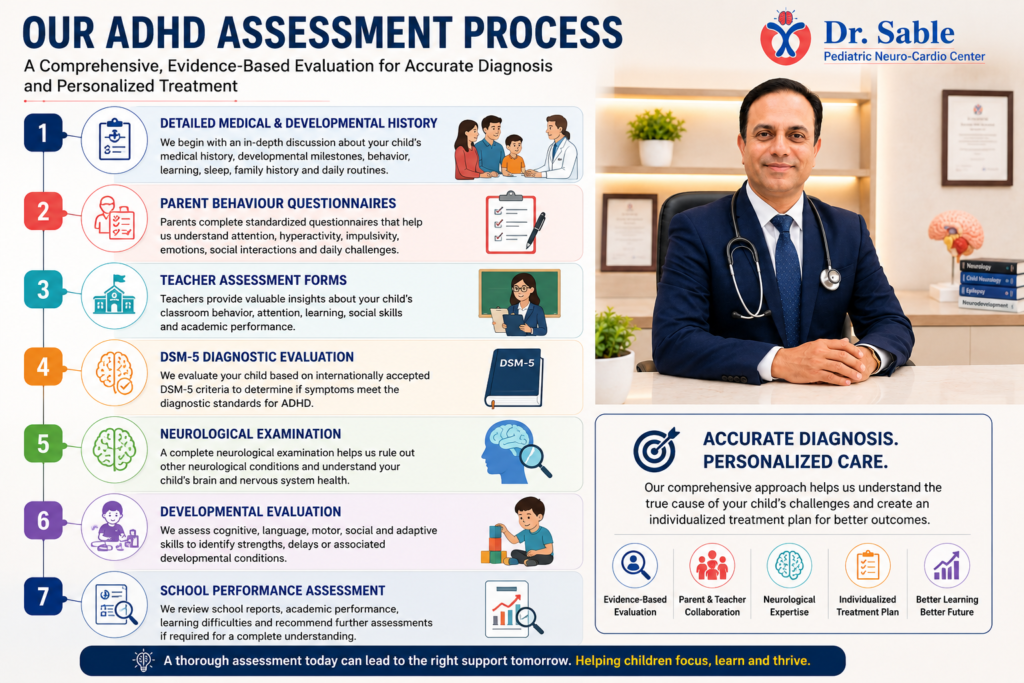
Every child is unique, and there is no single test that can diagnose ADHD. At the ADHD Assessment & Treatment Clinic, Dr. Sunil Sable, Pediatric Neurologist & Epilepsy Specialist, Ahilyanagar (Ahmednagar), Maharashtra, follows a structured, evidence-based assessment process designed to identify ADHD accurately while also evaluating for other developmental, neurological, behavioural, and medical conditions that may cause similar symptoms.
Our goal is not simply to determine whether a child has ADHD, but to understand why the child is struggling and develop a personalized management plan that supports long-term success at home, in school, and in everyday life.
1. Detailed Medical and Developmental History
The assessment begins with a comprehensive discussion with parents to understand the child’s overall health and developmental journey.
This includes:
- Pregnancy and birth history
- Early developmental milestones
- Speech and language development
- Medical illnesses and medications
- Family history of ADHD, learning disorders, epilepsy, or other neurological conditions
- Sleep habits
- Screen time
- Behaviour at home
- Academic performance
- Social interactions
- Previous therapies and interventions
A detailed history provides valuable clues about the possible causes of your child’s symptoms.
2. Parent Behaviour Questionnaires
Parents know their child best. Standardized parent rating scales and questionnaires help us understand your child’s behaviour across different situations.
These forms assess:
- Attention and concentration
- Hyperactivity
- Impulsivity
- Emotional regulation
- Behaviour at home
- Daily routines
- Executive functioning
- Social behaviour
Parents are encouraged to answer honestly, as there are no “right” or “wrong” answers.
3. Teacher Assessment Forms
Children with ADHD usually show symptoms in more than one environment. Teacher feedback is therefore an essential part of the assessment.
Teacher questionnaires help evaluate:
- Classroom attention
- Learning behaviour
- Hyperactivity
- Impulsivity
- Ability to follow instructions
- Organization skills
- Homework completion
- Peer relationships
- Classroom behaviour
These observations provide important information about how your child functions in the school environment.
4. DSM-5 Diagnostic Evaluation
The diagnosis of ADHD is based on internationally accepted diagnostic criteria outlined in the Diagnostic and Statistical Manual of Mental Disorders, Fifth Edition, Text Revision (DSM-5-TR).
During the assessment, Dr. Sunil Sable carefully evaluates whether:
- Symptoms have been present for at least six months.
- Symptoms began before 12 years of age.
- Symptoms occur in two or more settings (such as home and school).
- Symptoms interfere with learning, behaviour, or social functioning.
- Another medical or psychological condition does not better explain the symptoms.
This ensures an accurate and evidence-based diagnosis.
5. Comprehensive Neurological Examination
As a Pediatric Neurologist, Dr. Sunil Sable performs a detailed neurological examination to identify any neurological signs that may contribute to attention or behavioural problems.
The examination includes assessment of:
- Muscle tone and strength
- Coordination and balance
- Reflexes
- Cranial nerve function
- Vision and hearing concerns
- Motor development
- Abnormal movements or tics
- Other neurological findings
This helps distinguish ADHD from neurological disorders that may require different treatment.
6. Developmental Evaluation
Many children with ADHD have associated developmental challenges. A comprehensive developmental assessment helps evaluate:
- Gross motor skills
- Fine motor skills
- Speech and language development
- Social communication
- Cognitive abilities
- Adaptive skills
- Executive functioning
The evaluation also screens for associated conditions such as Autism Spectrum Disorder, Developmental Delay, Learning Disorders, and Intellectual Disability.
7. School Performance Assessment
Understanding how ADHD affects learning is an important part of the evaluation.
The assessment may include review of:
- School report cards
- Teacher observations
- Classroom behaviour
- Homework performance
- Academic strengths and weaknesses
- Reading, writing, and mathematics skills
- Organizational abilities
- Examination performance
When required, recommendations for psychoeducational testing or additional educational support may be provided.
8. Individualized Treatment Planning
Once the assessment is complete, Dr. Sunil Sable discusses the findings with the family and develops a personalized management plan based on the child’s needs.
This may include:
- Parent education and counselling
- Behavioural management strategies
- School accommodations
- Speech or occupational therapy referral (when indicated)
- Lifestyle and sleep recommendations
- Guidance on reducing excessive screen time
- Medication, when clinically appropriate
- Regular follow-up to monitor progress
Our Comprehensive Approach
Unlike a brief consultation focused only on behaviour, our ADHD assessment looks at the whole child. We carefully evaluate medical, neurological, developmental, educational, emotional, and family factors to ensure that every child receives the correct diagnosis and the most appropriate treatment.
At the ADHD Assessment & Treatment Clinic, Dr. Sunil Sable believes that understanding a child’s strengths is just as important as identifying their challenges. By working closely with parents, teachers, and therapists, we aim to help every child achieve success at home, in school, and in everyday life.
A comprehensive ADHD assessment is the foundation of effective treatment. The right diagnosis leads to the right support, helping children build confidence, improve learning, and reach their full potential.
Our ADHD Clinic Services
Comprehensive ADHD Assessment, Treatment, and Long-Term Support for Children and Adolescents
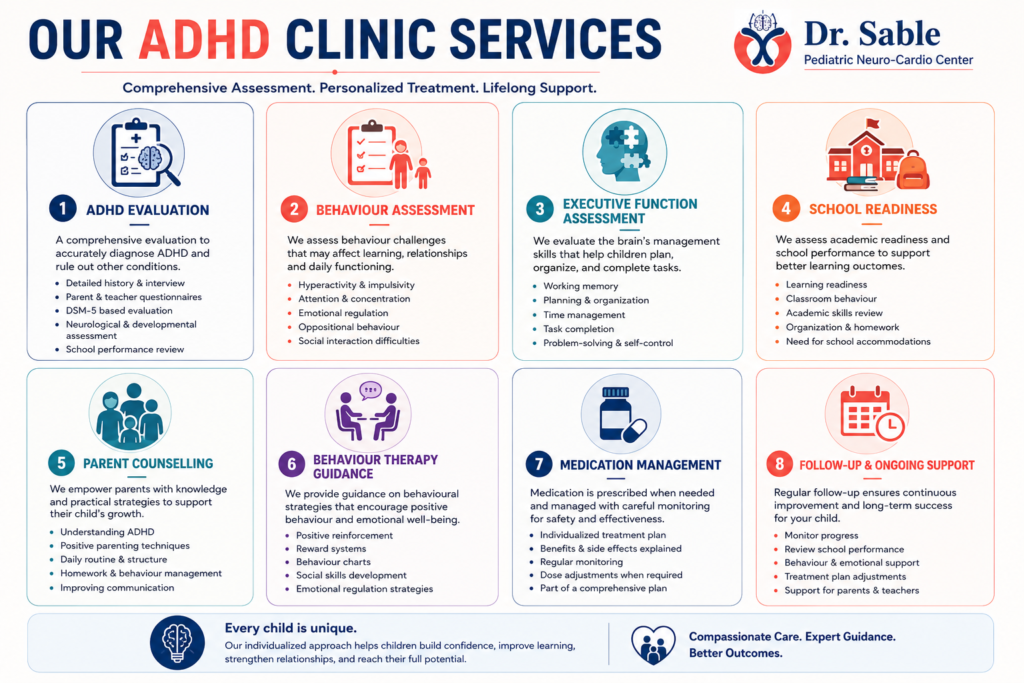
At the ADHD Assessment & Treatment Clinic at Dr. Sunil Sable Pediatric Neurology & Cardiology Centre, Dr. Sunil Sable, Pediatric Neurologist & Epilepsy Specialist, Ahilyanagar (Ahmednagar), Maharashtra, we provide comprehensive, evidence-based care for children and adolescents with Attention-Deficit/Hyperactivity Disorder (ADHD) and related developmental, behavioural, and learning concerns. Our services are designed to identify each child’s strengths and challenges, establish an accurate diagnosis, and develop a personalized treatment plan that supports success at home, in school, and in everyday life.
🧠 Comprehensive ADHD Evaluation
A detailed assessment to accurately diagnose ADHD and distinguish it from other medical, neurological, developmental, and behavioural conditions.
Our evaluation includes:
- Detailed medical and developmental history
- Behavioural assessment
- Parent and teacher questionnaires
- DSM-5 diagnostic evaluation
- Neurological examination
- Developmental assessment
- Review of school performance
- Screening for associated conditions
📋 Behaviour Assessment
We evaluate behavioural concerns that may affect learning, relationships, and daily functioning, including:
- Hyperactivity
- Impulsivity
- Poor attention
- Emotional regulation
- Temper tantrums
- Oppositional behaviour
- Social interaction difficulties
- Behaviour at home and school
This assessment helps identify the underlying cause of behavioural challenges and guides appropriate management.
🎯 Executive Function Assessment
Executive functions are the brain’s “management skills” that help children plan, organize, remember instructions, regulate emotions, and complete tasks.
We assess:
- Attention and concentration
- Working memory
- Planning and organization
- Time management
- Task completion
- Cognitive flexibility
- Self-control
- Problem-solving skills
Understanding executive functioning helps create practical strategies for home and school.
🎒 School Readiness and Academic Assessment
Many children with ADHD experience challenges in the classroom. We assess:
- Learning readiness
- Classroom behaviour
- Attention during lessons
- Homework completion
- Reading, writing, and mathematics difficulties
- Organization skills
- Academic strengths and weaknesses
- Need for educational support or accommodations
Recommendations are provided to help children succeed in school.
👨👩👧 Parent Counselling and Education
Parents play a central role in helping children with ADHD. During consultations, we provide practical guidance on:
- Understanding ADHD
- Positive parenting techniques
- Behaviour management strategies
- Creating structured daily routines
- Homework management
- Improving communication
- Managing emotional outbursts
- Reducing excessive screen time
Our goal is to empower families with knowledge and confidence.
🤝 Behaviour Therapy Guidance
Behavioural strategies are an important part of ADHD management.
We provide guidance on:
- Positive reinforcement techniques
- Reward systems
- Behaviour charts
- Setting realistic expectations
- Building self-esteem
- Improving emotional regulation
- Social skills development
- Classroom behaviour strategies
When appropriate, referrals to psychologists or behavioural therapists may be recommended.
💊 Medication Assessment and Management
Medication is not required for every child with ADHD, but it can be highly effective for children with moderate to severe symptoms when used appropriately.
If medication is recommended, Dr. Sunil Sable will:
- Explain available treatment options
- Discuss expected benefits and possible side effects
- Individualize medication according to the child’s age, symptoms, and medical history
- Monitor growth, appetite, sleep, and overall progress
- Adjust treatment based on the child’s response
Medication is always prescribed as part of a comprehensive treatment plan that includes behavioural and educational support.
Regular Follow-up and Progress Monitoring
ADHD is a long-term condition that benefits from regular review and ongoing support.
Follow-up visits help us:
- Monitor symptom improvement
- Review school progress
- Assess behavioural changes
- Evaluate medication effectiveness (if prescribed)
- Address new concerns
- Modify treatment plans as the child grows
- Support parents throughout the child’s developmental journey
Our aim is to help children achieve their full academic, social, and emotional potential.
Individualized, Family-Centred ADHD Care
Every child with ADHD is different. Some children primarily struggle with attention, while others have hyperactivity, impulsivity, learning difficulties, anxiety, autism, or other associated conditions. At our clinic, we do not use a “one-size-fits-all” approach. Instead, Dr. Sunil Sable develops an individualized management plan based on each child’s unique strengths, challenges, developmental profile, and family goals.
Whether your child needs an ADHD evaluation, behavioural assessment, executive function support, school guidance, parent counselling, medication management, or long-term follow-up, our clinic is committed to providing compassionate, evidence-based, and comprehensive pediatric neurological care.
Our goal is not just to manage ADHD symptoms—it is to help every child build confidence, improve learning, strengthen relationships, and thrive at every stage of development.
Treatment for ADHD
Individualized, Evidence-Based Treatment to Help Children Reach Their Full Potential
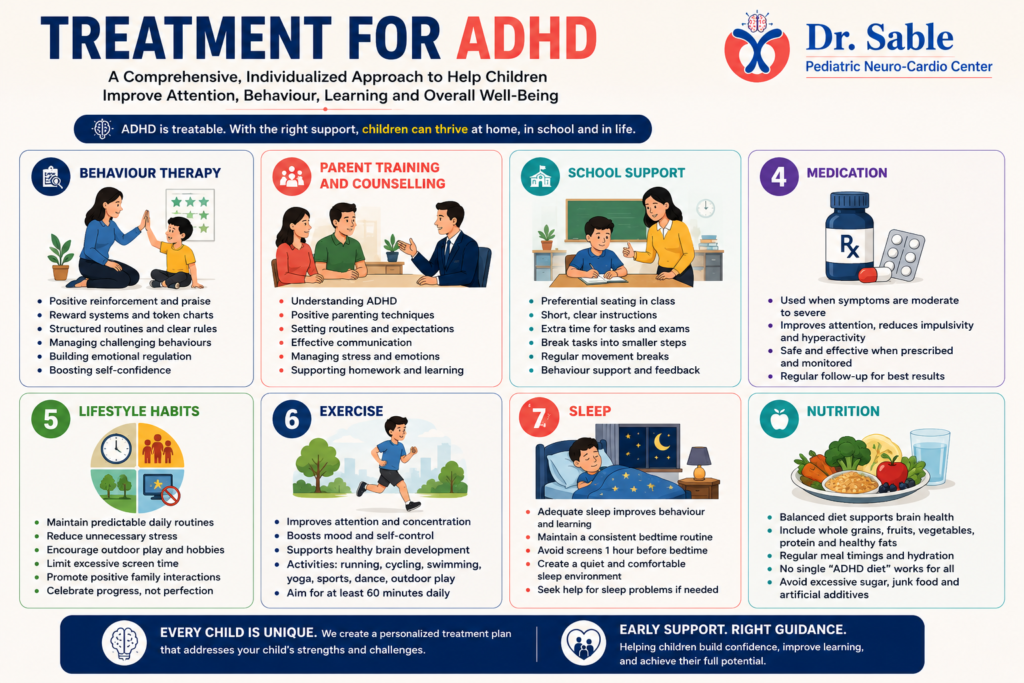
ADHD is a treatable neurodevelopmental disorder, and with the right combination of interventions, children can improve their attention, behaviour, learning, emotional regulation, and social skills. Treatment is individualized because every child has different strengths, challenges, and needs. There is no single treatment that works for every child, and successful management often involves collaboration between the child, parents, school, and healthcare professionals.
At the ADHD Assessment & Treatment Clinic, Dr. Sunil Sable, Pediatric Neurologist & Epilepsy Specialist, Ahilyanagar (Ahmednagar), Maharashtra, develops a personalized, evidence-based treatment plan based on the child’s age, symptoms, developmental profile, academic needs, and family goals.
🤝 Behaviour Therapy
Behaviour therapy is one of the most effective treatments for ADHD, particularly in younger children. It focuses on encouraging positive behaviours while reducing behaviours that interfere with learning and daily life.
Behavioural strategies may include:
- Positive reinforcement and praise
- Reward systems and token charts
- Consistent daily routines
- Clear and simple instructions
- Breaking large tasks into smaller steps
- Managing challenging behaviours
- Improving emotional regulation
- Building self-confidence and independence
Behaviour therapy works best when parents, teachers, and therapists use similar strategies consistently.
👨👩👧 Parent Training and Counselling
Parents are the most important partners in ADHD management. Understanding the condition helps families respond more effectively to behavioural challenges.
Parent counselling focuses on:
- Understanding ADHD
- Positive parenting techniques
- Managing difficult behaviours calmly
- Setting realistic expectations
- Creating structured daily routines
- Improving communication
- Supporting homework and learning
- Managing emotional outbursts
- Reducing stress within the family
Empowered parents often see meaningful improvements in their child’s behaviour and confidence.
🏫 School Support
Many children with ADHD perform much better when appropriate support is provided at school.
Recommendations may include:
- Preferential classroom seating
- Short, clear instructions
- Extra time for assignments or examinations
- Regular movement breaks
- Reduced distractions
- Homework planning
- Behaviour support strategies
- Positive teacher feedback
- Individualized educational accommodations when appropriate
Close communication between parents, teachers, and healthcare professionals is essential for success.
💊 Medication
Medication can be an important part of treatment for children with moderate to severe ADHD when symptoms significantly affect learning, behaviour, or daily functioning.
Medication is not required for every child.
When clinically appropriate, Dr. Sunil Sable will:
- Explain available medication options
- Discuss expected benefits and possible side effects
- Select the most appropriate medication based on the child’s needs
- Monitor appetite, sleep, growth, blood pressure, and response to treatment
- Adjust treatment during regular follow-up visits
Medication is most effective when combined with behavioural strategies, parent training, and school support.
🌿 Healthy Lifestyle Habits
Healthy daily habits can significantly improve attention, emotional regulation, and overall well-being.
Families are encouraged to:
- Maintain predictable daily routines
- Reduce unnecessary stress
- Encourage outdoor play
- Limit excessive screen time
- Promote positive family interactions
- Celebrate progress rather than perfection
Healthy routines support the effectiveness of other ADHD treatments.
🏃 Regular Physical Activity
Exercise has been shown to improve attention, mood, executive functioning, and self-control.
Children with ADHD should be encouraged to participate in:
- Outdoor play
- Running and cycling
- Swimming
- Team sports
- Martial arts
- Yoga
- Dance
- Age-appropriate physical activities they enjoy
Daily physical activity benefits both physical and mental health.
😴 Good Sleep Habits
Poor sleep can worsen ADHD symptoms, making children more inattentive, impulsive, and emotionally reactive.
Helpful sleep practices include:
- Maintaining a consistent bedtime routine
- Ensuring adequate sleep for the child’s age
- Avoiding screens at least one hour before bedtime
- Limiting caffeine-containing drinks
- Creating a quiet and comfortable sleep environment
- Seeking medical advice for persistent snoring or sleep problems
Improving sleep often leads to better behaviour and concentration during the day.
🥗 Balanced Nutrition
A healthy, balanced diet supports normal growth, brain development, and overall health.
General dietary recommendations include:
- Plenty of fruits and vegetables
- Whole grains
- Protein-rich foods
- Healthy fats
- Adequate hydration
- Regular meal timings
There is no single “ADHD diet” that cures the condition. Some children may have individual food sensitivities, but routine elimination diets are not recommended unless medically indicated. Parents should avoid unproven supplements or restrictive diets without professional guidance.
A Personalized Treatment Plan for Every Child
ADHD treatment is most successful when it is tailored to the individual child. Some children benefit mainly from behavioural strategies and school support, while others may also require medication or additional therapies. The best outcomes are achieved when parents, teachers, therapists, and healthcare professionals work together as a team.
At the ADHD Assessment & Treatment Clinic, Dr. Sunil Sable provides comprehensive, family-centred care that focuses not only on reducing symptoms but also on helping children build confidence, improve academic performance, strengthen relationships, and develop the skills they need for lifelong success.
Children with ADHD can thrive with the right support. Early diagnosis, evidence-based treatment, and active family involvement can make a lasting difference in their future.
Can ADHD Be Cured?
Understanding ADHD: Management, Support, and Long-Term Success
One of the most common questions parents ask is, “Can ADHD be cured?”
The simple answer is No—ADHD is not currently considered a condition that can be permanently cured. However, ADHD can be effectively managed, and with the right support, most children can lead healthy, successful, and fulfilling lives.
Attention-Deficit/Hyperactivity Disorder (ADHD) is a neurodevelopmental disorder, meaning it results from differences in the way certain parts of the brain develop and function. While there is no medicine, therapy, diet, or supplement that permanently eliminates ADHD, evidence-based treatments can significantly reduce symptoms and improve a child’s ability to learn, concentrate, organize tasks, and interact with others.
At the ADHD Assessment & Treatment Clinic, Dr. Sunil Sable, Pediatric Neurologist & Epilepsy Specialist, Ahilyanagar (Ahmednagar), Maharashtra, helps families understand that the goal of treatment is not to change who the child is, but to help them develop the skills and strategies needed to succeed in school, at home, and in everyday life.
ADHD Symptoms Often Improve with Age
Many children experience changes in their symptoms as they grow older.
For example:
- Hyperactivity often becomes less noticeable during adolescence.
- Many children learn better self-control and coping strategies.
- Attention and organizational skills may improve with appropriate support.
- Some individuals continue to experience attention or executive function challenges into adulthood.
The course of ADHD varies from one child to another, which is why regular follow-up and individualized care are important.
Effective Treatment Can Make a Significant Difference
Although ADHD cannot be permanently cured, comprehensive treatment can help children:
- 🎯 Improve attention and concentration
- 📚 Perform better academically
- 🤝 Build stronger friendships
- ❤️ Increase confidence and self-esteem
- 🏡 Improve family relationships
- 😊 Better regulate emotions
- 🧠 Strengthen executive functioning skills
- 🌟 Become more independent and successful
Many children show remarkable improvement when treatment is started early and continued consistently.
There Is No "Miracle Cure" for ADHD
Parents may come across advertisements claiming to cure ADHD through:
- Special diets
- Herbal products
- Brain tonics
- Nutritional supplements
- Alternative therapies
- Detoxification programs
- Magnetic devices
- Unproven brain training techniques
At present, there is no high-quality scientific evidence that these treatments can cure ADHD. Some complementary approaches may support overall well-being, but they should never replace evidence-based medical care.
Always discuss any alternative treatment with your child’s healthcare professional before starting it.
What Does Evidence-Based ADHD Treatment Include?
International clinical guidelines recommend an individualized combination of:
- Behaviour therapy
- Parent training and counselling
- School-based support
- Healthy lifestyle habits
- Regular physical activity
- Good sleep hygiene
- Medication when clinically indicated
- Ongoing follow-up and progress monitoring
The most effective treatment plan depends on the child’s age, symptoms, and individual needs.
Every Child with ADHD Is Different
Some children have mild symptoms that improve mainly with behavioural strategies and school support, while others benefit from medication as part of a comprehensive treatment plan. Many children also have associated conditions such as learning difficulties, anxiety, autism spectrum disorder, or sleep problems, which may require additional evaluation and management.
This is why treatment should always be individualized rather than based on a single approach.
Focus on Your Child's Strengths
Children with ADHD often possess many positive qualities, including:
- Creativity
- Curiosity
- Enthusiasm
- Energy
- Problem-solving ability
- Imagination
- Resilience
- Strong interests and talents
With the right guidance, these strengths can be nurtured and developed into lifelong assets.
Our Goal Is to Help Your Child Thrive
At the ADHD Assessment & Treatment Clinic, Dr. Sunil Sable works closely with families to develop individualized, evidence-based management plans that help children improve their attention, behaviour, learning, and emotional well-being.
Our aim is not simply to reduce ADHD symptoms but to help every child achieve their full potential, develop confidence, and enjoy success at home, in school, and throughout life.
ADHD may not be curable, but it is highly manageable. With early diagnosis, appropriate treatment, family support, and regular follow-up, children with ADHD can grow into confident, capable, and successful adults.
How Parents Can Help at Home
Practical Everyday Strategies to Support Children with ADHD
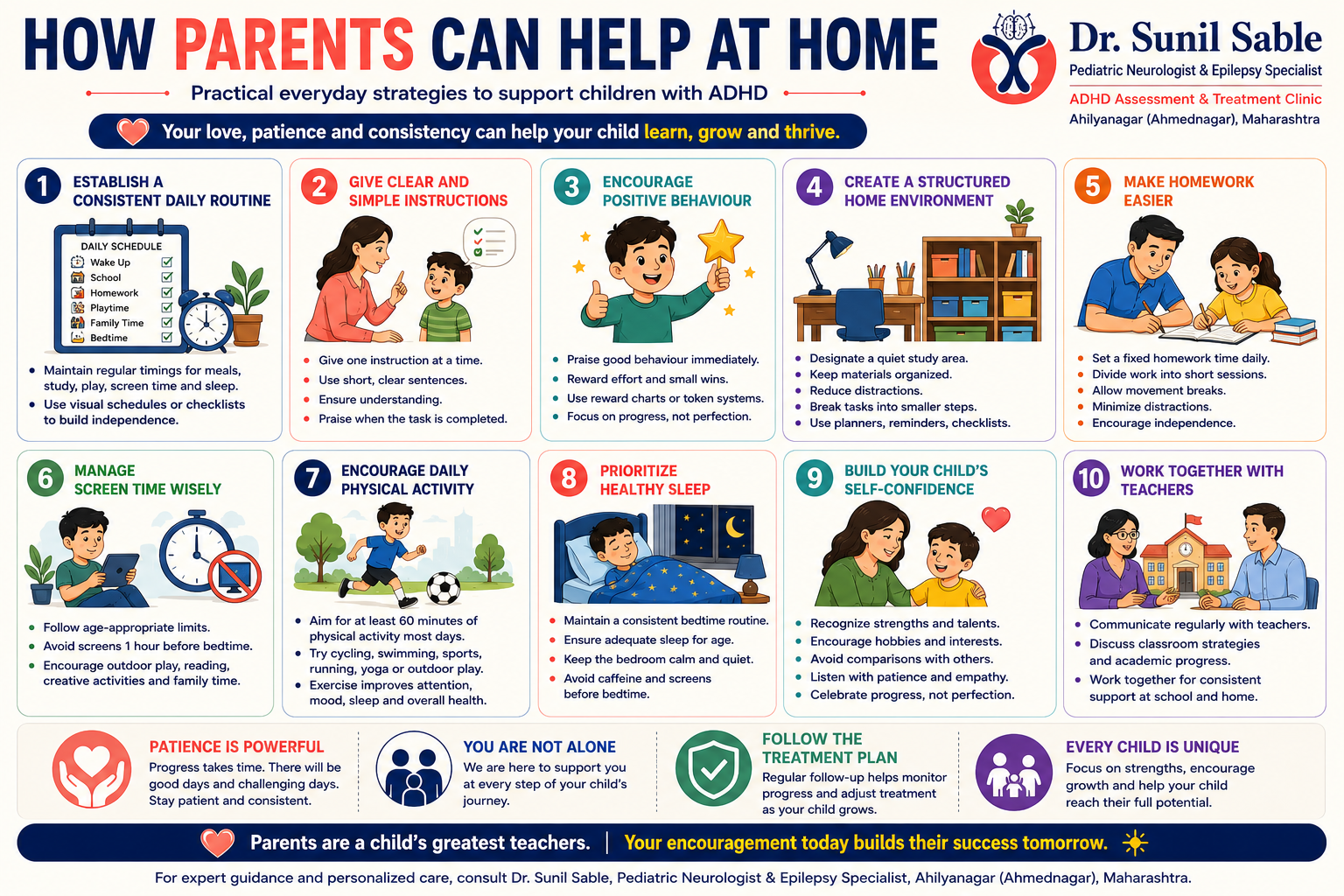
Parents are the most important partners in helping a child with Attention-Deficit/Hyperactivity Disorder (ADHD) succeed. While professional assessment, behavioural therapy, school support, and medication (when appropriate) play an important role, the greatest progress often happens through consistent support at home.
Children with ADHD do not intentionally misbehave or choose to be inattentive. Their brains process attention, impulse control, planning, and emotional regulation differently. With patience, structure, and encouragement, parents can help their child develop lifelong skills, improve confidence, and achieve their full potential.
At the ADHD Assessment & Treatment Clinic, Dr. Sunil Sable, Pediatric Neurologist & Epilepsy Specialist, Ahilyanagar (Ahmednagar), Maharashtra, guides families with practical, evidence-based strategies that can be incorporated into everyday life.
📅 Establish a Consistent Daily Routine
Children with ADHD thrive when daily activities follow a predictable schedule.
Maintain regular timings for:
- Waking up
- Meals
- School
- Homework
- Playtime
- Physical activity
- Screen time
- Bedtime
Using calendars, visual schedules, or checklists can help children become more independent and organized.
🗣️ Give Clear and Simple Instructions
Children with ADHD may become overwhelmed by multiple directions at once.
Helpful strategies include:
- Give one instruction at a time.
- Use short and clear sentences.
- Gain your child’s attention before speaking.
- Ask your child to repeat the instruction.
- Praise them when they complete the task.
Simple communication reduces frustration and improves cooperation.
🌟 Encourage Positive Behaviour
Positive reinforcement is often more effective than punishment.
Parents can:
- Praise good behaviour immediately.
- Reward effort rather than perfection.
- Use reward charts or token systems.
- Celebrate small achievements.
- Encourage problem-solving instead of criticism.
Positive feedback helps build motivation, confidence, and self-esteem.
🏡 Create a Structured Home Environment
An organized environment helps children stay focused.
You can:
- Designate a quiet study area.
- Keep school materials in one place.
- Reduce unnecessary distractions.
- Break larger tasks into smaller steps.
- Use reminders, planners, or checklists.
Small changes in the environment can significantly improve attention and task completion.
📖 Make Homework Easier
Homework often becomes stressful for children with ADHD.
Parents can help by:
- Scheduling homework at the same time each day.
- Dividing work into shorter sessions.
- Allowing brief movement breaks.
- Minimizing distractions such as television and mobile phones.
- Encouraging independence while offering guidance when needed.
The goal is to develop responsibility while reducing frustration.
📱 Manage Screen Time Wisely
Excessive recreational screen time may worsen attention difficulties, sleep problems, and emotional regulation.
Encourage children to:
- Follow age-appropriate screen time limits.
- Avoid screens before bedtime.
- Spend more time outdoors.
- Read books.
- Engage in creative hobbies.
- Participate in family activities.
Healthy digital habits support better concentration and sleep.
🏃 Encourage Daily Physical Activity
Regular exercise has been shown to improve:
- Attention and concentration
- Mood
- Emotional regulation
- Executive functioning
- Sleep quality
- Overall physical health
Activities such as cycling, swimming, football, running, dancing, yoga, martial arts, and outdoor play are excellent choices.
Aim for at least 60 minutes of physical activity on most days.
😴 Prioritize Healthy Sleep
Good sleep is essential for learning, behaviour, and emotional well-being.
Support healthy sleep by:
- Following a regular bedtime routine.
- Ensuring adequate sleep for your child’s age.
- Keeping the bedroom quiet and comfortable.
- Avoiding caffeine-containing beverages.
- Limiting screen use before bedtime.
If your child has persistent sleep problems, discuss them during the consultation.
❤️ Build Your Child's Self-Confidence
Children with ADHD often hear more criticism than praise.
Parents can strengthen self-esteem by:
- Recognizing strengths and talents.
- Encouraging hobbies and interests.
- Avoiding comparisons with other children.
- Listening patiently.
- Celebrating progress, not perfection.
Every child has unique abilities that deserve encouragement.
🤝 Work Together with Teachers
Regular communication with your child’s school helps create consistent support.
Discuss:
- Classroom strategies
- Homework expectations
- Academic progress
- Behavioural concerns
- School accommodations when needed
A strong partnership between parents, teachers, and healthcare professionals provides the best support for children with ADHD.
👨⚕️ Follow the Treatment Plan
ADHD management is an ongoing process.
Attend regular follow-up appointments to:
- Review your child’s progress.
- Discuss school performance.
- Address new concerns.
- Monitor medication if prescribed.
- Adjust treatment as your child grows.
Consistent follow-up helps ensure your child continues to receive the most appropriate care.
Remember: Progress Takes Time
Every child develops at their own pace. Some days will be easier than others, and meaningful improvements often occur gradually rather than overnight.
With patience, consistency, evidence-based treatment, and a supportive home environment, children with ADHD can build confidence, improve their learning, develop healthy relationships, and achieve long-term success.
At the ADHD Assessment & Treatment Clinic, Dr. Sunil Sable partners with families to provide compassionate guidance, practical strategies, and individualized care that empowers both children and parents.
Parents are a child’s greatest teachers. Your encouragement, patience, and consistent support can shape your child’s confidence, resilience, and future success.
ADHD at School
Helping Children with ADHD Succeed in the Classroom
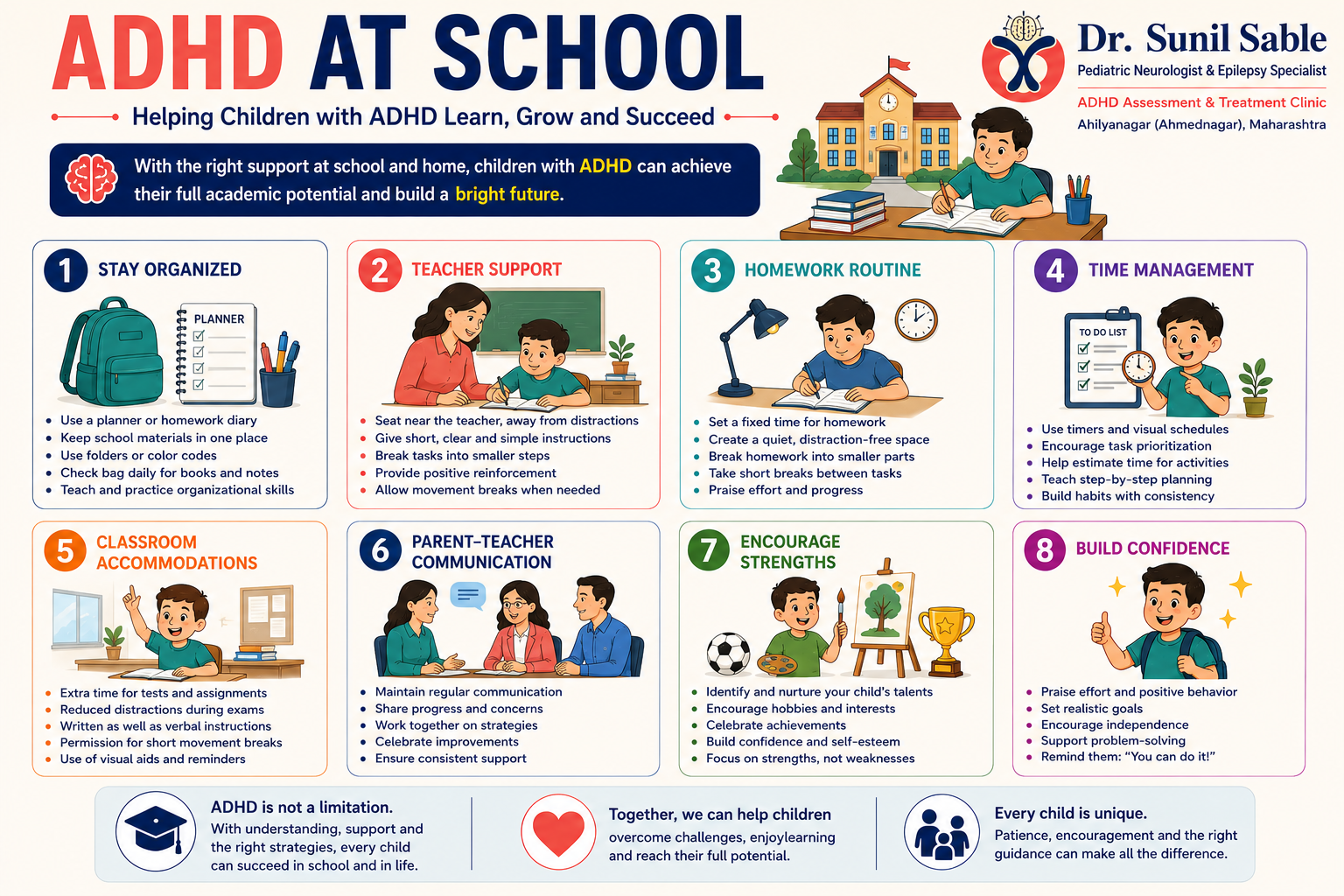
School is where many children with Attention-Deficit/Hyperactivity Disorder (ADHD) first experience significant challenges. The demands of sitting still, paying attention, following instructions, completing assignments, and staying organized can be particularly difficult for children with ADHD. Without appropriate support, these challenges may affect academic performance, behaviour, self-confidence, and relationships with teachers and classmates.
The good news is that most children with ADHD can thrive at school when they receive the right combination of medical care, family support, and appropriate classroom accommodations.
At the ADHD Assessment & Treatment Clinic, Dr. Sunil Sable, Pediatric Neurologist & Epilepsy Specialist, Ahilyanagar (Ahmednagar), Maharashtra, works closely with families to help children succeed academically while building confidence and independence.
Common School Challenges in Children with ADHD
Children with ADHD may experience:
- 📖 Difficulty paying attention during lessons
- 📝 Frequent careless mistakes in schoolwork
- 📚 Incomplete classwork or homework
- ⏰ Difficulty following classroom routines
- 🎒 Frequently losing books, notebooks, or stationery
- 🚶 Restlessness and difficulty remaining seated
- 💬 Talking excessively or interrupting others
- 🤝 Difficulty waiting for their turn
- 📋 Poor organization and time management
- 📉 Declining academic performance despite normal intelligence
These challenges are symptoms of ADHD and should not be mistaken for laziness or lack of effort.
ADHD Does Not Mean Poor Intelligence
Many children with ADHD have average or above-average intelligence. They often perform well when they are interested in a subject or when learning is interactive.
However, difficulties with:
- Sustaining attention
- Planning tasks
- Completing assignments
- Managing time
- Organizing materials
may affect their academic performance.
With appropriate support, children with ADHD can achieve excellent educational outcomes.
Classroom Strategies That Can Help
Simple classroom modifications can significantly improve learning.
Teachers may consider:
- Seating the child near the teacher and away from distractions.
- Giving short, clear instructions.
- Breaking large assignments into smaller tasks.
- Allowing brief movement breaks.
- Using visual schedules and reminders.
- Providing positive reinforcement for good behaviour.
- Checking understanding before moving to the next task.
- Giving additional time for tests or assignments when appropriate.
- Encouraging organization using planners or checklists.
These strategies benefit many children without changing the curriculum.
Building a Strong Partnership Between Parents and Teachers
Children with ADHD perform best when parents and teachers work together.
Regular communication helps to:
- Monitor academic progress
- Share behavioural observations
- Reinforce consistent strategies
- Address concerns early
- Celebrate improvements and achievements
A collaborative approach creates a supportive learning environment for the child.
Supporting Homework at Home
Homework can become a daily source of frustration for many families.
Helpful strategies include:
- Establishing a fixed homework routine.
- Creating a quiet, distraction-free study space.
- Dividing homework into manageable sections.
- Allowing short movement breaks between tasks.
- Using planners or homework diaries.
- Encouraging independence while providing guidance.
- Praising effort rather than perfection.
Small, consistent changes often lead to better study habits.
School Accommodations May Be Helpful
Depending on the child’s individual needs, accommodations may include:
- Extra time during examinations
- Reduced distractions during tests
- Seating near the teacher
- Written as well as verbal instructions
- Permission for short movement breaks
- Organizational support
- Behavioural reward systems
- Individualized learning strategies
Recommendations should always be tailored to the child’s needs and discussed with the school.
Encourage Your Child's Strengths
Children with ADHD often excel in areas such as:
- Creativity
- Art and design
- Music
- Sports
- Leadership
- Problem-solving
- Innovation
- Entrepreneurship
Encouraging these strengths helps improve confidence and motivation while balancing academic challenges.
Watch for Learning Difficulties
Some children with ADHD also have:
- Dyslexia
- Dysgraphia
- Dyscalculia
- Language Disorders
- Autism Spectrum Disorder
- Developmental Coordination Disorder
If a child continues to struggle academically despite appropriate ADHD treatment, additional evaluation for learning disorders may be recommended.
Every Child Can Succeed
ADHD should never define a child’s future. With early diagnosis, evidence-based treatment, supportive teachers, involved parents, and individualized educational strategies, children with ADHD can perform well academically and develop the skills they need for lifelong success.
At the ADHD Assessment & Treatment Clinic, Dr. Sunil Sable helps families understand both the challenges and strengths associated with ADHD. Our goal is to empower children with the tools, confidence, and support they need to thrive in school and beyond.
With understanding, patience, and the right educational support, children with ADHD can become confident learners and achieve their full academic potential.
ADHD in Teenagers
Understanding ADHD During Adolescence
Attention-Deficit/Hyperactivity Disorder (ADHD) does not disappear when a child enters adolescence. While some symptoms, particularly hyperactivity, may become less obvious, many teenagers continue to experience challenges with attention, organization, planning, emotional regulation, and impulse control. As academic expectations, social responsibilities, and independence increase, ADHD can become more noticeable and may affect school performance, relationships, and self-confidence.
At the ADHD Assessment & Treatment Clinic, Dr. Sunil Sable, Pediatric Neurologist & Epilepsy Specialist, Ahilyanagar (Ahmednagar), Maharashtra, provides comprehensive evaluation and individualized management for teenagers with ADHD, helping them develop the skills they need for a successful transition into adulthood.
Common Symptoms of ADHD in Teenagers
ADHD may present differently in adolescents compared to younger children.
Teenagers with ADHD may experience:
- 📚 Difficulty concentrating during classes or while studying.
- 📝 Forgetting assignments, deadlines, or examinations.
- ⏰ Poor time management and procrastination.
- 📂 Difficulty organizing schoolwork and personal belongings.
- 🚶 Feeling restless or unable to relax.
- 💬 Talking impulsively or interrupting conversations.
- 😠 Difficulty controlling emotions or frustration.
- 🤝 Problems maintaining friendships or social relationships.
- 📉 Declining academic performance despite good intelligence.
- 📱 Becoming easily distracted by mobile phones and social media.
Academic Challenges
As students move into higher classes, academic demands increase significantly.
Teenagers with ADHD may struggle with:
- Long study sessions
- Planning projects and assignments
- Preparing for examinations
- Managing multiple subjects
- Completing homework on time
- Taking organized notes
- Maintaining concentration during lectures
Without appropriate support, these difficulties may lead to frustration and reduced confidence.
Emotional and Social Challenges
Adolescence is a period of emotional growth and increasing independence.
Teenagers with ADHD may experience:
- Low self-esteem
- Anxiety
- Mood changes
- Emotional impulsivity
- Difficulty handling criticism
- Conflict with parents or teachers
- Social misunderstandings
- Peer relationship difficulties
Recognizing these challenges early allows families to provide appropriate support.
Screen Time and Digital Distractions
Smartphones, online gaming, and social media can make attention and time management more difficult for teenagers with ADHD.
Parents should encourage:
- Healthy screen time limits
- Technology-free study periods
- Screen-free bedtime routines
- Outdoor activities
- Sports and hobbies
- Face-to-face social interaction
Developing healthy digital habits supports better concentration, sleep, and emotional well-being.
Preparing Teenagers for Independence
As adolescents mature, they gradually take more responsibility for their education and daily life.
Important life skills include:
- Planning daily schedules
- Managing homework independently
- Organizing study materials
- Using planners or digital reminders
- Managing time effectively
- Learning problem-solving skills
- Developing healthy decision-making
These executive functioning skills are essential for success in higher education and future careers.
Treatment for Teenagers with ADHD
Management is individualized and may include:
- Behavioural strategies
- Parent counselling
- Academic support
- Executive function coaching
- Lifestyle modification
- Sleep improvement
- Regular physical activity
- Medication when clinically indicated
- Ongoing follow-up and monitoring
Long-Term Outlook
Children with ADHD Can Lead Successful and Fulfilling Lives
One of the biggest concerns parents have after their child is diagnosed with Attention-Deficit/Hyperactivity Disorder (ADHD) is:
“What will my child’s future look like?”
The reassuring news is that most children with ADHD can grow into successful, confident, and independent adults when they receive early diagnosis, evidence-based treatment, family support, and appropriate educational guidance.
ADHD is a long-term neurodevelopmental condition, but it does not define a child’s intelligence, abilities, or future potential. Many individuals with ADHD excel academically, professionally, creatively, and socially when they receive the right support during childhood and adolescence.
At the ADHD Assessment & Treatment Clinic, Dr. Sunil Sable, Pediatric Neurologist & Epilepsy Specialist, Ahilyanagar (Ahmednagar), Maharashtra, works with families to help children build lifelong skills that improve learning, confidence, emotional well-being, and independence.
ADHD Symptoms Often Change with Age
The way ADHD presents can change as children grow.
👶 Childhood
Children may experience:
- Hyperactivity
- Impulsivity
- Poor attention
- Behavioural challenges
- Difficulty following instructions
👦 Adolescence
Teenagers often experience:
- Poor organization
- Difficulty managing studies
- Time management problems
- Emotional regulation challenges
- Forgetfulness
- Reduced self-confidence
- Academic stress
Hyperactivity may become less obvious, while attention and executive functioning difficulties often continue.
👨 Adulthood
Some adults continue to experience:
- Difficulty staying organized
- Time management challenges
- Distractibility
- Procrastination
- Planning difficulties
However, many adults learn effective coping strategies and lead highly productive personal and professional lives.
Early Intervention Improves Long-Term Outcomes
Research consistently shows that early identification and appropriate intervention can significantly improve outcomes for children with ADHD.
Benefits of early treatment include:
- 🎯 Better attention and concentration
- 📚 Improved academic performance
- 🤝 Stronger social relationships
- ❤️ Higher self-esteem
- 👨👩👧 Better family relationships
- 😊 Improved emotional regulation
- 🏆 Greater independence
- 🌟 Better quality of life
Children who receive timely support are more likely to reach their full potential.
Every Child Has Unique Strengths
Children with ADHD often possess qualities that can become lifelong strengths, including:
- Creativity
- Curiosity
- Energy
- Innovation
- Problem-solving ability
- Leadership
- Entrepreneurial thinking
- Resilience
- Artistic and sporting talents
Recognizing and nurturing these strengths is just as important as managing ADHD symptoms.
The Importance of Ongoing Follow-up
ADHD management is not a one-time event. As children grow, their needs change.
Regular follow-up appointments help:
- Monitor progress
- Review school performance
- Adjust behavioural strategies
- Evaluate medication when prescribed
- Identify new learning or emotional challenges
- Support transitions to higher education and adolescence
Long-term care ensures that treatment continues to meet the child’s evolving needs.
Family and School Partnership Matters
Children achieve the best outcomes when parents, teachers, therapists, and healthcare professionals work together.
A coordinated approach helps to:
- Maintain consistent expectations
- Improve academic performance
- Support emotional well-being
- Encourage independence
- Build confidence
- Strengthen social skills
A supportive environment can make a significant difference in a child’s development.
Success Is Possible
Many successful scientists, entrepreneurs, artists, athletes, and professionals have ADHD. With appropriate guidance and perseverance, children with ADHD can pursue higher education, build meaningful careers, maintain healthy relationships, and contribute positively to society.
Rather than focusing only on challenges, families should recognize the unique strengths, creativity, and resilience that many children with ADHD possess.
Looking Ahead with Confidence
ADHD is a lifelong condition for many individuals, but it is highly manageable. Early diagnosis, evidence-based treatment, supportive parenting, school collaboration, healthy lifestyle habits, and regular follow-up enable children to develop the skills they need to succeed throughout life.
At the ADHD Assessment & Treatment Clinic, Dr. Sunil Sable is committed to providing compassionate, individualized, and evidence-based care that helps children overcome challenges, build confidence, and achieve their fullest potential.
ADHD is not a barrier to success. With early intervention, family support, and the right guidance, children with ADHD can learn, grow, achieve their goals, and lead happy, productive lives.
Why Choose Dr. Sunil Sable?
Trusted Pediatric Neurology Care for Children with ADHD and Other Neurodevelopmental Disorders
Choosing the right specialist for your child’s developmental, behavioural, or neurological concerns is one of the most important decisions a family can make. Children with Attention-Deficit/Hyperactivity Disorder (ADHD) often require more than just a diagnosis—they need a comprehensive evaluation, an individualized treatment plan, ongoing monitoring, and compassionate support for both the child and the family.
At the ADHD Assessment & Treatment Clinic, Dr. Sunil Sable, Pediatric Neurologist & Epilepsy Specialist, Ahilyanagar (Ahmednagar), Maharashtra, is committed to providing evidence-based, family-centred care that focuses on helping every child reach their fullest potential.
🧠 Specialized Pediatric Neurology Expertise
Unlike general medical consultations, every child receives an evaluation from a Pediatric Neurologist with expertise in diagnosing and managing ADHD, developmental disorders, epilepsy, learning difficulties, and other neurological conditions affecting children and adolescents.
👨⚕️ More Than 20 Years of Clinical Experience
With over 20 years of experience in Pediatrics and Pediatric Neurology, Dr. Sunil Sable has cared for thousands of children with developmental, behavioural, and neurological disorders. This extensive clinical experience helps ensure careful evaluation and individualized treatment planning.
🔍 Comprehensive ADHD Assessment
Every child undergoes a detailed assessment that may include:
- Medical and developmental history
- Parent interview
- Teacher feedback
- DSM-5 diagnostic evaluation
- Neurological examination
- Developmental assessment
- School performance review
- Screening for associated conditions
Our goal is to understand the whole child—not just the symptoms.
🎯 Personalized Treatment Plans
No two children with ADHD are exactly alike.
Treatment plans are individualized and may include:
- Parent counselling
- Behavioural strategies
- School guidance
- Lifestyle recommendations
- Executive function support
- Medication when clinically appropriate
- Regular follow-up and progress monitoring
Each plan is tailored to the child’s unique needs and family goals.
🤝 Family-Centred Approach
Parents are active partners throughout the assessment and treatment process.
We believe in:
- Listening carefully to family concerns
- Explaining the diagnosis in simple language
- Answering questions thoroughly
- Supporting parents with practical strategies
- Working together to achieve long-term success
An informed family is empowered to make confident decisions for their child.
📚 Evidence-Based Care
Our recommendations are based on current international clinical guidelines and established medical evidence.
We emphasize:
- Accurate diagnosis
- Appropriate investigations only when necessary
- Proven treatment strategies
- Regular monitoring and follow-up
- Avoidance of unnecessary or unproven therapies
This ensures that every child receives safe, effective, and scientifically supported care.
🧩 Expertise in Associated Conditions
Many children with ADHD also have other developmental or neurological conditions.
Comprehensive evaluation is available for:
- Autism Spectrum Disorder
- Learning Difficulties
- Speech and Language Disorders
- Developmental Delay
- Epilepsy
- Intellectual Disability
- Genetic Disorders
- Headache and Migraine
- Behavioural Concerns
This integrated approach helps identify coexisting conditions that may influence treatment.
🏥 Comprehensive Pediatric Neurology Services Under One Roof
Families can access evaluation and management for a wide range of pediatric neurological and developmental conditions, including:
- ADHD
- Autism Spectrum Disorder
- Epilepsy
- Speech Delay
- Developmental Delay
- Learning Difficulties
- Cerebral Palsy
- Genetic and Neuromuscular Disorders
- Headache and Migraine
- Child Development Assessment
This coordinated approach reduces the need for multiple consultations at different centres.
🌍 Trusted by Families Across Maharashtra
Families from Ahilyanagar (Ahmednagar) and many parts of Maharashtra consult Dr. Sunil Sable for expert evaluation of developmental, behavioural, and neurological conditions. We are committed to providing compassionate, ethical, and high-quality pediatric neurological care close to home.
❤️ Compassionate Care Focused on Every Child
Every child deserves to be understood, respected, and supported. Our goal is not only to reduce ADHD symptoms but also to help children build confidence, improve learning, strengthen family relationships, and achieve long-term success.
From the first consultation through ongoing follow-up, we strive to create a welcoming environment where families feel heard, informed, and supported.
When it comes to your child’s brain development, behaviour, and future, choosing an experienced Pediatric Neurologist can make a meaningful difference. We are committed to partnering with your family every step of the way.
Why Families Trust Dr. Sunil Sable
Over 20 years of Pediatric Neurology experience
✔ Specialized ADHD Assessment & Treatment Clinic
✔ Comprehensive developmental and neurological evaluations
✔ Evidence-based diagnosis and treatment
✔ Family-centred, compassionate care
✔ Personalized treatment plans
✔ Expertise in autism, epilepsy, learning difficulties, and developmental disorders
✔ Regular follow-up and long-term support
✔ Trusted by families across Maharashtra
Why Choose Dr. Sunil Sable?
1. What is ADHD?
Attention-Deficit/Hyperactivity Disorder (ADHD) is a common neurodevelopmental disorder that affects a child’s ability to pay attention, control impulses, regulate behaviour, and stay organized. It can affect learning, relationships, and daily life but can be effectively managed with appropriate treatment.
2. What are the early signs of ADHD?
Common early signs include poor attention, excessive activity, impulsive behaviour, difficulty following instructions, frequent forgetfulness, careless mistakes, and problems completing tasks at home or school.
3. At what age can ADHD be diagnosed?
ADHD symptoms often become noticeable during the preschool or early school years. A reliable diagnosis is usually made after a comprehensive clinical assessment when symptoms are persistent, developmentally inappropriate, and affect daily functioning.
4. Which doctor should I consult for ADHD?
A Pediatric Neurologist, Developmental Pediatrician, Child Psychiatrist, or qualified specialist experienced in neurodevelopmental disorders can evaluate ADHD. Dr. Sunil Sable provides comprehensive ADHD assessment and management.
5. How is ADHD diagnosed?
ADHD is diagnosed through a detailed clinical assessment that includes medical and developmental history, parent and teacher information, behavioural evaluation, neurological examination, and internationally accepted diagnostic criteria such as DSM-5-TR.
6. Is there a blood test or brain scan for ADHD?
No. There is no blood test, CT scan, MRI, or EEG that can diagnose ADHD. These tests are performed only when another medical or neurological condition is suspected.
7. Can ADHD be cured?
There is currently no permanent cure for ADHD. However, with early diagnosis, behavioural strategies, school support, parent training, and medication when appropriate, most children show significant improvement.
8. Will my child outgrow ADHD?
Some symptoms, especially hyperactivity, may decrease with age. However, many individuals continue to experience attention or executive function difficulties into adolescence or adulthood.
9. Does every child with ADHD need medication?
No. Treatment is individualized. Some children improve with behavioural therapy, parent training, and school support, while others benefit from medication as part of a comprehensive treatment plan.
10. Is ADHD caused by poor parenting?
No. ADHD is a neurodevelopmental disorder. It is not caused by poor parenting, laziness, or lack of discipline.
11. Is ADHD hereditary?
Genetics plays an important role in ADHD. Children with a family history of ADHD are at a higher risk, although environmental factors may also contribute.
12. Can excessive screen time cause ADHD?
Excessive screen time does not cause ADHD, but it can worsen attention problems, sleep disturbances, emotional regulation, and behaviour in some children.
13. Can diet cure ADHD?
There is no scientific evidence that a specific diet cures ADHD. A balanced, nutritious diet supports overall health and brain development, but treatment should be based on evidence-based medical recommendations.
14. Can sugar cause ADHD?
Current research does not show that sugar causes ADHD. However, a healthy diet with limited sugary foods is recommended for all children.
15. What is the difference between ADHD and normal childhood behaviour?
All children can be active or distracted occasionally. ADHD symptoms are persistent, occur in multiple settings, are inappropriate for the child’s developmental age, and interfere with learning, behaviour, or social functioning.
16. Can a child have both ADHD and Autism?
Yes. ADHD and Autism Spectrum Disorder frequently occur together. A comprehensive developmental assessment is important to identify both conditions.
17. Can ADHD affect school performance?
Yes. Children with ADHD may have difficulty concentrating, completing homework, organizing tasks, following instructions, and maintaining consistent academic performance.
18. What classroom support helps children with ADHD?
Helpful strategies include preferential seating, short instructions, movement breaks, organizational support, homework planning, and positive reinforcement.
19. Can ADHD affect sleep?
Yes. Many children with ADHD experience difficulty falling asleep, maintaining sleep, or following regular sleep routines. Improving sleep habits is an important part of management.
20. Can ADHD affect friendships?
Yes. Impulsivity, emotional regulation difficulties, and poor social skills may affect peer relationships. Early support can improve social interactions.
21. How can parents help a child with ADHD?
Parents can help by maintaining routines, providing clear instructions, using positive reinforcement, encouraging physical activity, ensuring good sleep, limiting excessive screen time, and working closely with teachers.
22. What is executive functioning?
Executive functions are brain skills that help children plan, organize, remember instructions, manage time, control impulses, and complete tasks. These skills are commonly affected in ADHD.
23. Are learning difficulties common in ADHD?
Yes. Some children with ADHD also have learning disorders such as Dyslexia, Dysgraphia, or Dyscalculia. These conditions should be assessed separately.
24. Should my child have an EEG or MRI?
Not routinely. These investigations are recommended only if the child’s history or neurological examination suggests another underlying condition.
25. How often should children with ADHD be reviewed?
Regular follow-up is important to monitor progress, review school performance, adjust treatment when necessary, and address new concerns as the child grows.
26. Can teenagers have ADHD?
Yes. ADHD often continues into adolescence. Symptoms may include poor organization, procrastination, forgetfulness, emotional regulation difficulties, and academic challenges.
27. Can children with ADHD become successful adults?
Absolutely. With early diagnosis, evidence-based treatment, family support, and educational guidance, many individuals with ADHD achieve success in higher education, careers, sports, business, and creative fields.
28. When should I seek an ADHD assessment?
You should seek an evaluation if your child has persistent problems with attention, hyperactivity, impulsivity, school performance, organization, or behaviour that affect daily functioning at home or school.
29. Do you provide online ADHD consultations?
Yes. Online consultations may be available for selected cases, including second opinions, follow-up visits, review of reports, and guidance for families who are unable to visit the clinic in person. Some children may still require an in-person assessment depending on their clinical needs.
30. How do I book an appointment with Dr. Sunil Sable?
Appointments can be booked by calling the clinic, sending a WhatsApp message, or using the appointment booking option on our website. Our team will assist you in scheduling a consultation for your child.
Related Resources
Explore More Trusted Resources on ADHD, Child Development, and Pediatric Neurology
Learning about ADHD is the first step toward helping your child succeed. To support families beyond the clinic, Dr. Sunil Sable, Pediatric Neurologist & Epilepsy Specialist, Ahilyanagar (Ahmednagar), Maharashtra, has created a comprehensive collection of educational articles, videos, downloadable resources, and parent guides based on current medical evidence and clinical experience.
Explore the resources below to better understand your child’s development, behaviour, learning, and neurological health.
📚 Learning Difficulties
Many children with ADHD also have learning disorders that affect reading, writing, mathematics, or academic performance.
Learn about:
- Dyslexia
- Dysgraphia
- Dyscalculia
- Slow learning
- School difficulties
- Educational assessments
- Learning support strategies
🧩 Autism Spectrum Disorder
ADHD and Autism Spectrum Disorder frequently occur together.
Read about:
- Early signs of autism
- Autism diagnosis
- Behavioural therapy
- Speech development
- Sensory issues
- Parent guidance
- Long-term management
🗣️ Speech Delay
Children with ADHD may also experience speech and language difficulties.
Find information about:
- Speech milestones
- Causes of speech delay
- Language development
- Communication skills
- Early intervention
- Speech therapy
Parent Resource Centre
Download free educational resources designed to help parents monitor their child’s development and support learning at home.
Available resources include:
- ADHD Parent Guide
- ADHD Behaviour Checklist
- Classroom Support Checklist
- Homework Planner
- Autism Early Signs Checklist
- Speech Milestone Chart
- Child Development Milestones
- Seizure First Aid Guide
- Parent Education Infographics
ADHD & Child Development Video Library
Watch educational videos created by Dr. Sunil Sable in English, Marathi, and Hindi.
Popular topics include:
- ADHD
- Autism
- Speech Delay
- Child Development
- Learning Difficulties
- Epilepsy
- Screen Time
- Behaviour Problems
- Parenting Tips
Our videos simplify complex medical topics and provide practical advice for families.
📝 Read Our Latest Blogs
Stay informed with evidence-based articles covering a wide range of pediatric neurological and developmental topics.
Popular blog categories include:
- ADHD
- Autism
- Epilepsy
- Speech Delay
- Child Development
- Learning Difficulties
- Behaviour Problems
- Headache & Migraine
- Parenting Strategies
- Brain Health
Each article is written to answer the questions parents most commonly ask during clinic visits and online searches.
➡️ Explore Our Blog
Continue Learning with Trusted Medical Information
Reliable information empowers parents to make informed decisions about their child’s health. Whether you are looking for guidance on ADHD, autism, speech delay, learning difficulties, epilepsy, or child development, our growing library of educational resources is designed to support your family with practical, evidence-based advice.
At Dr. Sunil Sable Pediatric Neurology & Cardiology Centre, our mission extends beyond consultations. Through our articles, videos, downloadable guides, and parent resources, we aim to educate, empower, and support families at every stage of their child’s developmental journey.
Knowledge is one of the most powerful tools in improving a child’s future. Explore our trusted resources and take the next step toward understanding and supporting your child’s development.
Trusted Resources
Reliable ADHD Information from Leading International Medical Organizations
When making decisions about your child’s health, it is important to rely on trusted, evidence-based medical information. The resources below are published by internationally recognized organizations and are regularly updated based on the latest scientific research and clinical guidelines.
At Dr. Sunil Sable Pediatric Neurology & Cardiology Centre, we encourage parents to use reliable sources alongside professional medical advice to better understand ADHD and other neurodevelopmental conditions.
🇺🇸 American Academy of Pediatrics (AAP)
The American Academy of Pediatrics (AAP) provides evidence-based guidance on the diagnosis, evaluation, and management of ADHD in children and adolescents.
Useful resources include:
- ADHD diagnosis and treatment
- Parenting advice
- School support
- Behaviour management
- Healthy child development
Official Website:
HealthyChildren ADHD Resource:
https://www.healthychildren.org/English/health-issues/conditions/adhd
🇺🇸 Centers for Disease Control and Prevention (CDC)
The CDC provides comprehensive information about ADHD, including symptoms, diagnosis, treatment, prevalence, and practical resources for parents, teachers, and healthcare professionals.
Official ADHD Resource:
🇺🇸 American Academy of Child and Adolescent Psychiatry (AACAP)
AACAP publishes evidence-based resources about ADHD and other behavioural and mental health conditions affecting children and adolescents.
Parent Resource Center:
ADHD Facts for Families:
https://www.aacap.org/AACAP/Families_and_Youth/Facts_for_Families
🇬🇧 National Institute for Health and Care Excellence (NICE)
NICE develops internationally respected clinical guidelines used by healthcare professionals worldwide.
ADHD Guideline (NG87):
https://www.nice.org.uk/guidance/ng87
The guideline covers:
- Diagnosis
- Assessment
- Medication
- Behavioural interventions
- Long-term management
🇮🇳 Indian Academy of Pediatrics (IAP)
The Indian Academy of Pediatrics provides guidance on child health, development, behaviour, and neurodevelopmental disorders relevant to Indian children.
Official Website:
Parents can also explore educational resources through the IAP website and consult their pediatrician for recommendations based on Indian clinical practice.
Additional Reliable Resources
🇺🇸 National Institute of Mental Health (NIMH)
https://www.nimh.nih.gov/health/topics/attention-deficit-hyperactivity-disorder-adhd
🌍 World Health Organization (WHO)
(For child development, mental health, disability, and developmental health resources.)
Why We Recommend Trusted Resources
The internet contains a vast amount of information about ADHD, but not all of it is accurate. Some websites promote treatments or products that are not supported by scientific evidence.
We encourage families to:
- Choose information from recognized medical organizations.
- Discuss questions with a qualified healthcare professional.
- Be cautious about websites that promise a “cure” for ADHD.
- Avoid making treatment decisions based solely on social media or anecdotal advice.
At Dr. Sunil Sable Pediatric Neurology & Cardiology Centre, our recommendations are based on current scientific evidence, international clinical guidelines, and individualized assessment of each child.
Reliable information empowers parents to make informed decisions. Combining trusted educational resources with expert medical care gives children with ADHD the best opportunity to thrive.
Areas We Serve
Expert ADHD Assessment and Treatment for Families Across Maharashtra
At the ADHD Assessment & Treatment Clinic at Dr. Sunil Sable Pediatric Neurology & Cardiology Centre, Dr. Sunil Sable, Pediatric Neurologist & Epilepsy Specialist, Ahilyanagar (Ahmednagar), Maharashtra, provides comprehensive evaluation and evidence-based treatment for children and adolescents with Attention-Deficit/Hyperactivity Disorder (ADHD). Families travel from across Maharashtra seeking expert care for attention difficulties, hyperactivity, impulsivity, behavioural concerns, learning challenges, and associated neurodevelopmental conditions.
Whether your child requires an ADHD assessment, a second opinion, behavioural guidance, medication management, or long-term follow-up, our clinic is committed to delivering compassionate, family-centred care.
📍 Families Visit Our ADHD Clinic From
Ahilyanagar (Ahmednagar) District
- Ahilyanagar City
- Sangamner
- Shrirampur
- Kopargaon
- Rahata
- Rahuri
- Parner
- Nevasa
- Shevgaon
- Pathardi
- Karjat
- Jamkhed
- Akole
- Shrigonda
Beed District
- Beed
- Georai
- Ashti
- Patoda
- Shirur (Kasar)
- Majalgaon
- Parli
- Ambejogai
- Kaij
- Dharur
Chhatrapati Sambhajinagar District
- Chhatrapati Sambhajinagar
- Vaijapur
- Gangapur
- Kannad
- Paithan
- Phulambri
- Khuldabad
- Sillod
- Soegaon
Nashik District
- Nashik
- Sinnar
- Yeola
- Niphad
- Malegaon
- Chandwad
- Igatpuri
- Kalwan
Pune District
- Pune
- Shirur
- Rajgurunagar (Khed)
- Junnar
- Ambegaon
- Baramati
- Daund
- Indapur
Other Areas Across Maharashtra
Families also consult Dr. Sunil Sable from:
- Solapur
- Jalna
- Latur
- Dharashiv (Osmanabad)
- Dhule
- Nandurbar
- Mumbai
- Navi Mumbai
- Thane
- Satara
- Kolhapur
- Nagpur
- Other cities and towns across Maharashtra
Why Families Travel to Our ADHD Clinic
Parents choose Dr. Sunil Sable for:
- 🧠 Comprehensive ADHD assessment by a Pediatric Neurologist
- 👨⚕️ Over 20 years of Pediatric Neurology experience
- 📋 Detailed developmental and neurological evaluation
- 📚 Evidence-based diagnosis and treatment
- 👨👩👧 Parent counselling and behavioural guidance
- 🏫 School support recommendations
- 💊 Individualized medication management when indicated
- 🔄 Long-term follow-up and developmental monitoring
- 🤝 Compassionate, family-centred care
Supporting Children Beyond ADHD
Many children visiting our ADHD Clinic are also evaluated for associated conditions such as:
- Autism Spectrum Disorder
- Learning Difficulties
- Speech and Language Disorders
- Developmental Delay
- Epilepsy
- Behavioural Challenges
- Sleep Problems
- Anxiety
- Headache and Migraine
Our integrated approach helps ensure that every child receives a complete and accurate assessment.
Book an ADHD Consultation
If you are concerned about your child’s attention, hyperactivity, impulsivity, behaviour, school performance, or learning, an early evaluation can make a significant difference.
Whether you are visiting from Ahilyanagar, Pune, Nashik, Beed, Chhatrapati Sambhajinagar, Solapur, or anywhere else in Maharashtra, Dr. Sunil Sable Pediatric Neurology & Cardiology Centre is committed to providing expert, evidence-based care for children with ADHD and other neurodevelopmental disorders.
📅 Book an Appointment
📍 Get Directions
📞 Call Clinic
💬 WhatsApp Appointment
Online Consultation
Expert ADHD Consultation for Children Across India and Around the World
Access to expert pediatric neurological care should not be limited by distance. At the ADHD Assessment & Treatment Clinic, Dr. Sunil Sable, Pediatric Neurologist & Epilepsy Specialist, Ahilyanagar (Ahmednagar), Maharashtra, offers online consultations for children and adolescents with ADHD, attention difficulties, behavioural concerns, learning problems, and other neurodevelopmental disorders.
Whether you live in another city, another state, or outside India, online consultations allow families to receive specialist guidance without the need for immediate travel. Parents can discuss their child’s concerns, review medical records, understand the diagnosis, receive treatment recommendations, and plan the next steps in care from the comfort of their home.
Please note: Some children may require an in-person neurological examination or additional investigations. If this is necessary, you will be advised during the consultation.
Who Can Benefit from an Online ADHD Consultation?
Online consultations are suitable for:
- Children with suspected ADHD symptoms
- Children already diagnosed with ADHD requiring follow-up
- Parents seeking a second opinion
- Review of behavioural concerns
- Academic and school-related difficulties
- Medication review and follow-up (where appropriate)
- Parent counselling and behaviour management guidance
- Review of developmental concerns
- Interpretation of previous medical records and reports
Conditions We Commonly Consult for Online
In addition to ADHD, online consultations are available for:
- ADHD (Attention-Deficit/Hyperactivity Disorder)
- Autism Spectrum Disorder
- Speech Delay
- Developmental Delay
- Learning Difficulties
- Child Behavioural Problems
- Epilepsy and Seizure Disorders
- Headache and Migraine
- Genetic and Neuromuscular Disorders
- Child Development Concerns
- Sleep Problems in Children
What to Keep Ready Before Your Appointment
To make the consultation as productive as possible, please keep the following ready:
- Previous medical records
- Growth and vaccination records (if available)
- School reports and teacher observations
- Parent and teacher behaviour questionnaires (if completed)
- Previous prescriptions
- MRI, CT scan, EEG, or laboratory reports (if available)
- Speech, occupational therapy, or psychology reports
- Videos of behavioural concerns or unusual movements (if relevant)
- A list of your child’s current medications
Having these documents available helps us better understand your child’s condition and provide individualized recommendations.
Benefits of Online Consultation
- 🌍 Expert pediatric neurology advice from anywhere
- 🏠 Convenient consultations from home
- 👨⚕️ Specialist assessment by a Pediatric Neurologist
- 📋 Review of previous reports and investigations
- 🤝 Parent counselling and practical guidance
- 💊 Medication review and follow-up (when appropriate)
- 📚 Evidence-based recommendations
- 🔄 Ongoing follow-up for long-term care
Families We Serve
We provide online consultations for families across:
🇮🇳 India
Including Maharashtra, Gujarat, Karnataka, Telangana, Andhra Pradesh, Madhya Pradesh, Goa, Delhi, Rajasthan, Uttar Pradesh, Tamil Nadu, Kerala, and other states.
🌍 International Families
We also welcome consultation requests from families living in:
- United States
- Canada
- United Kingdom
- Australia
- New Zealand
- United Arab Emirates
- Saudi Arabia
- Oman
- Qatar
- Kuwait
- Bahrain
- Singapore
- Malaysia
- Other countries around the world
Book Your Online ADHD Consultation
If your child has poor attention, hyperactivity, impulsive behaviour, learning difficulties, school problems, or behavioural concerns, expert guidance is just a consultation away.
At the ADHD Assessment & Treatment Clinic, Dr. Sunil Sable is committed to providing compassionate, evidence-based, and family-centred care for children with ADHD and other neurodevelopmental conditions—whether you visit the clinic in person or consult online.
Early guidance can make a meaningful difference. An online consultation can help you understand your child’s concerns, receive expert recommendations, and plan the next steps with confidence.
Give Your Child the Right Support at the Right Time
Every child deserves the opportunity to learn, grow, and reach their full potential. If your child is experiencing poor attention, hyperactivity, impulsive behaviour, learning difficulties, school challenges, or behavioural concerns, seeking an early evaluation can make a meaningful difference.
At the ADHD Assessment & Treatment Clinic at Dr. Sunil Sable Pediatric Neurology & Cardiology Centre, Dr. Sunil Sable, Pediatric Neurologist & Epilepsy Specialist, Ahilyanagar (Ahmednagar), Maharashtra, provides comprehensive ADHD assessment, evidence-based treatment, parent counselling, school guidance, and long-term follow-up tailored to each child’s individual needs.
Whether you are seeking an initial ADHD evaluation, a second opinion, or ongoing care, we are committed to partnering with your family to help your child thrive academically, socially, and emotionally.
Early diagnosis, the right guidance, and family support can make a lifelong difference. Take the first step toward understanding your child’s needs and building a brighter future.
📅 Book an Appointment
📍 Get Directions
📞 Call Clinic
💬 WhatsApp Appointment
Downloadable Resources
Free ADHD Resources for Parents, Teachers, and Caregivers
Understanding ADHD is easier when families have practical tools they can use every day. To support children at home and in school, Dr. Sunil Sable, Pediatric Neurologist & Epilepsy Specialist, Ahilyanagar (Ahmednagar), Maharashtra, provides a collection of free downloadable resources based on current medical evidence and everyday clinical practice.
These resources are designed to help parents recognize symptoms, monitor progress, support learning, and work effectively with teachers and healthcare professionals.
📄 ADHD Behaviour Checklist
A simple checklist to help parents identify common symptoms of ADHD at home and decide when a specialist evaluation may be appropriate.
Includes:
- Attention difficulties
- Hyperactivity
- Impulsivity
- Behaviour at home
- School-related concerns
- When to seek medical advice
📥 Download ADHD Behaviour Checklist
📘 ADHD Parent Guide
A comprehensive guide explaining ADHD in simple language, including practical advice for families.
Topics covered:
- What is ADHD?
- Common symptoms
- Diagnosis
- Treatment options
- Parenting strategies
- Behaviour management
- School support
- Frequently Asked Questions
📥 Download ADHD Parent Guide
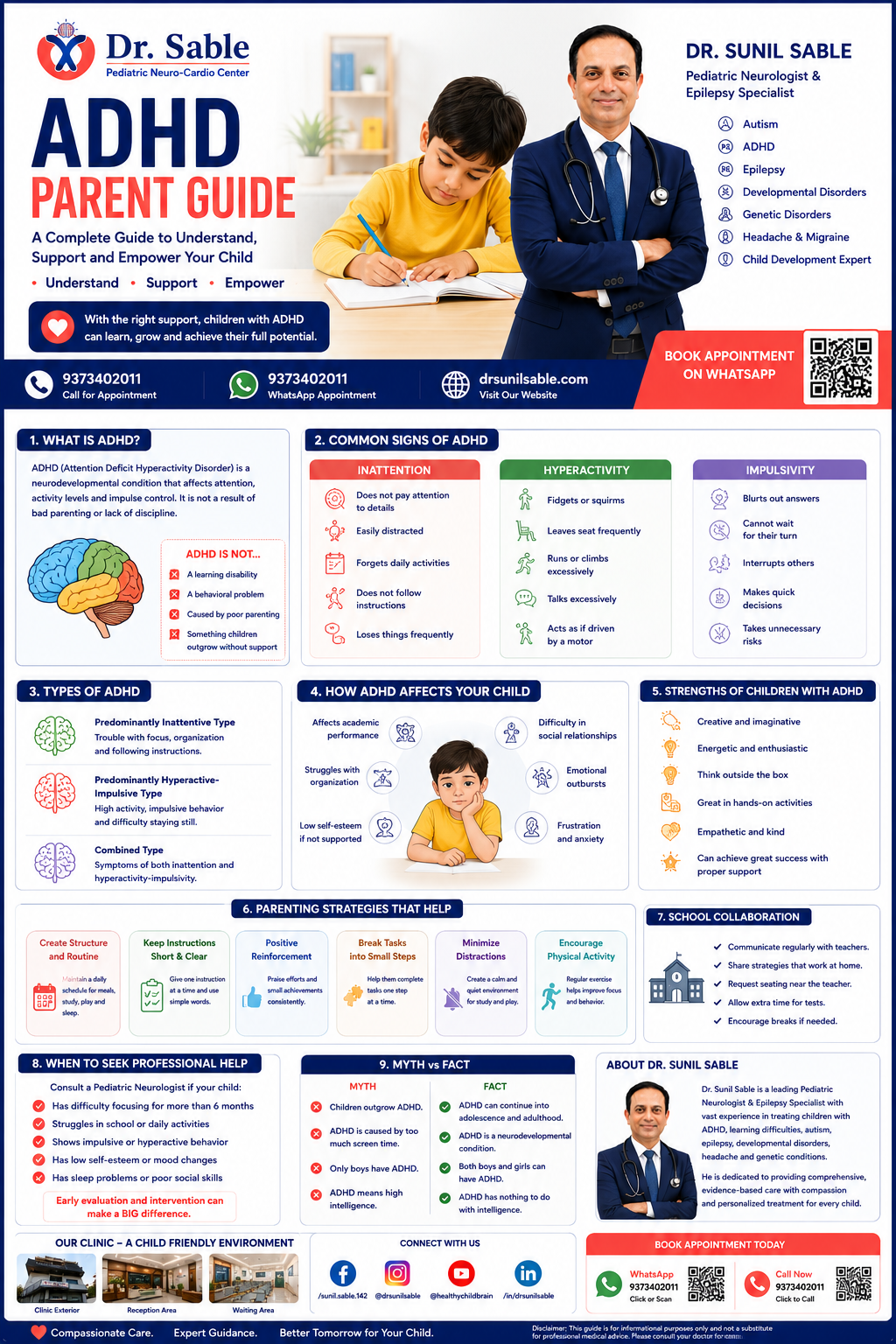
🏫 ADHD School Checklist
A practical resource for parents and teachers to monitor classroom performance and identify areas where additional support may be helpful.
Includes:
- Attention in class
- Homework completion
- Organization skills
- Classroom behaviour
- Social interaction
- Teacher observations
📥 Download ADHD School Checklist
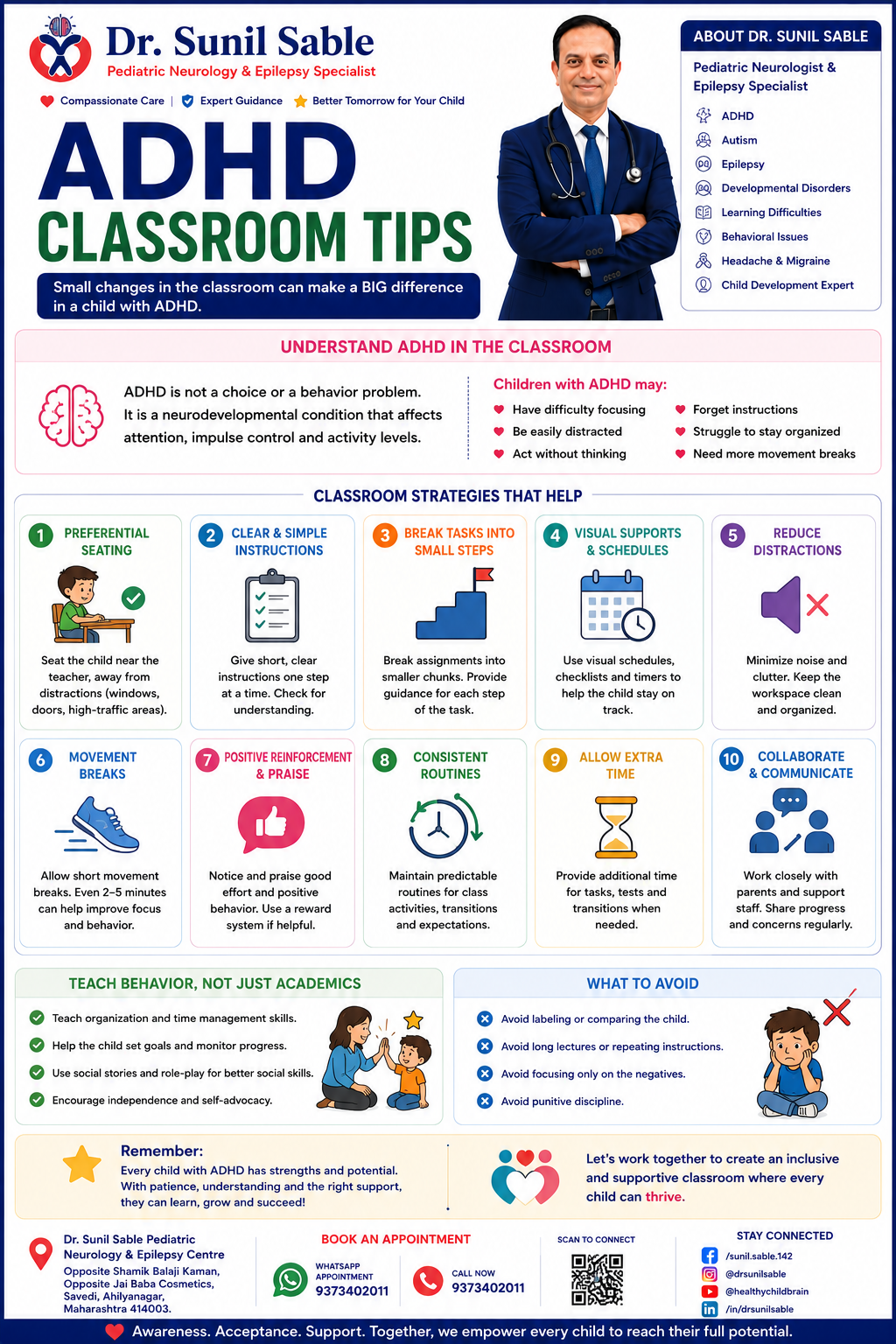
👩🏫 Classroom Tips for Teachers
Evidence-based classroom strategies that help children with ADHD learn more effectively.
Topics include:
- Classroom seating
- Giving clear instructions
- Positive reinforcement
- Movement breaks
- Time management
- Homework support
- Behaviour management
- Classroom organization
📥 Download Classroom Tips
📅 Homework Planner
A printable planner designed to help children develop better organization and study habits.
Features:
- Daily homework schedule
- Assignment tracker
- Study goals
- Revision planner
- Parent checklist
- Reward tracker
📥 Download Homework Planner
More Free Resources Coming Soon
Our Parent Resource Centre is continually expanding with new educational materials for families.
Upcoming downloads include:
- Executive Function Checklist
- ADHD Daily Routine Planner
- ADHD Medication Tracker
- Screen Time Agreement for Families
- Sleep Routine Chart
- Positive Behaviour Reward Chart
- Teacher Communication Form
- School Accommodation Guide
- Child Development Milestone Charts
- Autism Early Signs Checklist
- Speech Milestone Chart
- Seizure First Aid Guide
Helping Families Beyond the Clinic
Education is an essential part of ADHD management. These downloadable resources are designed to complement professional medical care by giving parents and teachers practical tools they can use every day. Whether you are preparing for your child’s first assessment or supporting long-term progress, our goal is to provide reliable, easy-to-understand information that empowers families and promotes better outcomes.
Download, print, and use these resources at home and school to support your child’s development and make informed decisions in partnership with your healthcare team.