
When Should a Child Start Speaking? A Complete Parent's Guide to Speech Development
Speech is one of the most exciting milestones in a child’s development. Parents eagerly wait for that first “mama,” “papa,” or meaningful word.
However, many parents become concerned when their child is not talking as expected.
Questions such as:
- When should my baby start speaking?
- Is my toddler talking late?
- When should a child speak sentences?
- Is speech delay normal?
- Could this be autism?
- When should I consult a specialist?
are among the most common concerns seen in pediatric neurology and child development clinics.
In this guide, Dr. Sunil Sable, Pediatric Neurologist & Epilepsy Specialist in Ahilyanagar, explains normal speech milestones, warning signs, and when professional evaluation is needed.
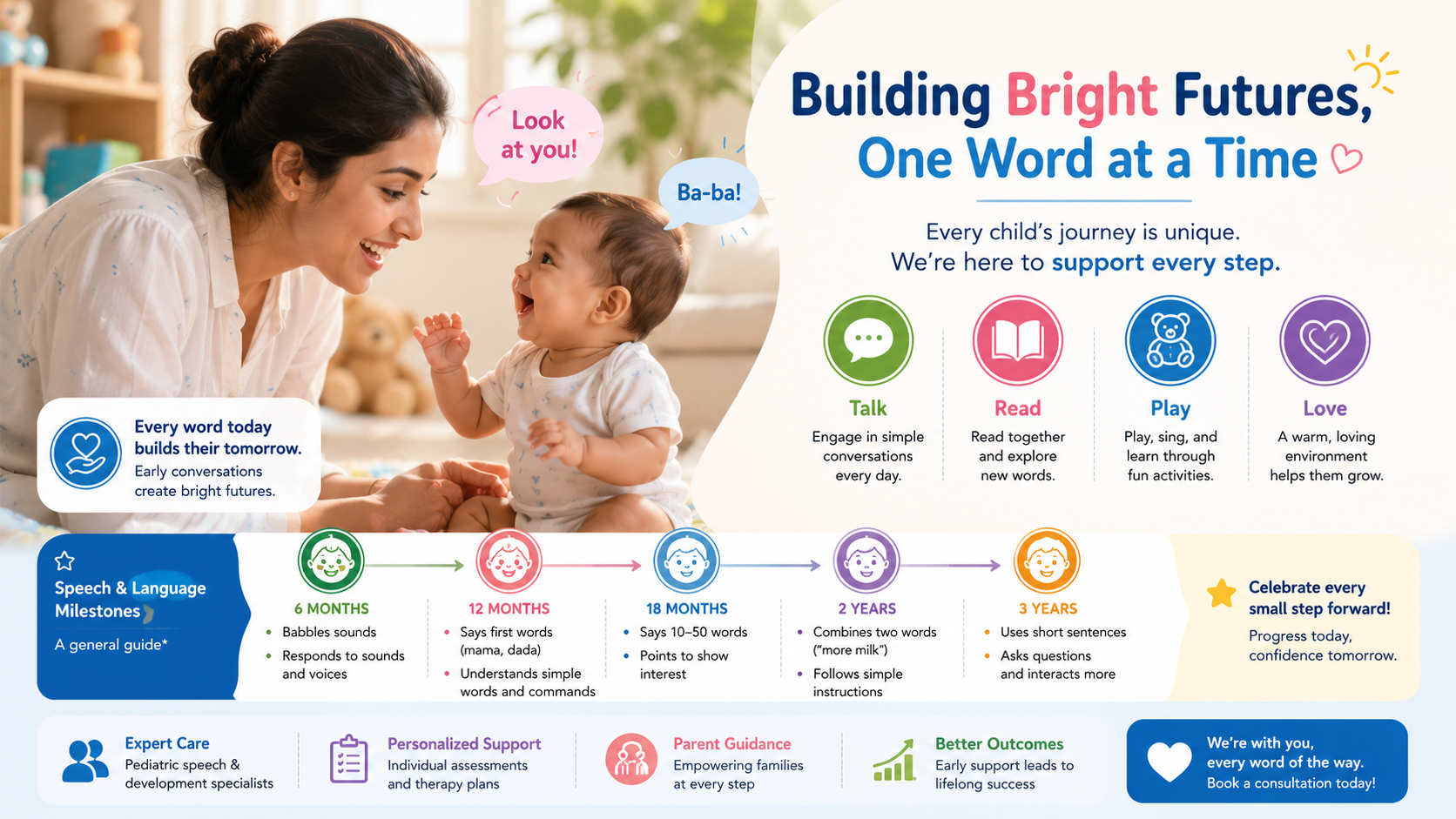
Why Is Speech Development Important?
Speech and language development reflect how a child’s brain is growing and learning.
Language development is closely linked to:
- Brain development
- Hearing ability
- Social interaction
- Learning skills
- Future academic success
According to the American Academy of Pediatrics, early language exposure strongly influences communication and cognitive development.
The World Health Organization also emphasizes early childhood development as a critical foundation for lifelong health and learning.
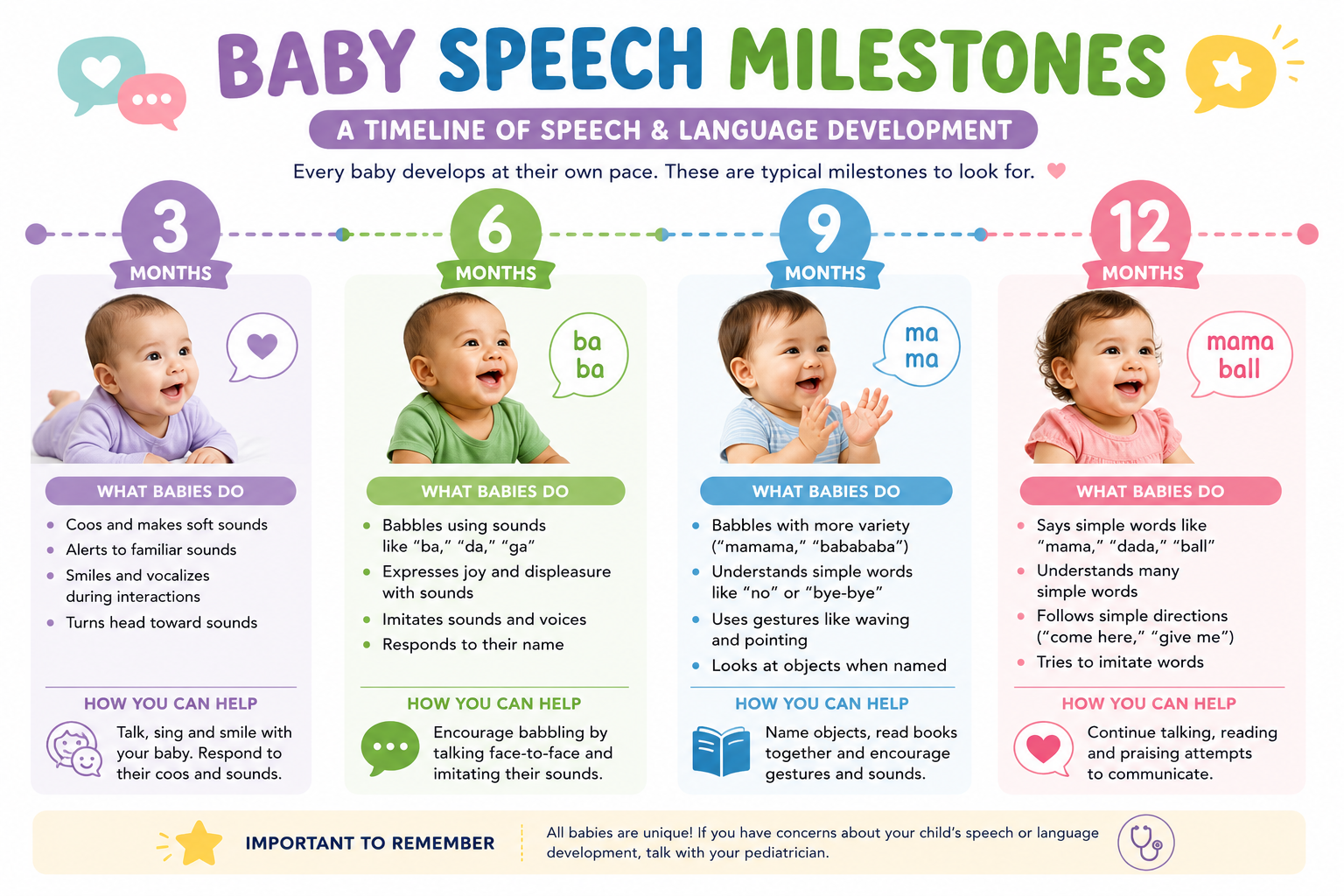
When Do Babies Start Speaking?
Most babies begin communicating long before they say their first words.
Birth to 3 Months
Babies typically:
- Cry differently for different needs
- Respond to voices
- Turn toward sounds
- Smile socially
4 to 6 Months
Babies often:
- Laugh
- Squeal
- Babble
- Make sounds like
“ba”
“da”
“ga”
6 to 9 Months
Most babies begin repetitive babbling:
- “bababa”
- “dadada”
- “mamama”
At this stage these sounds are not always used meaningfully.
9 to 12 Months
Many babies:
- Understand simple words
- Respond to their name
- Wave goodbye
- Use gestures
Some may begin saying:
- Mama
- Dada
- Bye
meaningfully.
When Should a Child Start Speaking Words?
Most children say their first meaningful word between:
10 and 15 months
Examples:
- Mama
- Papa
- Ball
- Bye
- Dog
A child who reaches 15 months without any meaningful words may benefit from developmental monitoring.
When Should a Child Start Speaking Clearly?
Parents frequently search:
“When should my baby speak clearly?”
Speech clarity develops gradually.
Age 2 Years
Parents understand about 50% of speech.
Age 3 Years
Parents understand about 75% of speech.
Age 4 Years
Most speech should be understandable to strangers.
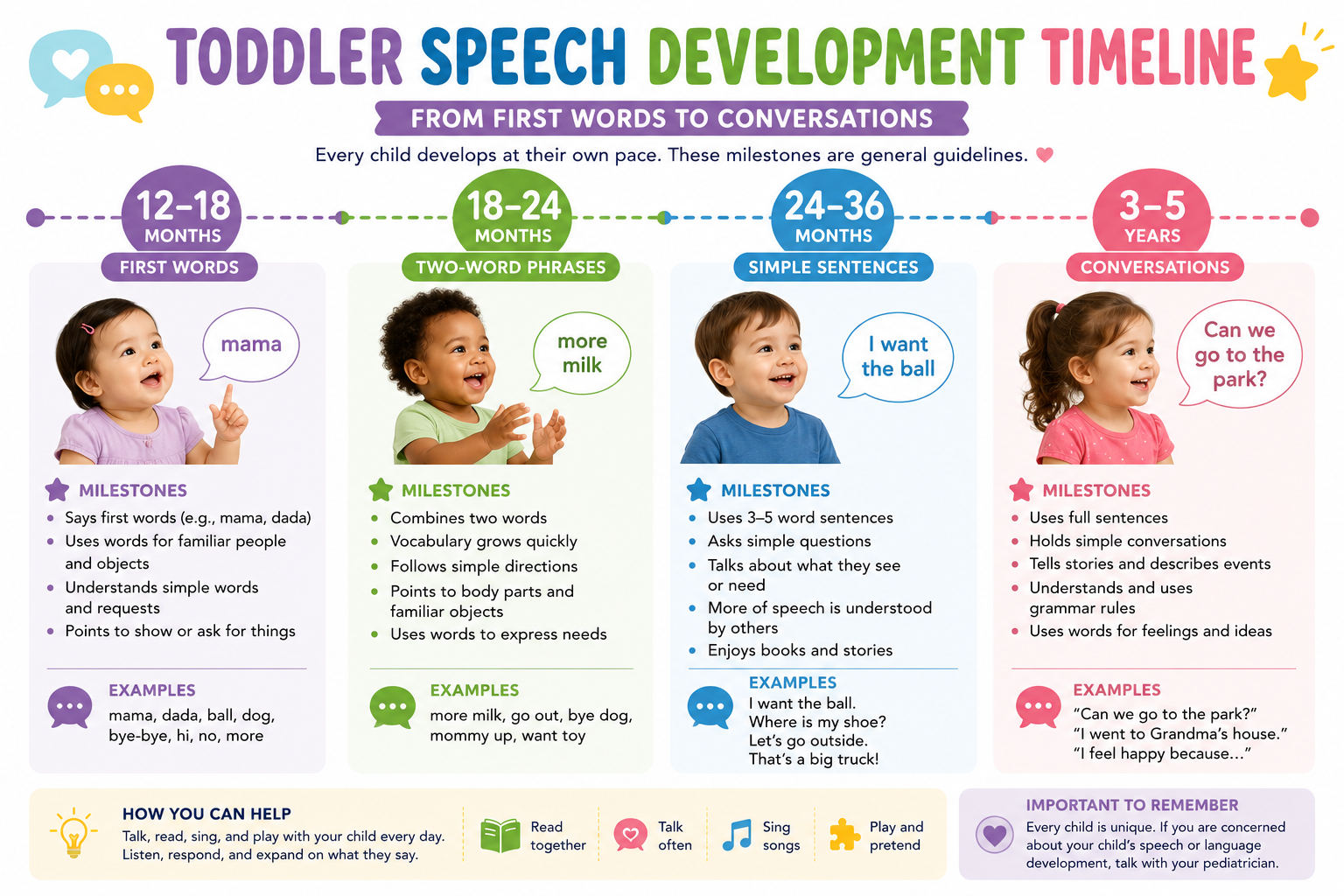
When Should a Child Start Speaking Sentences?
Around 18–24 Months
Children begin combining two words:
Examples:
- Want water
- Mama come
- More milk
Around 3 Years
Most children speak short sentences containing:
- 3–5 words
- Questions
- Simple conversations
Speech Development Milestone Chart
| Age | Expected Milestone |
|---|---|
| 6 Months | Babbling |
| 9 Months | Responds to name |
| 12 Months | First words |
| 18 Months | 10–20 words |
| 24 Months | 50+ words, two-word phrases |
| 3 Years | Short sentences |
| 4 Years | Mostly understandable speech |
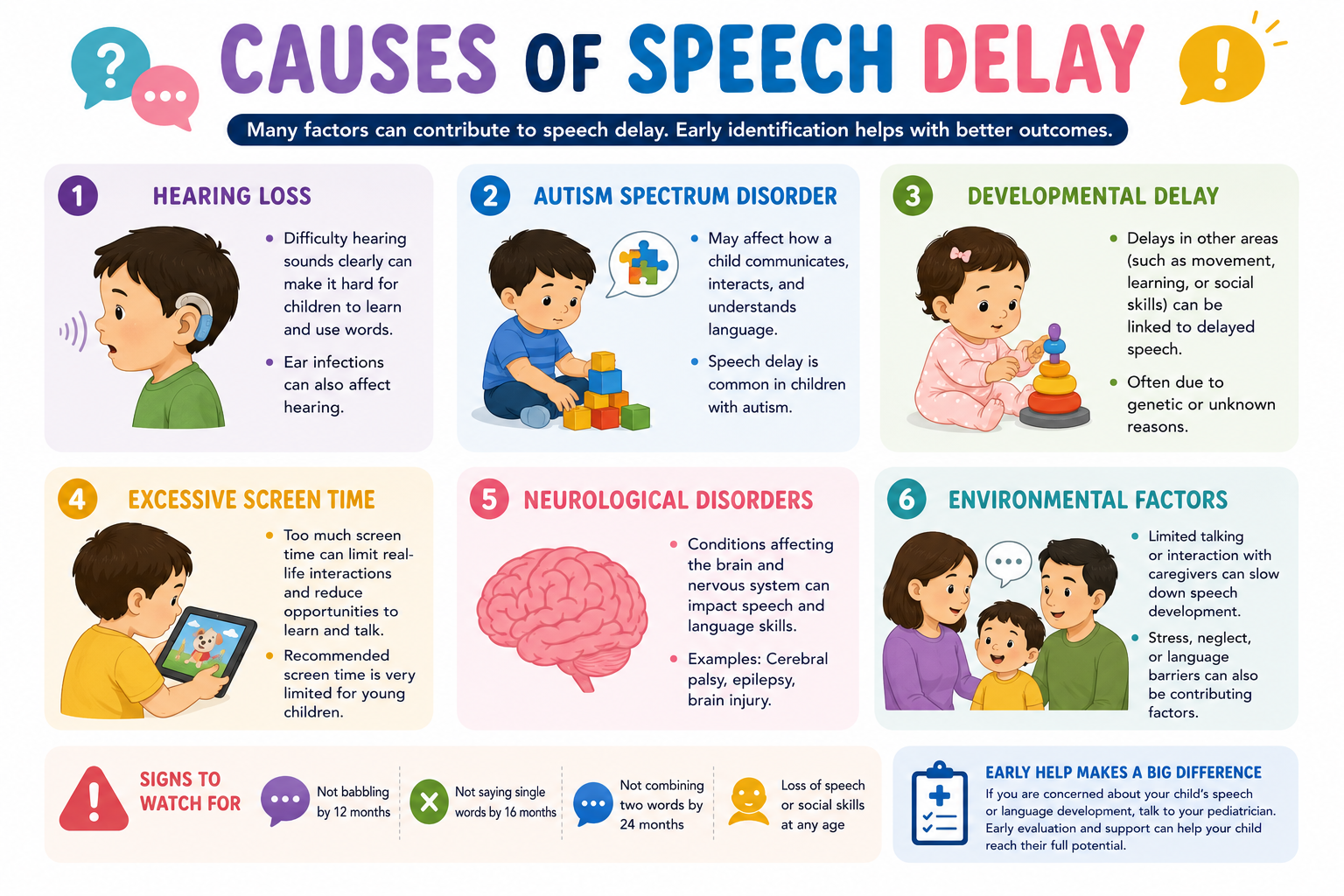
What Causes Speech Delay?
Speech delay may occur due to:
Hearing Problems
A child must hear well to learn language.
Developmental Delay
Global developmental delay can affect speech milestones.
Autism Spectrum Disorder
Speech delay is often one of the earliest signs of autism.
Excessive Screen Time
Studies increasingly show associations between excessive passive screen exposure and delayed language development.
Intellectual Disability
Learning difficulties may affect language development.
Neurological Disorders
Brain-related conditions may influence communication skills.
Environmental Factors
Limited interaction and reduced language exposure can contribute.
Does Delayed Speech Always Mean Autism?
No.
This is one of the biggest misconceptions among parents.
Many children with speech delay do NOT have autism.
Possible causes include:
- Hearing impairment
- Developmental language disorder
- Bilingual language exposure
- Developmental delay
- Neurological conditions
However, speech delay combined with:
- Poor eye contact
- Limited social interaction
- Repetitive behaviors
should prompt evaluation for autism.
Can Excessive Screen Time Delay Speech?
Modern research suggests excessive passive screen exposure may negatively affect language development.
Children learn language through:
- Human interaction
- Facial expressions
- Eye contact
- Conversation
Screens cannot fully replace real-life communication.
The American Academy of Pediatrics recommends prioritizing interactive communication and limiting excessive screen exposure in young children.
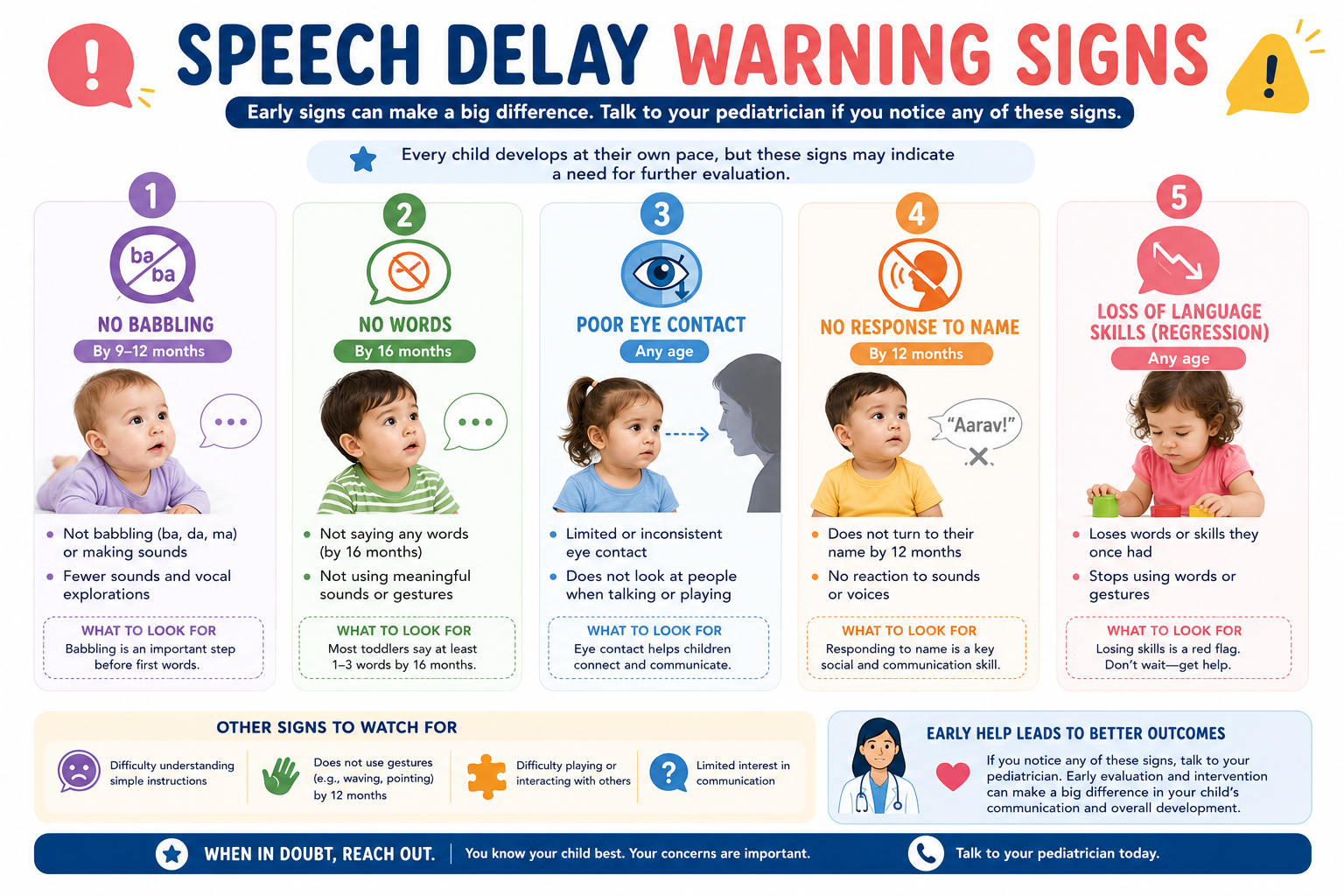
Red Flags: When Should Parents Be Concerned?
Seek professional evaluation if your child:
By 9 Months
- Does not babble
By 12 Months
- Does not respond to name
- No gestures
By 15 Months
- No meaningful words
By 18 Months
- Very limited vocabulary
By 24 Months
- No two-word combinations
At Any Age
- Loss of previously acquired language skills
This requires immediate developmental assessment.
How Parents Can Encourage Speech Development
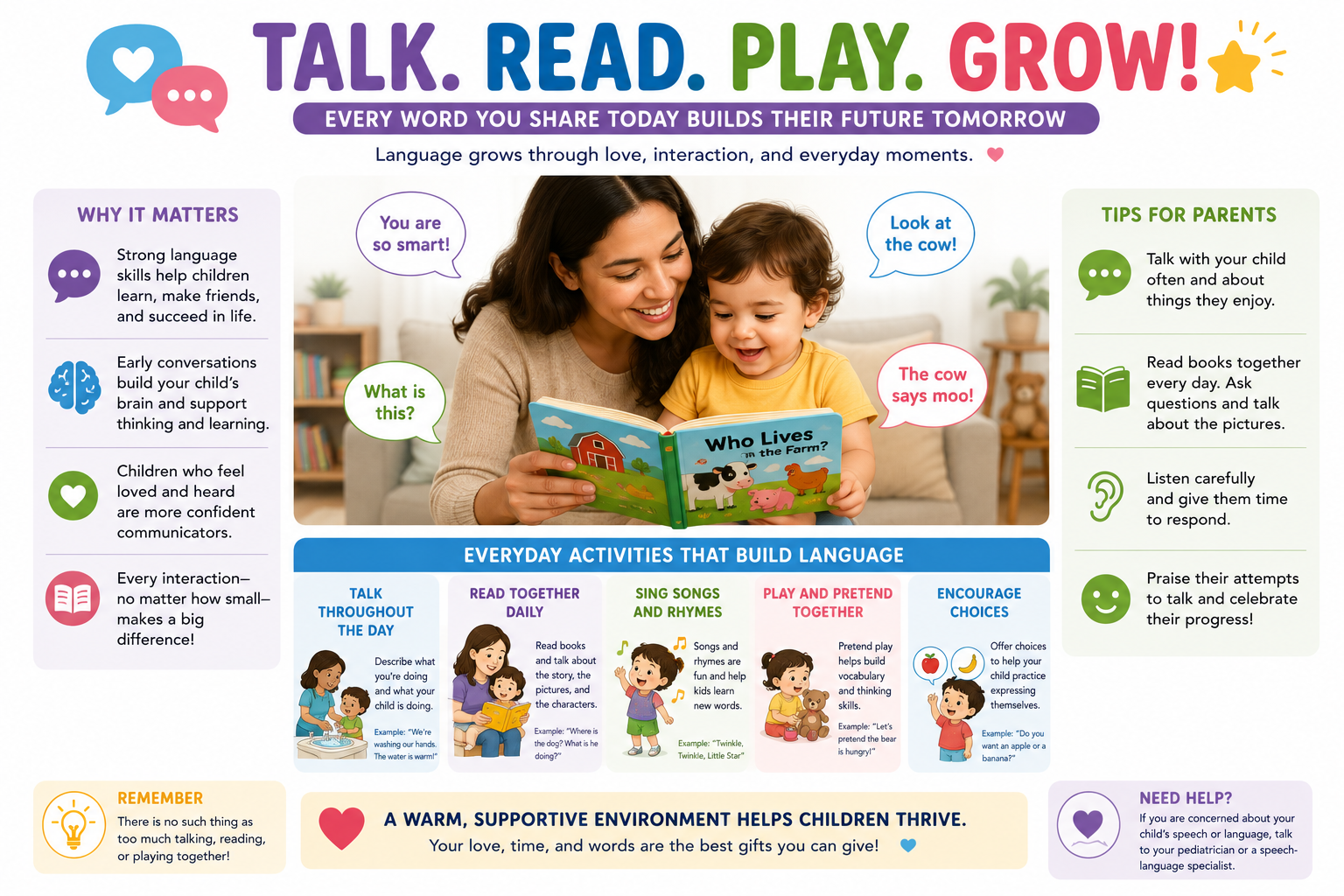
Talk Frequently
Narrate daily activities.
Read Books Daily
Reading improves vocabulary and communication skills.
Sing Songs
Songs help language learning.
Play Face-to-Face Games
Encourage interaction.
Reduce Screen Time
Prioritize human interaction.
Respond to Communication Attempts
Even gestures and sounds should be encouraged.
When Should You Consult a Pediatric Neurologist?
Consult a Pediatric Neurologist if your child has:
- Significant speech delay
- Developmental delay
- Regression of skills
- Suspected autism
- Seizures
- Poor social interaction
- Neurological concerns
Early intervention significantly improves outcomes.
Frequently Asked Questions About Child Development
Q:When should a baby start speaking mama and papa?
A:Many babies begin saying mama or papa between 9 and 12 months, although meaningful use may develop later.
Q:What age should a child start speaking words?
A:Most children say their first meaningful words between 10 and 15 months.
Q:When should a child start speaking sentences?
A:Most children begin combining words between 18 and 24 months.
Q:What age should speech be clear?
A:Speech is usually mostly understandable by age 4 years.
Q:Is speech delay common?
A:Speech delay affects approximately 5–10% of preschool children.
Q:Can speech delay improve?
A:Yes. Early identification and intervention often result in significant improvement.
Q:Does screen time cause speech delay?
A:Excessive screen exposure may contribute to delayed language development in some children.
Q:Is speech delay hereditary?
A:Family history can influence language development.
Q:When should I worry about speech delay?
A:If your child has no words by 15 months or no two-word phrases by 24 months, evaluation is recommended.
Q:Who should evaluate speech delay?
A:A Pediatric Neurologist, developmental specialist, speech therapist, and hearing specialist may all play important roles.
Medically Reviewed by Dr. Sunil Sable
Pediatric Neurologist & Epilepsy Specialist, Ahilyanagar
Special Interest: Child Development, Autism, Speech Delay, Epilepsy, ADHD and Genetic Disorders.
Concerned about your child's speech development?
Families searching for answers about when a child should start speaking, speech delay, late talking toddlers, first words, speech milestones, and autism warning signs often require expert guidance. Dr. Sunil Sable, Pediatric Neurologist & Epilepsy Specialist in Ahilyanagar, provides comprehensive developmental assessment, speech delay evaluation, autism screening, and early intervention guidance for children with communication concerns.
References
- American Academy of Pediatrics
- World Health Organization
- Indian Academy of Pediatrics