

How to Choose the Best Pediatric Neurologist in Ahilyanagar: A Parent’s Complete Guide for Parents
When a child experiences seizures, developmental delays, autism-related concerns, speech delay, ADHD symptoms, headaches, muscle weakness, or other neurological problems, parents often face an important question:
“Which doctor should I consult for my child?”
Choosing the right Pediatric Neurologist can significantly influence diagnosis, treatment outcomes, developmental progress, and quality of life.
This comprehensive guide explains what a Pediatric Neurologist does, when your child should see one, and the key factors parents should consider while selecting a Pediatric Neurologist in Ahilyanagar.
Understanding Pediatric Neurology
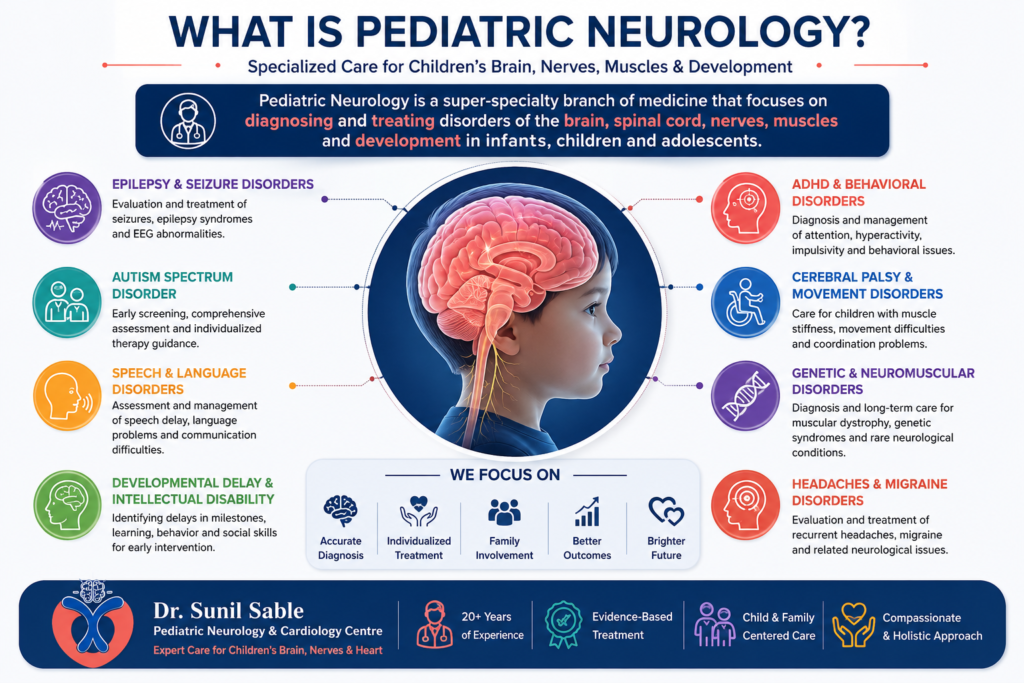
Pediatric Neurology is a specialized branch of medicine focused on disorders affecting the developing brain, spinal cord, nerves, muscles, learning, behavior, and neurodevelopment in infants, children, and adolescents.
Unlike adults, children’s brains are still developing. Neurological conditions often present differently in children and require specialized evaluation and treatment approaches.
A Pediatric Neurologist receives advanced training to diagnose and manage complex neurological and developmental disorders unique to childhood.
Why Choosing the Best Pediatric Neurologist in Ahilyanagar Matters
Neurological disorders often affect multiple aspects of a child’s life, including:
- Learning abilities
- Speech and language development
- Social skills
- Academic performance
- Physical development
- Behavioral regulation
- Independence and quality of life
Early diagnosis and intervention frequently improve long-term outcomes.
Studies consistently demonstrate that early recognition and management of developmental and neurological disorders can positively influence a child’s developmental trajectory.
Common Conditions Treated by Pediatric Neurologists
Epilepsy and Seizure Disorders
Children may experience:
- Febrile seizures
- Childhood epilepsy
- Infantile spasms
- Absence seizures
- Generalized seizures
- Focal seizures
Accurate diagnosis is essential because different seizure types require different treatments.
Autism Spectrum Disorder
Parents often seek neurological consultation for:
- Poor eye contact
- Delayed speech
- Repetitive behaviors
- Social communication difficulties
- Sensory concerns
A Pediatric Neurologist helps identify associated neurological conditions and coordinates multidisciplinary care.
Speech and Language Delay
Warning signs include:
- No babbling by 12 months
- No meaningful words by 18 months
- Limited vocabulary
- Difficulty understanding language
Early assessment helps identify underlying developmental or neurological causes.
Developmental Delay
Developmental delays may involve:
- Walking delay
- Speech delay
- Cognitive delay
- Social delay
- Fine motor difficulties
Prompt evaluation helps identify treatable causes.
ADHD and Behavioral Concerns
Children may present with:
- Hyperactivity
- Poor attention span
- Impulsivity
- School difficulties
Specialized evaluation helps distinguish ADHD from other developmental conditions.
Cerebral Palsy
Children with Cerebral Palsy often require long-term neurological care for:
- Motor impairment
- Muscle stiffness
- Walking difficulties
- Associated epilepsy
- Developmental concerns
Genetic and Neuromuscular Disorders
These include:
- Muscular dystrophy
- Genetic syndromes
- Metabolic disorders
- Rare neurological diseases
Early diagnosis often improves management options.
When Should Parents Consult a Pediatric Neurologist?
Parents should seek specialist evaluation if their child experiences:
Developmental Red Flags
- Not sitting independently
- Not walking on time
- Speech delay
- Poor social interaction
- Loss of previously acquired skills
Seizure Symptoms
- Staring spells
- Body jerking
- Sudden falls
- Recurrent unexplained episodes
Behavioral Concerns
- Hyperactivity
- Attention difficulties
- Autism concerns
- Learning difficulties
Neurological Symptoms
- Persistent headaches
- Weakness
- Abnormal movements
- Balance problems
10 Factors to Consider When Choosing a Pediatric Neurologist in Ahilyanagar
1. Specialized Pediatric Neurology Training
Not all neurologists are trained to manage children.
Look for a doctor specifically trained in Pediatric Neurology with expertise in childhood neurological and developmental disorders.
2. Experience in Managing Complex Childhood Conditions
Experience matters, especially for conditions such as:
- Autism
- Epilepsy
- Infantile spasms
- Developmental delay
- ADHD
- Genetic disorders
Children often require nuanced evaluation and individualized treatment plans.
3. Comprehensive Developmental Assessment
A good Pediatric Neurologist should evaluate:
- Speech development
- Motor milestones
- Social skills
- Learning abilities
- Behavioral concerns
Rather than focusing only on symptoms.
4. Child-Friendly Communication
Children and parents often feel anxious during consultations.
An effective Pediatric Neurologist should:
- Listen carefully
- Explain clearly
- Answer questions patiently
- Involve parents in decision-making
5. Availability of Diagnostic Facilities
Depending on the condition, investigations may include:
- EEG
- MRI Brain
- Genetic testing
- Developmental assessment
- Metabolic evaluation
Timely access facilitates quicker diagnosis.
6. Evidence-Based Treatment Approach
Treatment recommendations should be based on current scientific evidence and established clinical guidelines.
7. Multidisciplinary Care Coordination
Many children benefit from coordinated care involving:
- Speech therapists
- Occupational therapists
- Psychologists
- Physiotherapists
- Special educators
Integrated management often produces better outcomes.
8. Focus on Early Intervention
The developing brain demonstrates remarkable adaptability during early childhood.
Early intervention can significantly improve outcomes for many developmental conditions.
9. Parent Education and Guidance
Successful treatment requires informed parents.
A good specialist should provide:
- Home strategies
- Developmental guidance
- School recommendations
- Long-term planning advice
10. Long-Term Follow-Up and Continuity of Care
Neurological conditions often require ongoing monitoring.
Choose a specialist who provides long-term developmental tracking and support.
Parent Red Flag Box
🚨 Seek urgent medical evaluation if your child has:
- First seizure episode
- Prolonged seizure lasting more than 5 minutes
- Developmental regression
- Sudden weakness
- Loss of consciousness
- Persistent severe headache
- Repeated unexplained falls
Why Families Seek Pediatric Neurology Consultation
Parents commonly seek specialist evaluation for:
- Speech delay
- Autism concerns
- Delayed milestones
- ADHD symptoms
- Epilepsy
- Learning difficulties
- Genetic disorders
- Cerebral palsy
- Behavioral challenges
Comprehensive evaluation helps identify the underlying cause and guide appropriate intervention.
Pediatric Neurology Services by Dr. Sunil Sable Pediatric Neurologist & Epilepsy Specialist,Ahilyanagar,Maharashtra
Services include:
- Pediatric Neurology Consultation
- Autism Assessment
- Speech Delay Evaluation
- Developmental Delay Assessment
- ADHD Evaluation
- Epilepsy Management
- EEG Interpretation
- Cerebral Palsy Care
- Genetic Disorder Evaluation
- Child Development Guidance
With over 20 years of specialized experience in pediatric neurological and developmental disorders, Dr. Sunil Sable provides evidence-based, family-centered care for children across Ahilyanagar and surrounding regions.
Frequently Asked Questions
Pediatric Neurologists diagnose and manage disorders affecting the brain, spinal cord, nerves, muscles, behavior, and development in children.
If a child is not meeting expected speech milestones or shows regression in communication skills, specialist evaluation is recommended.
Yes. Pediatric Neurologists play an important role in evaluating developmental concerns and diagnosing Autism Spectrum Disorder.
No. Speech delay can occur due to multiple reasons including hearing impairment, developmental language disorder, intellectual disability, or environmental factors.
Many children with epilepsy achieve excellent seizure control with appropriate treatment.
Depending on symptoms, tests may include EEG, MRI, genetic testing, developmental assessments, and laboratory investigations.
Many children show significant improvement when delays are identified early and appropriate interventions are initiated.
ADHD is considered a neurodevelopmental disorder affecting attention, impulse control, and activity levels.
Follow-up frequency depends on diagnosis, treatment requirements, and developmental progress.
Yes. Early intervention is one of the most effective strategies for improving outcomes in developmental and neurological disorders.
Related Articles
- Early Signs of Autism in Toddlers
- Speech Delay in Children: When Should Parents Worry?
- Developmental Milestones from Birth to 5 Years
- ADHD Symptoms in Children
- Childhood Epilepsy: Causes, Symptoms and Treatment
- Cerebral Palsy in Children
- Infantile Spasms: A Medical Emergency
- How to Improve Eye Contact in Children with Autism
About the Author
Dr. Sunil Sable
Dr. Sunil Sable is a Pediatric Neurologist and Epilepsy Specialist,Ahilyanagar,Maharashtra with more than 20 years of experience in diagnosing and treating childhood neurological and developmental disorders. His areas of expertise include epilepsy, autism spectrum disorder, developmental delay, speech delay, ADHD, cerebral palsy, genetic disorders, and child development.
Book an Appointment
If your child is experiencing seizures, speech delay, developmental concerns, autism-related symptoms, ADHD, or other neurological issues, early evaluation can make a meaningful difference.
Schedule a consultation with Dr. Sunil Sable Pediatric Neurology & Cardiology Centre, Ahilyanagar, for comprehensive assessment and evidence-based treatment.
Call: +91 9373402011
Website: drunilsable.com
References
Autism Resources
CDC Autism Information
CDC Autism Spectrum Disorder (ASD)
WHO Autism Information
WHO Autism Spectrum Disorders Fact Sheet
Epilepsy Resources
ILAE (International League Against Epilepsy)
ILAE Epilepsy Information and Resources