Dr Sunil Sable Pediatric Neurology & Cardiology Center

Cerebral Palsy Clinic Ahilyanagar

Expert Neurological Care, Rehabilitation Guidance & Family Support for Children with Cerebral Palsy
cerebral palsy clinic Dr Sunil Sable Pediatric Neurologist and Epilepsy Specialist Ahilynagar(Ahmednagar) Maharashtra

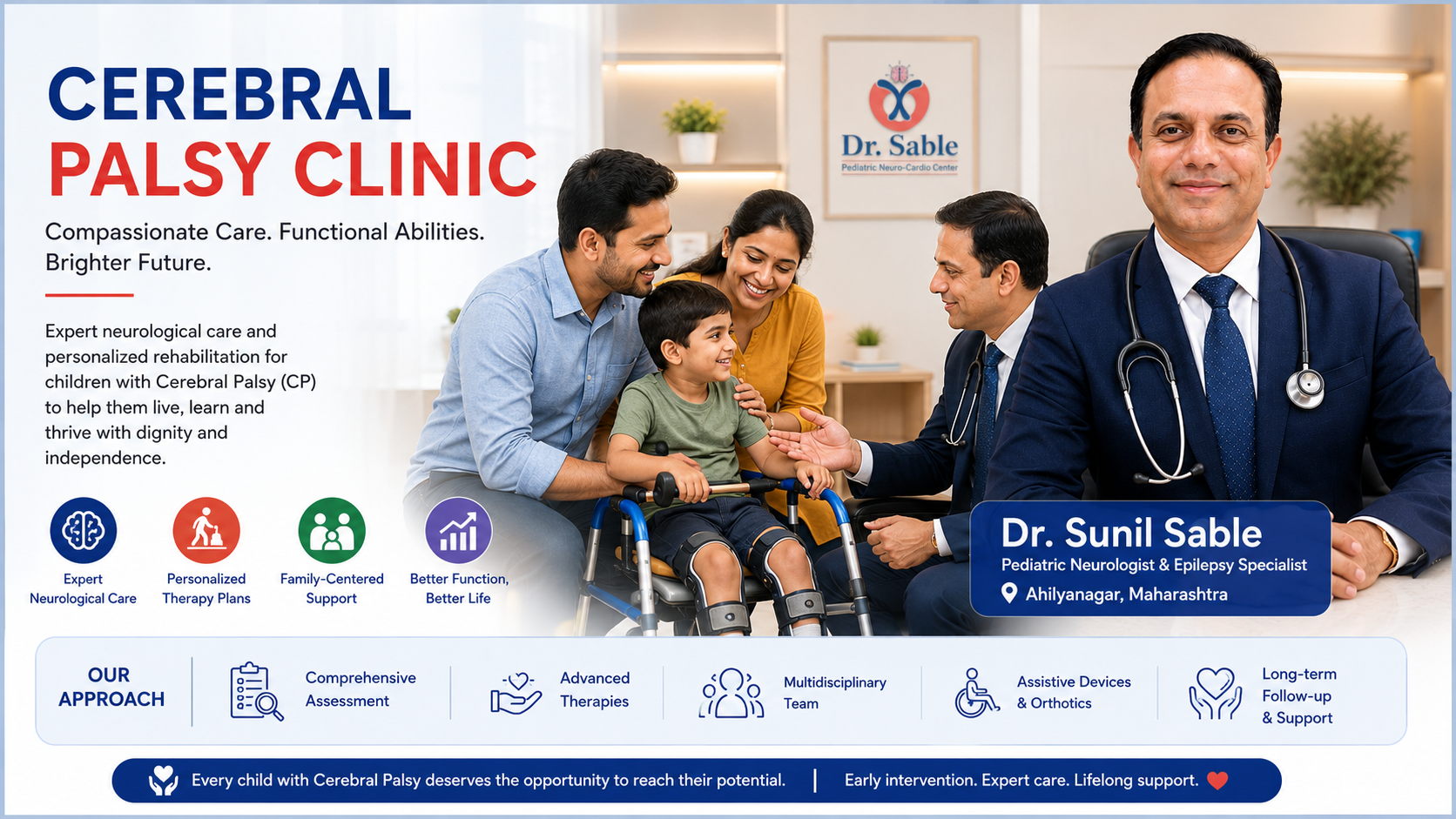
At our Cerebral Palsy Clinic Ahilyanagar, Dr. Sunil Sable provides comprehensive evaluation, diagnosis, developmental assessment, rehabilitation guidance, spasticity management, seizure management, and long-term support for children with cerebral palsy.

We believe every child deserves the opportunity to achieve their maximum potential, independence, and quality of life through early intervention and evidence-based care.

Book Appointment Contact US

What is Cerebral Palsy?

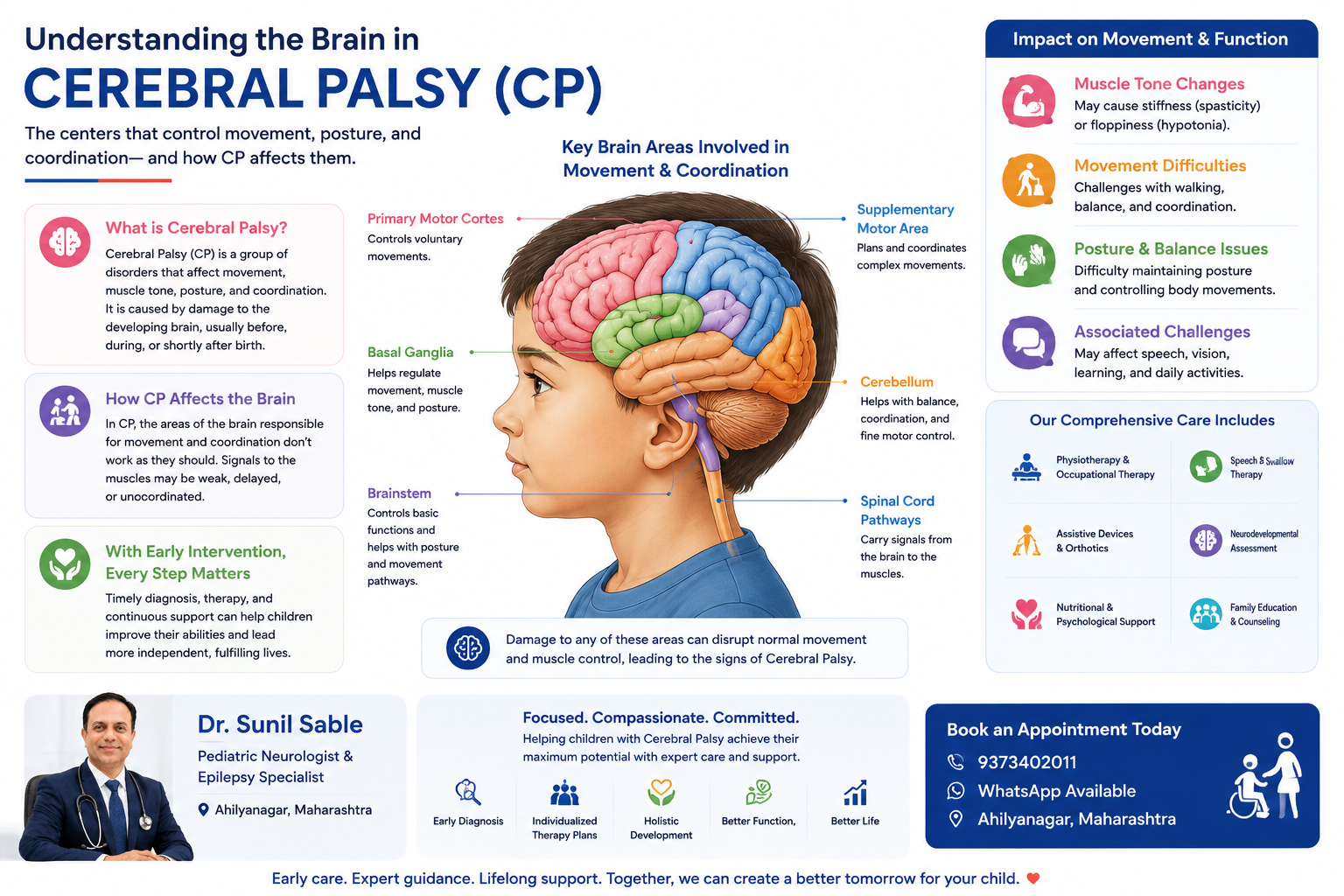
Cerebral palsy (CP) is a group of neurological disorders affecting movement, posture, muscle tone, and coordination. It occurs due to injury or abnormal development of the developing brain, usually before, during, or shortly after birth.

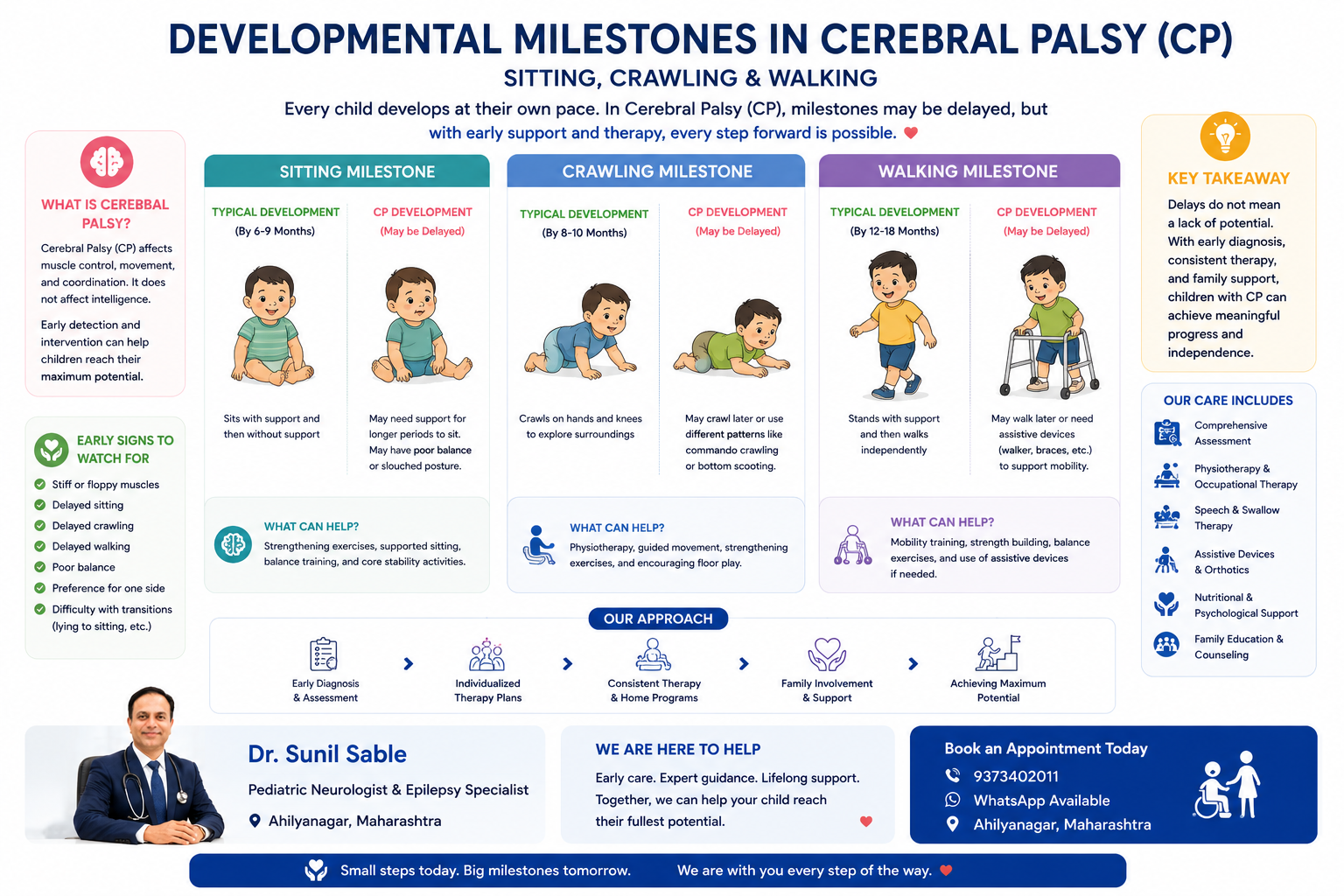
Although cerebral palsy is a lifelong condition, early diagnosis and intervention can significantly improve mobility, communication, learning, and independence.
Cerebral Palsy Clinic in Ahilyanagar Dr Sunil Sable Best Pediatric Neurologist & Epilepsy Specialist Ahilyanagar

Common Signs of Cerebral Palsy

Parents may notice:

  • Delayed sitting
  • Delayed crawling
  • Delayed walking
  • Stiff muscles
  • Floppy muscles
  • Poor balance
  • Abnormal posture
  • Walking on toes
  • Feeding difficulties
  • Speech difficulties
  • Seizures
  • Learning difficulties

.

Cerebral Palsy Clinic in Ahilyanagar Dr Sunil Sable Best Pediatric Neurologist & Epilepsy Specialist Ahilyanagar

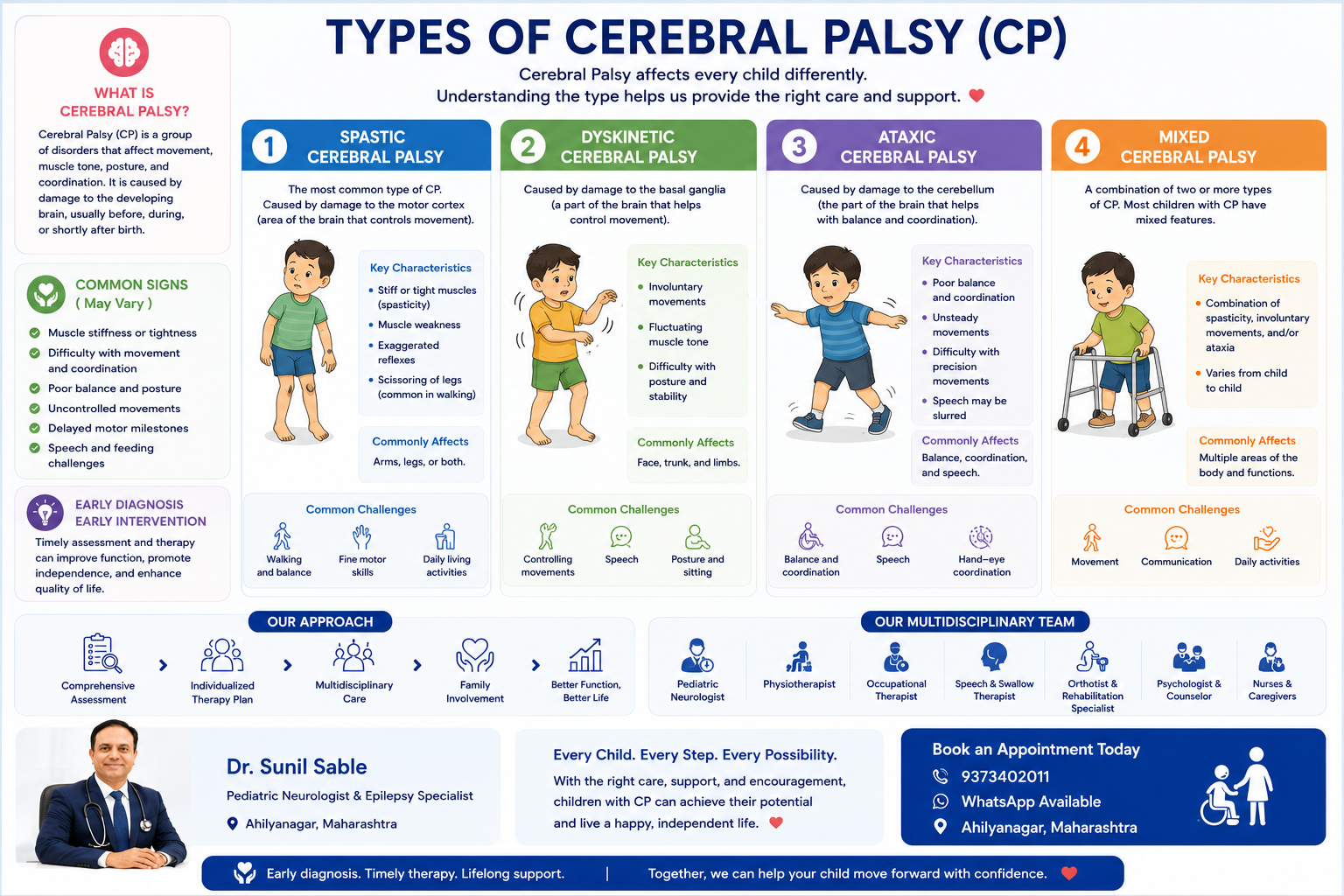
Types of Cerebral Palsy

Spastic Cerebral Palsy

Most common type characterized by muscle stiffness and increased muscle tone.

Dyskinetic Cerebral Palsy

Characterized by involuntary movements and difficulty controlling body movements.

Ataxic Cerebral Palsy

Associated with balance and coordination difficulties.

Mixed Cerebral Palsy

Combination of two or more types.
Cerebral Palsy Clinic in Ahilyanagar Dr Sunil Sable Best Pediatric Neurologist & Epilepsy Specialist Ahilyanagar

Conditions Commonly Associated With Cerebral Palsy

Children with cerebral palsy may also experience:
  • Epilepsy
  • Speech delay
  • Intellectual disability
  • Learning difficulties
  • Vision problems
  • Hearing difficulties
  • Feeding difficulties
  • Behavioral concerns
  • Autism spectrum disorder

usually before, during, or shortly after birth.

Although cerebral palsy is a lifelong condition, early diagnosis and intervention can significantly improve mobility, communication, learning, and independence.

Link to:

Cerebral Palsy Clinic in Ahilyanagar Dr Sunil Sable Best Pediatric Neurologist & Epilepsy Specialist Ahilyanagar

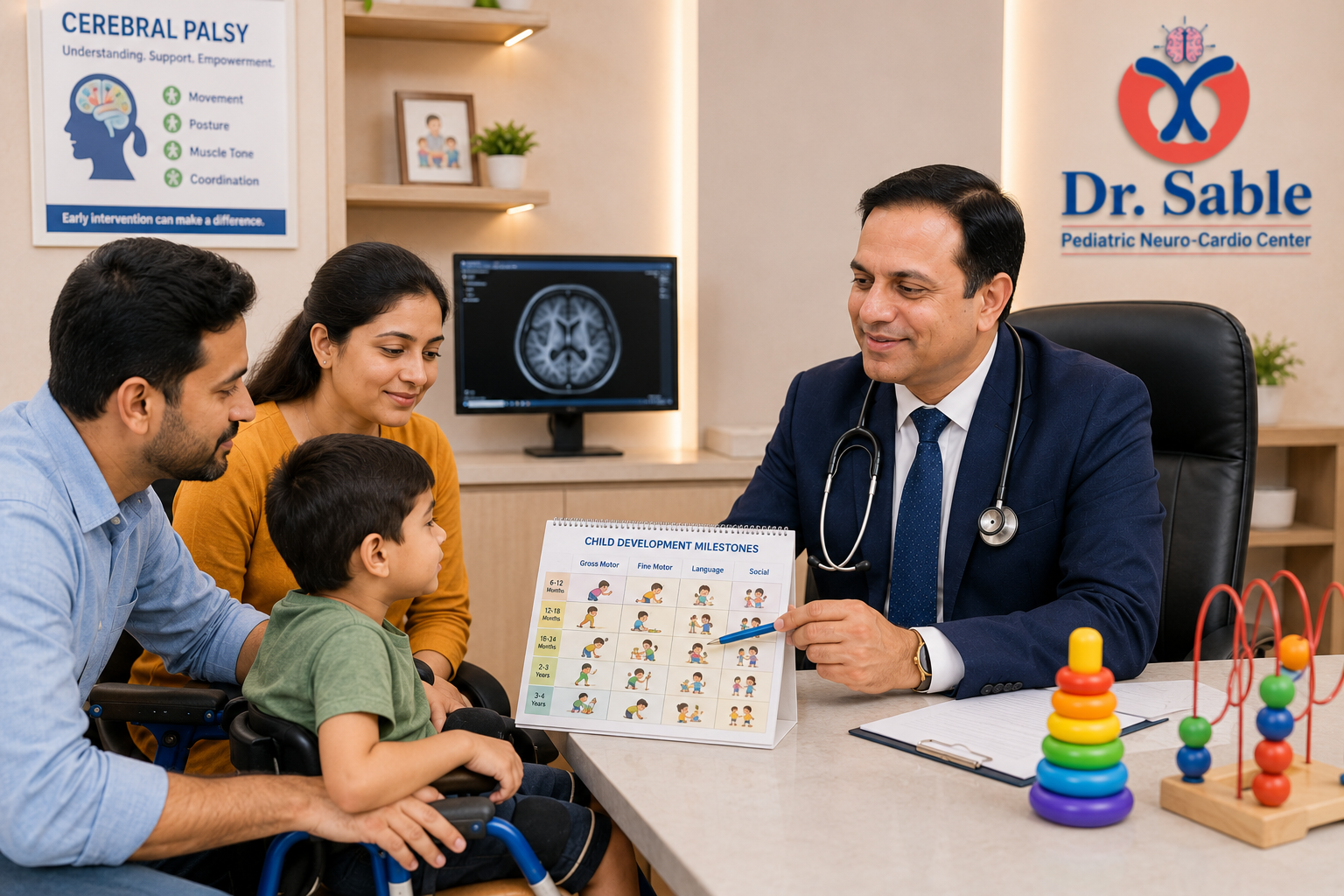
Evaluation at Our Cerebral Palsy Clinic Ahilyanagar

Detailed Developmental Assessment

Evaluation of developmental milestones.

Neurological Examination

Comprehensive pediatric neurological assessment.

MRI Brain Review

Assessment of brain imaging when available.

Functional Assessment

Evaluation of mobility and daily activities.

Seizure Screening

Assessment for epilepsy and seizure disorders.
Cerebral Palsy Clinic in Ahilyanagar Dr Sunil Sable Best Pediatric Neurologist & Epilepsy Specialist Ahilyanagar

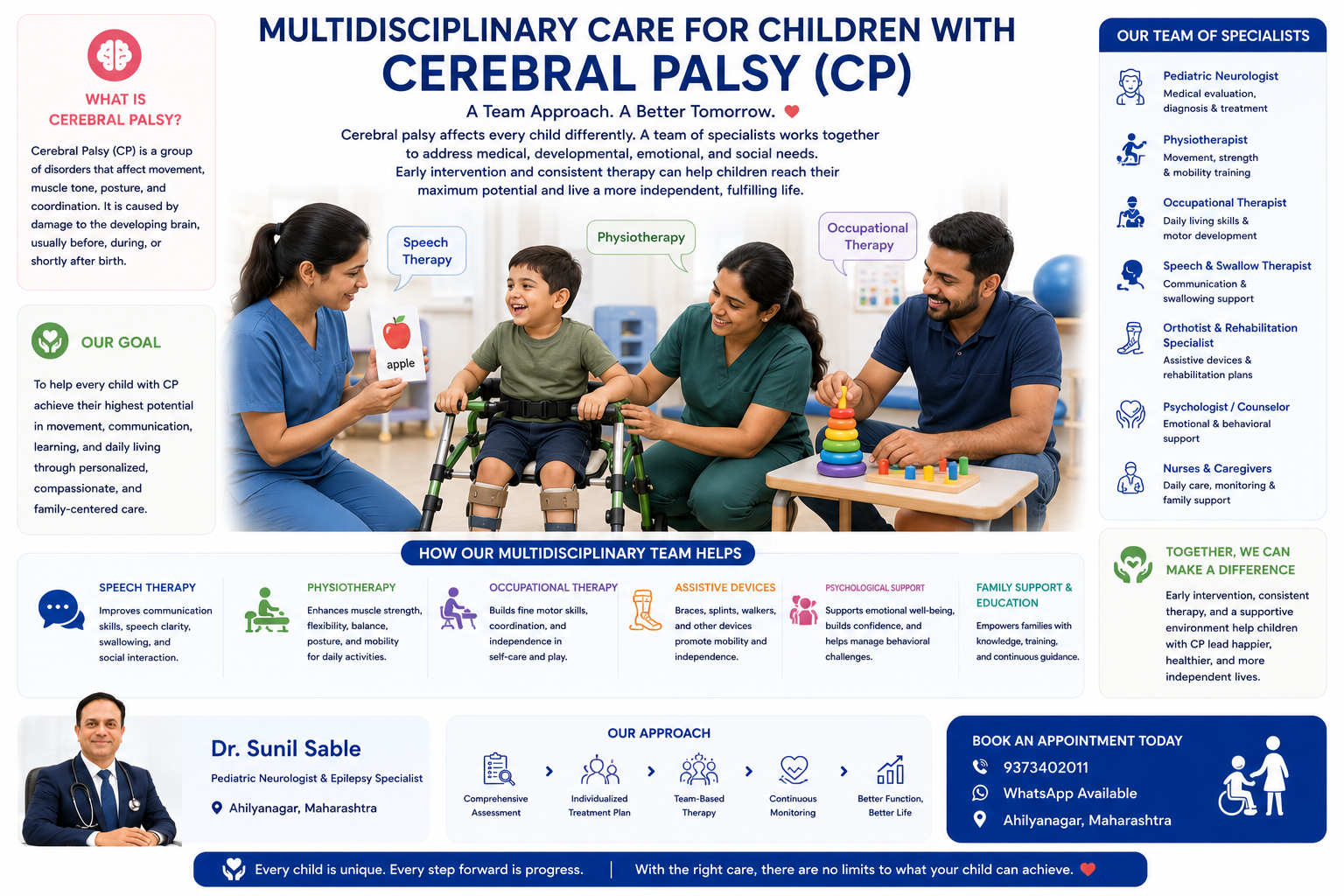
Treatment and Rehabilitation for Cerebral Palsy

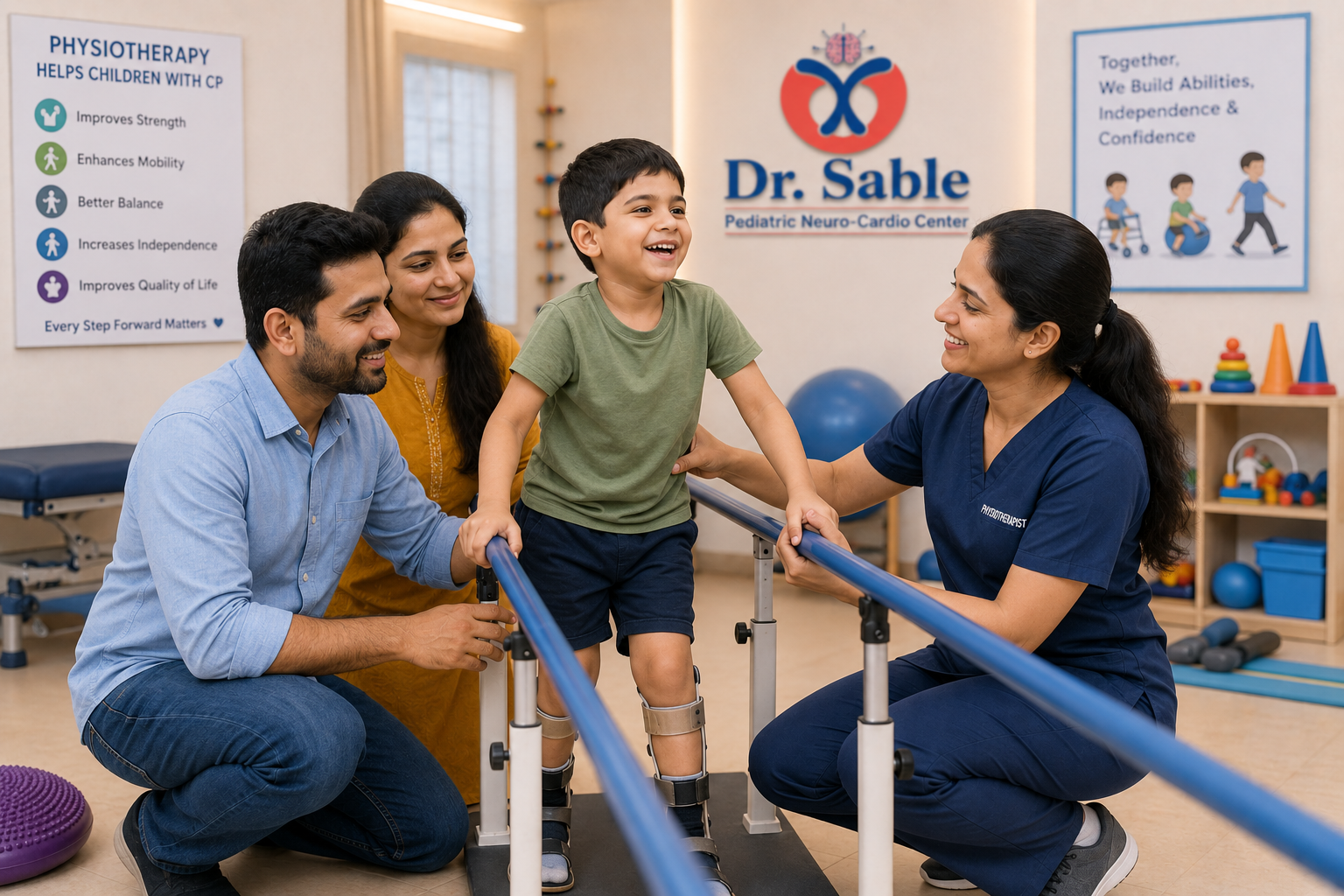
Physiotherapy

Improves strength, flexibility and mobility.

NeurologiOccupational Therapycal Examination

Improves daily living skills and independence.

Speech Therapy

Enhances communication and feeding abilities.

Spasticity Management

Management of muscle stiffness and movement difficulties.

Orthotic Support

Braces and assistive devices to improve mobility.

Seizure Management

Treatment of associated epilepsy.
Cerebral Palsy Clinic in Ahilyanagar Dr Sunil Sable Best Pediatric Neurologist & Epilepsy Specialist Ahilyanagar

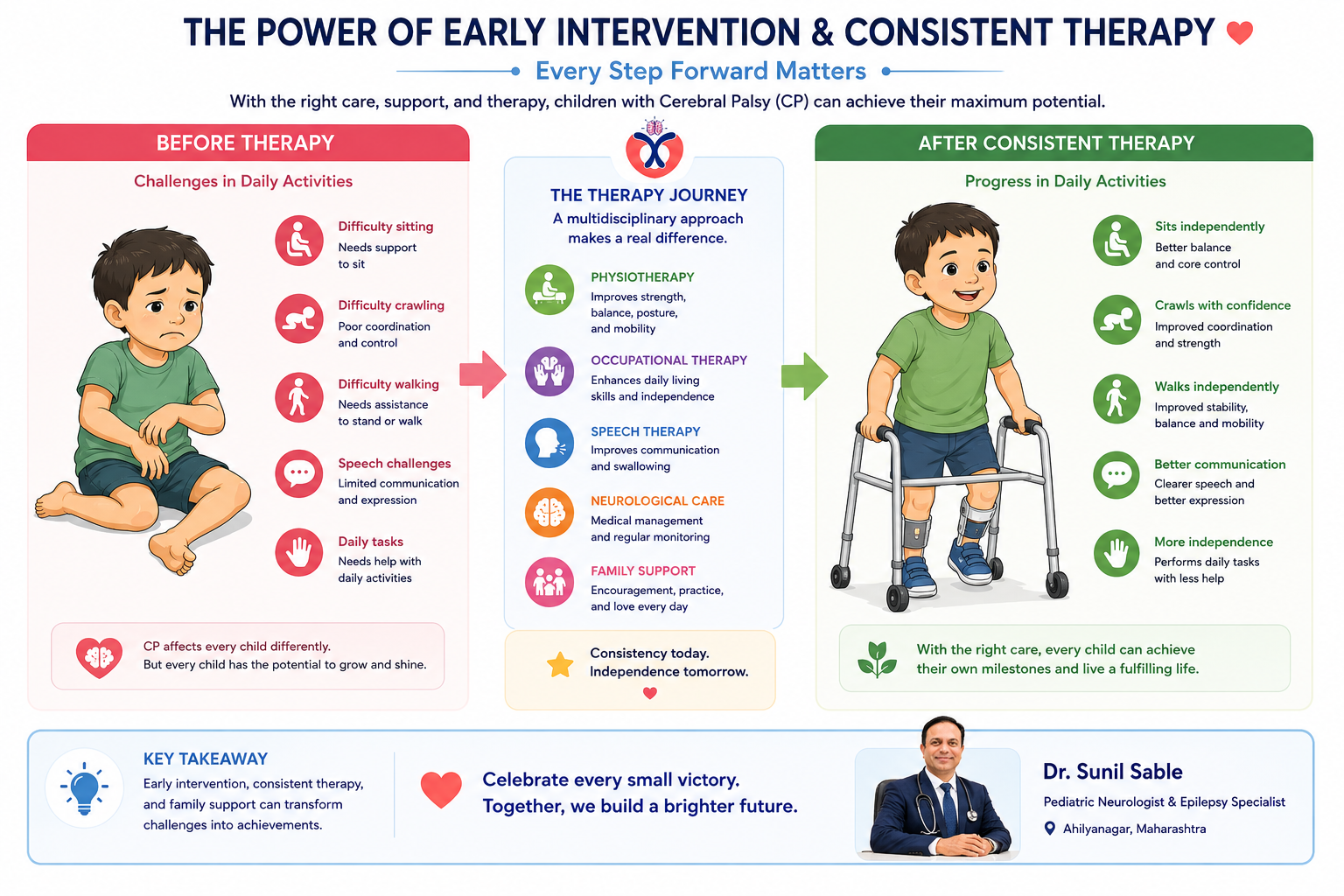
Why Early Intervention Matters

The developing brain has remarkable ability to adapt.

Early intervention can:

  • Improve mobility
  • Improve communication
  • Improve independence
  • Prevent contractures
  • Enhance learning
  • Improve quality of life

The earlier therapy begins, the better the long-term outcomes.
Cerebral Palsy Clinic in Ahilyanagar Dr Sunil Sable Best Pediatric Neurologist & Epilepsy Specialist Ahilyanagar

How Parents Can Help at Home

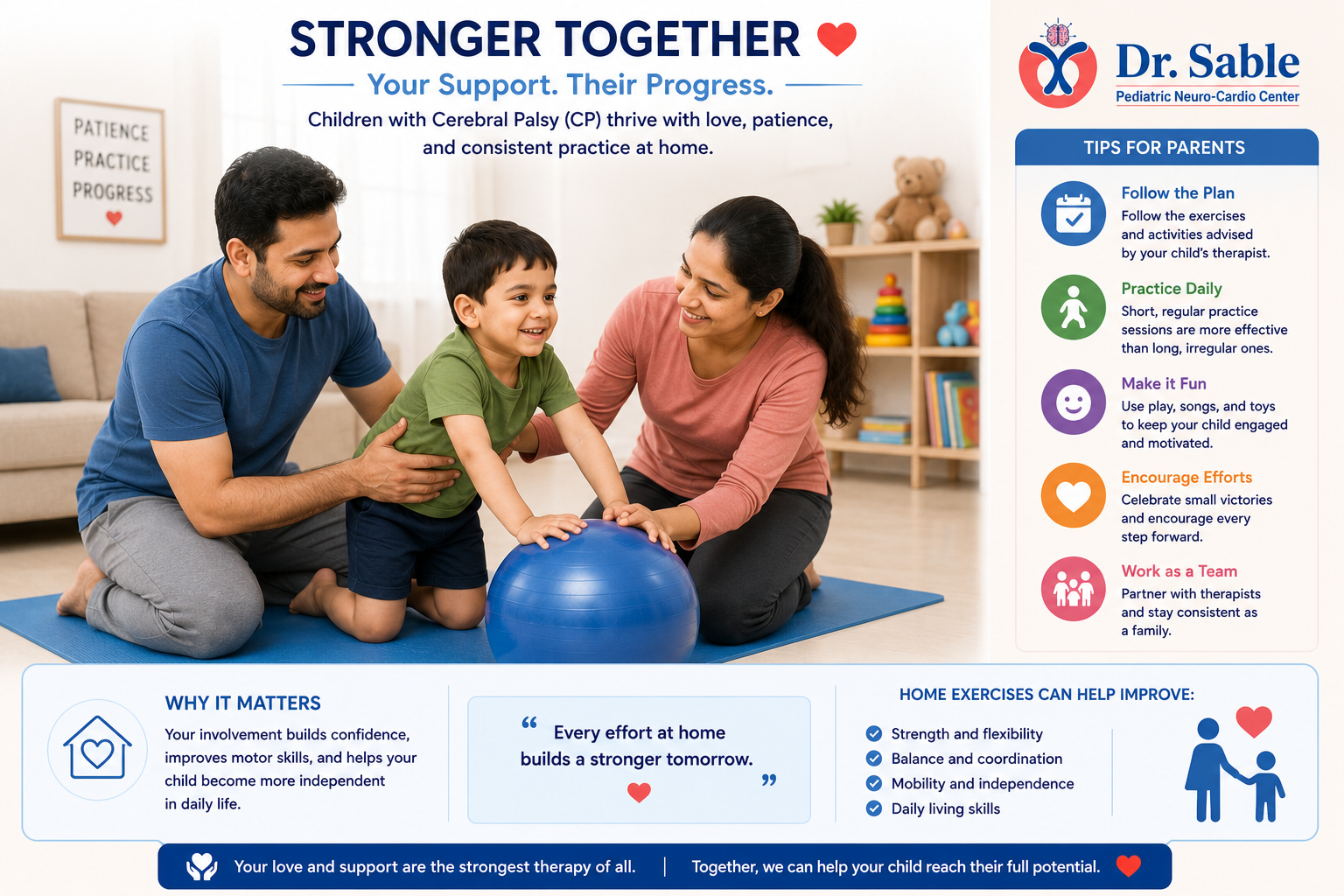
Parents play a crucial role by:

  • Encouraging daily exercises
  • Following therapy programs
  • Promoting communication
  • Supporting school participation
  • Encouraging independence
  • Providing emotional support
Cerebral Palsy Clinic in Ahilyanagar Dr Sunil Sable Best Pediatric Neurologist & Epilepsy Specialist Ahilyanagar

Why Choose Dr. Sunil Sable?

Dr. Sunil Sable
Pediatric Neurologist & Epilepsy Specialist
Ahilyanagar, Maharashtra

✔ Pediatric Neurology Expertise

✔ Developmental Neurology Specialist

✔ Cerebral Palsy Management

✔ Epilepsy Management

✔ Family-Centered Care

✔ Long-Term Follow-Up

✔ Evidence-Based Treatment

Frequently Asked Questions About Child Development

1. What is cerebral palsy?

Cerebral palsy (CP) is a group of neurological disorders that affect movement, posture, balance, and muscle coordination. It occurs due to damage or abnormal development of the brain before, during, or shortly after birth. Cerebral palsy is the most common physical disability in childhood.

Cerebral palsy can result from brain injury or abnormal brain development during pregnancy, birth, or early infancy. Common causes include prematurity, birth asphyxia, infections, stroke, brain malformations, and genetic factors.

No. Cerebral palsy itself is not progressive, meaning the brain injury does not worsen over time. However, muscle stiffness, joint contractures, and mobility problems may become more noticeable as the child grows if appropriate therapy is not provided.

There is currently no cure for cerebral palsy. However, early intervention, physiotherapy, occupational therapy, speech therapy, medical treatment, and supportive care can greatly improve function and quality of life.

Early signs may include delayed milestones, poor head control, difficulty sitting, stiffness or floppiness of muscles, feeding difficulties, unusual postures, and delayed walking.

Many children can be diagnosed between 6 months and 2 years of age. Early diagnosis allows earlier therapy and better long-term outcomes.

Yes. Premature babies, especially those born before 32 weeks of gestation, have a higher risk of developing cerebral palsy due to increased vulnerability of the developing brain.

The major types include:

  • Spastic Cerebral Palsy
  • Dyskinetic Cerebral Palsy
  • Ataxic Cerebral Palsy
  • Mixed Cerebral Palsy

Spastic cerebral palsy is the most common type.

Spastic cerebral palsy is characterized by increased muscle tone, stiffness, tight muscles, and difficulty with movement. It accounts for approximately 70–80% of cerebral palsy cases.

Many children with cerebral palsy can walk independently or with assistance. Outcomes vary depending on the severity and type of cerebral palsy.

Not always. Many children with cerebral palsy have normal intelligence. Others may have varying degrees of learning difficulties depending on the underlying brain involvement.

Yes. Some children with cerebral palsy experience speech and communication difficulties due to involvement of muscles controlling speech and swallowing.

Speech therapy helps improve communication, language development, speech clarity, feeding skills, and swallowing abilities.

Occupational therapy helps children develop independence in daily activities such as dressing, eating, writing, self-care, and play skills.

Physiotherapy helps improve muscle strength, flexibility, balance, posture, mobility, and functional independence while reducing complications related to muscle tightness.

Spasticity refers to abnormal muscle stiffness caused by increased muscle tone. It can interfere with movement, posture, walking, and daily activities.

Yes. Epilepsy is common in children with cerebral palsy. Some children may experience seizures and require evaluation and treatment by a Pediatric Neurologist.

Investigations may include:

  • MRI Brain
  • Hearing Assessment
  • Vision Assessment
  • Developmental Evaluation
  • Genetic Testing (selected cases)

The need for investigations depends on the individual child.

MRI is often helpful because it can identify the underlying brain injury or developmental abnormality and assist in diagnosis and prognosis.

Many children with cerebral palsy attend mainstream schools successfully. Educational support depends on mobility, learning abilities, communication skills, and individual needs.

Early intervention is one of the most important factors influencing long-term outcomes. Starting therapy early helps maximize brain plasticity and developmental progress.

Parents can help by:

  • Following therapy exercises
  • Encouraging movement
  • Promoting communication
  • Supporting independence
  • Maintaining regular follow-up
  • Creating a positive environment

The brain injury does not reverse, but children can make significant functional gains through therapy, medical treatment, adaptive equipment, and educational support.


The outlook varies widely. Many children grow into independent adults, while others may require ongoing support. Early intervention and multidisciplinary care improve outcomes significantly.

You should consult a Pediatric Neurologist if your child has:

  • Delayed sitting
  • Delayed walking
  • Muscle stiffness
  • Poor balance
  • Developmental delay
  • Feeding difficulties
  • Suspected seizures
  • Concerns about cerebral palsy

Early evaluation helps establish a diagnosis and create an individualized treatment plan.

Book an Appointment

  • If your child has delayed walking, muscle stiffness, poor balance, developmental delay, cerebral palsy, or associated seizures, early evaluation can make a significant difference.

    Dr. Sunil Sable

    Pediatric Neurologist & Epilepsy Specialist
    Ahilyanagar, Maharashtra

    📞 9373402011

Book Appointment Contact US
Scroll to Top